Instituto de Biotecnología, Universidad Nacional Autónoma de México, Apdo. Postal 510-3, Cuernavaca 62250, Morelos, Mexico.
Biochemistry. 2011 Jan 25;50(3):388-96. doi: 10.1021/bi101239r. Epub 2010 Dec 29.
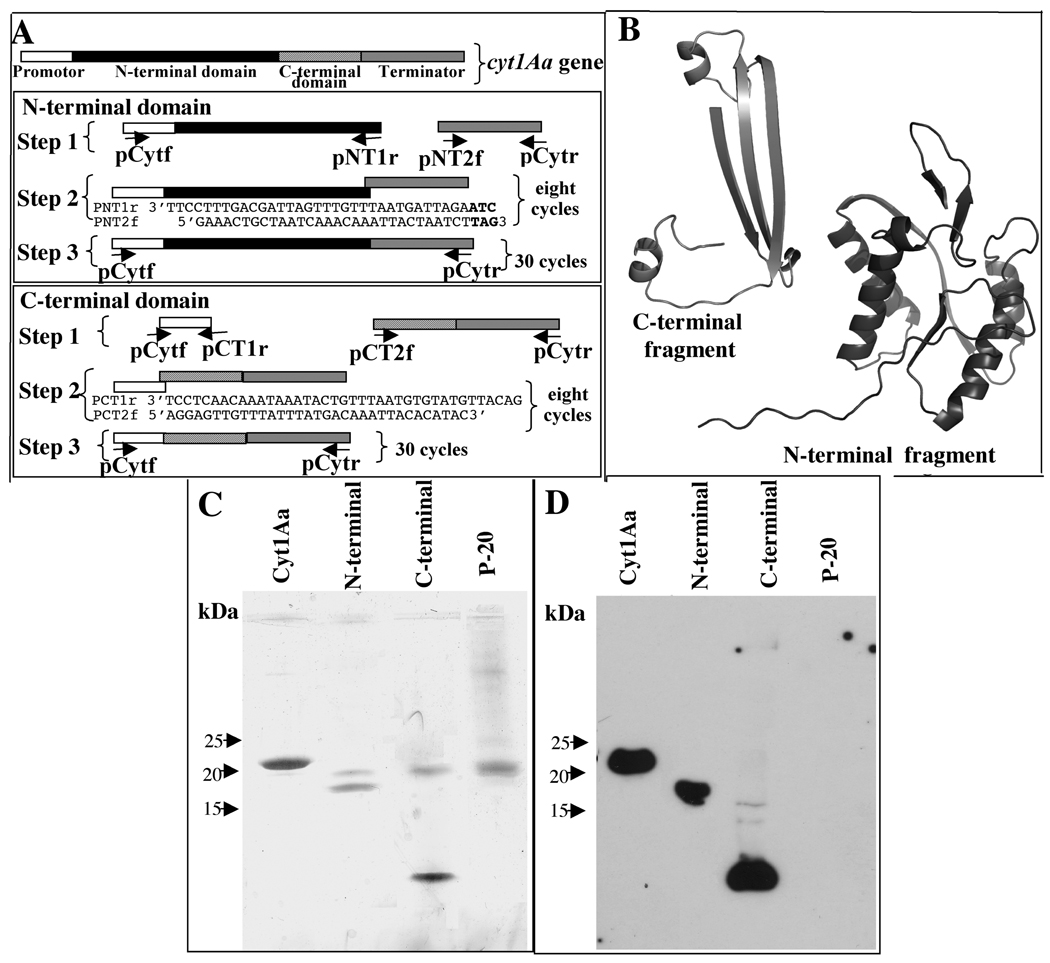
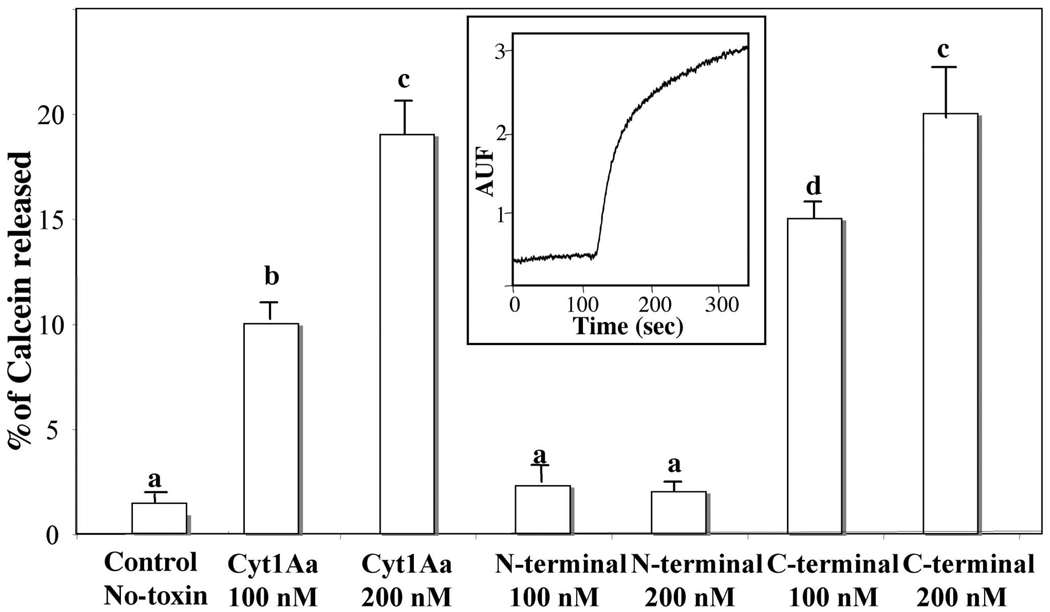
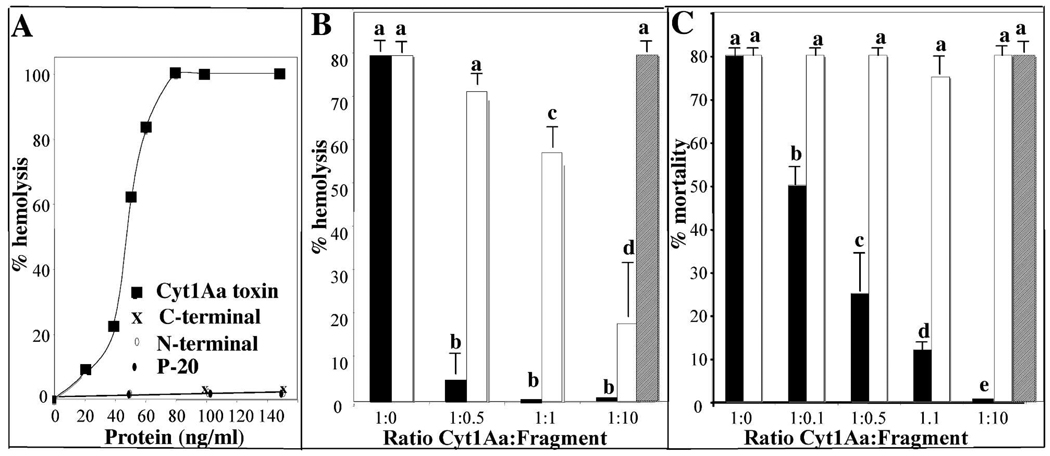
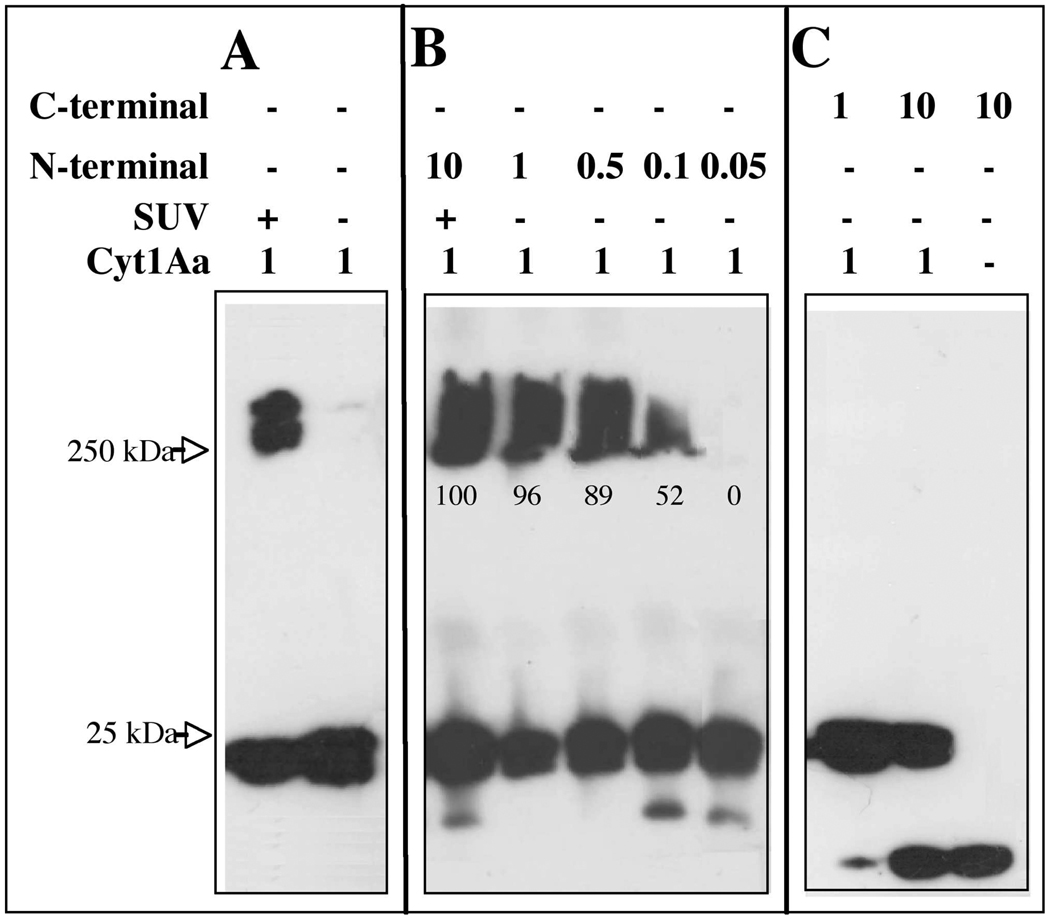
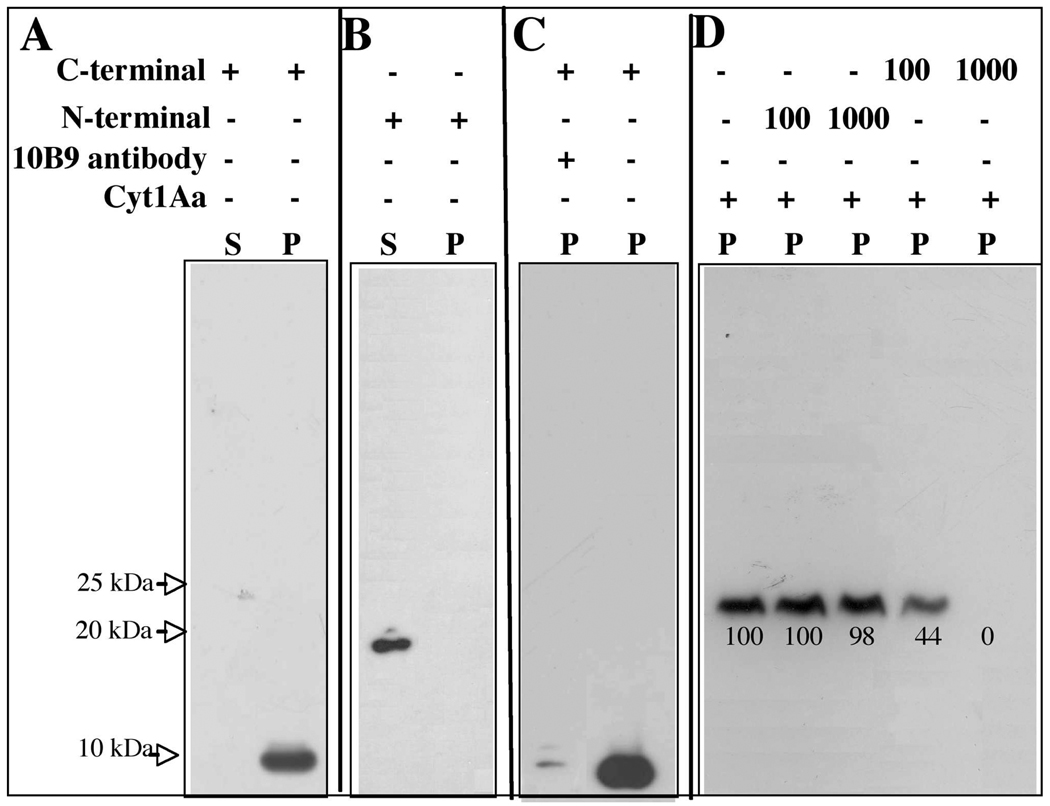
The Cyt toxins produced by the bacteria Bacillus thuringiensis show insecticidal activity against some insects, mainly dipteran larvae, being able to kill mosquitoes and black flies. However, they also possess a general cytolytic activity in vitro, showing hemolytic activity in red blood cells. These proteins are composed of two outer layers of α-helix hairpins wrapped around a β-sheet. With regard to their mode of action, one model proposed that the two outer layers of α-helix hairpins swing away from the β-sheet, allowing insertion of β-strands into the membrane forming a pore after toxin oligomerization. The other model suggested a detergent-like mechanism of action of the toxin on the surface of the lipid bilayer. In this work, we cloned the N- and C-terminal domains form Cyt1Aa and analyzed their effects on Cyt1Aa toxin action. The N-terminal domain shows a dominant negative phenotype inhibiting the in vitro hemolytic activity of Cyt1Aa in red blood cells and the in vivo insecticidal activity of Cyt1Aa against Aedes aegypti larvae. In addition, the N-terminal region is able to induce aggregation of the Cyt1Aa toxin in solution. Finally, the C-terminal domain composed mainly of β-strands is able to bind to the SUV liposomes, suggesting that this region of the toxin is involved in membrane interaction. Overall, our data indicate that the two isolated domains of Cyt1Aa have different roles in toxin action. The N-terminal region is involved in toxin aggregation, while the C-terminal domain is involved in the interaction of the toxin with the lipid membrane.
苏云金芽孢杆菌产生的细胞毒素对某些昆虫具有杀虫活性,主要是双翅目幼虫,能够杀死蚊子和黑蝇。然而,它们在体外也具有普遍的细胞溶解活性,对红细胞表现出溶血活性。这些蛋白质由两个外层α-螺旋发夹组成,包裹在β-折叠周围。关于它们的作用模式,一种模型提出,两个外层的α-螺旋发夹从β-折叠摆动,允许β-链插入形成孔后毒素寡聚化。另一种模型提出了毒素在脂质双层表面的去污剂样作用机制。在这项工作中,我们克隆了 Cyt1Aa 的 N-和 C-末端结构域,并分析了它们对 Cyt1Aa 毒素作用的影响。N-末端结构域表现出显性负表型,抑制 Cyt1Aa 在红细胞中的体外溶血活性和 Cyt1Aa 在埃及伊蚊幼虫体内的杀虫活性。此外,N-末端区域能够诱导 Cyt1Aa 毒素在溶液中的聚集。最后,主要由β-折叠组成的 C-末端结构域能够与 SUV 脂双层结合,表明该毒素区域参与膜相互作用。总的来说,我们的数据表明 Cyt1Aa 的两个分离结构域在毒素作用中具有不同的作用。N-末端区域参与毒素聚集,而 C-末端结构域参与毒素与脂质膜的相互作用。