• 文献检索
  • 文档翻译
  • 深度研究
  • 学术资讯
  • Suppr Zotero 插件Zotero 插件
  • 邀请有礼
  • 套餐&价格
  • 历史记录
应用&插件
Suppr Zotero 插件Zotero 插件浏览器插件Mac 客户端Windows 客户端微信小程序
定价
高级版会员购买积分包购买API积分包
服务
文献检索文档翻译深度研究API 文档MCP 服务
关于我们
关于 Suppr公司介绍联系我们用户协议隐私条款
关注我们

Suppr 超能文献

核心技术专利:CN118964589B侵权必究
粤ICP备2023148730 号-1Suppr @ 2026

文献检索

告别复杂PubMed语法,用中文像聊天一样搜索,搜遍4000万医学文献。AI智能推荐,让科研检索更轻松。

立即免费搜索

文件翻译

保留排版,准确专业,支持PDF/Word/PPT等文件格式,支持 12+语言互译。

免费翻译文档

深度研究

AI帮你快速写综述,25分钟生成高质量综述,智能提取关键信息,辅助科研写作。

立即免费体验

青少年向初中过渡时期社会发展模式的测试:以墨西哥裔美国青少年为例。

A test of the social development model during the transition to junior high with Mexican American adolescents.

机构信息

Prevention Research Center and School of Social and Family Dynamics, ArizonaState University, Tempe, AZ, USA.

出版信息

Dev Psychol. 2011 Mar;47(2):527-37. doi: 10.1037/a0021269.

DOI:10.1037/a0021269
PMID:21142368
原文链接:https://pmc.ncbi.nlm.nih.gov/articles/PMC3051411/
Abstract

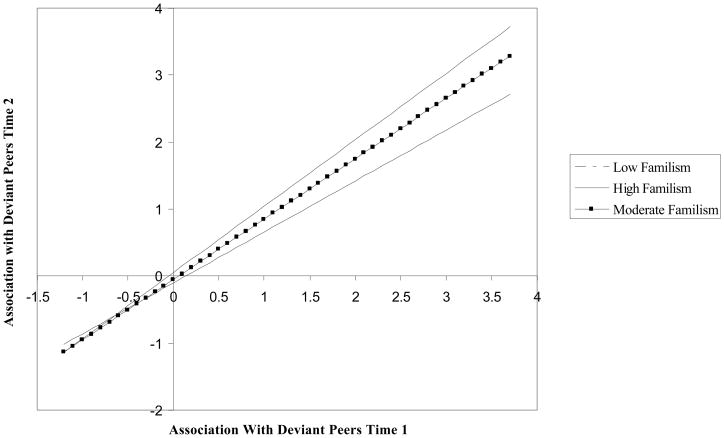
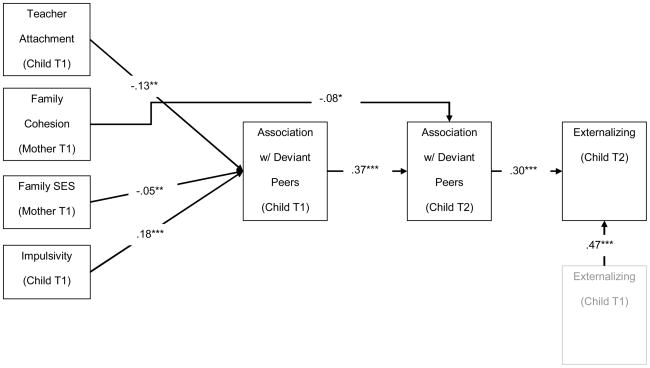
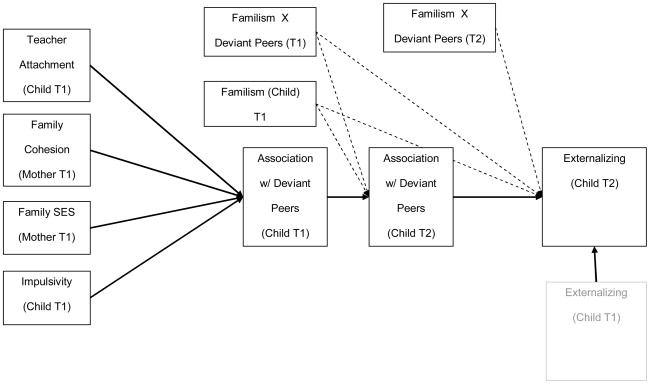
Mexican American adolescents have higher rates of externalizing problems than their peers from other ethnic and racial groups. To begin the process of understanding factors related to externalizing problems in this population, this study used the social development model (SDM) and prospective data across the transition to junior high school from 750 diverse Mexican American families. In addition, the authors examined whether familism values provided a protective effect for relations within the model. Results showed that the SDM worked well for this sample. As expected, association with deviant peers was the primary predictor of externalizing behaviors. There was support for a protective effect in that adolescents with higher familism values had slower rates of increase in association with deviant peers from 5th to 7th grades than those with lower familism values. Future research needs to determine whether additional culturally appropriate modifications of the SDM would increase its usefulness for Mexican American adolescents.

摘要

墨西哥裔美国青少年的外化问题发生率高于其他族裔和种族群体的同龄人。为了开始理解这一人群中外化问题相关因素的过程,本研究使用了社会发展模型(SDM)和从 750 个不同的墨西哥裔美国家庭到初中过渡的前瞻性数据。此外,作者还检验了家族主义价值观是否为模型内的关系提供了保护作用。结果表明,SDM 在此样本中表现良好。正如预期的那样,与越轨同伴的关联是外化行为的主要预测因素。有证据表明,保护作用是存在的,即具有较高家族主义价值观的青少年与越轨同伴的关联从 5 年级到 7 年级的增长率较慢,而具有较低家族主义价值观的青少年则较快。未来的研究需要确定 SDM 的其他文化上适当的修改是否会增加其对墨西哥裔美国青少年的有用性。
https://cdn.ncbi.nlm.nih.gov/pmc/blobs/1853/3051411/75bbbdef6458/nihms230753f3.jpg
https://cdn.ncbi.nlm.nih.gov/pmc/blobs/1853/3051411/a2fae8fae06b/nihms230753f1.jpg
https://cdn.ncbi.nlm.nih.gov/pmc/blobs/1853/3051411/4f31207d914b/nihms230753f2.jpg
https://cdn.ncbi.nlm.nih.gov/pmc/blobs/1853/3051411/75bbbdef6458/nihms230753f3.jpg
https://cdn.ncbi.nlm.nih.gov/pmc/blobs/1853/3051411/a2fae8fae06b/nihms230753f1.jpg
https://cdn.ncbi.nlm.nih.gov/pmc/blobs/1853/3051411/4f31207d914b/nihms230753f2.jpg
https://cdn.ncbi.nlm.nih.gov/pmc/blobs/1853/3051411/75bbbdef6458/nihms230753f3.jpg

相似文献

1
A test of the social development model during the transition to junior high with Mexican American adolescents.青少年向初中过渡时期社会发展模式的测试:以墨西哥裔美国青少年为例。
Dev Psychol. 2011 Mar;47(2):527-37. doi: 10.1037/a0021269.
2
Family and cultural processes linking family instability to Mexican American adolescent adjustment.家庭和文化过程将家庭不稳定与墨西哥裔美国青少年的适应联系起来。
J Fam Psychol. 2013 Jun;27(3):387-97. doi: 10.1037/a0032863.
3
Trajectories of familism values and the prosocial tendencies of Mexican American adolescents.墨西哥裔美国青少年的家庭主义价值观轨迹与亲社会倾向。
Dev Psychol. 2018 Feb;54(2):378-384. doi: 10.1037/dev0000436. Epub 2017 Oct 30.
4
The socialization of prosocial behavioral tendencies among Mexican American adolescents: The role of familism values.墨西哥裔美国青少年亲社会行为倾向的社会化:家族主义价值观的作用。
Cultur Divers Ethnic Minor Psychol. 2011 Jan;17(1):98-106. doi: 10.1037/a0021825.
5
Familism values across the transition to adolescent motherhood: Links to family functioning and Mexican-origin adolescent mothers' adjustment.家庭主义价值观在向青少年母亲过渡中的作用:与家庭功能的关系以及墨西哥裔青少年母亲的适应。
Dev Psychopathol. 2018 Dec;30(5):1589-1609. doi: 10.1017/S0954579418000986.
6
A prospective study of Mexican American adolescents' academic success: considering family and individual factors.一项关于墨西哥裔美国青少年学业成功的前瞻性研究:考虑家庭和个体因素。
J Youth Adolesc. 2012 Mar;41(3):307-19. doi: 10.1007/s10964-011-9707-x. Epub 2011 Aug 24.
7
Adolescent sibling relationships in Mexican American families: exploring the role of familism.墨西哥裔美国家庭中的青少年手足关系:探索家族主义的作用。
J Fam Psychol. 2005 Dec;19(4):512-22. doi: 10.1037/0893-3200.19.4.512.
8
Friend affiliations and school adjustment among Mexican-American adolescents: the moderating role of peer and parent support.墨西哥裔美国青少年的朋友关系与学校适应:同伴和父母支持的调节作用
J Youth Adolesc. 2014 Dec;43(12):1969-81. doi: 10.1007/s10964-013-0023-5. Epub 2013 Oct 6.
9
Mexican American adolescents' sleep patterns: contextual correlates and implications for health and adjustment in young adulthood.墨西哥裔美国青少年的睡眠模式:情境关联及其对青年期健康与适应的影响
J Youth Adolesc. 2015 Feb;44(2):346-61. doi: 10.1007/s10964-014-0156-1. Epub 2014 Jul 22.
10
Mexican-origin adolescent mothers' stressors and psychosocial functioning: examining ethnic identity affirmation and familism as moderators.墨西哥裔青少年母亲的压力源和心理社会功能:检验族裔认同肯定和家庭主义的调节作用。
J Youth Adolesc. 2011 Feb;40(2):140-57. doi: 10.1007/s10964-010-9511-z. Epub 2010 Feb 11.

引用本文的文献

1
Family ethnic socialization practices longitudinally associated with cultural assets, civic responsibility, and prosocial behaviors in rural U.S. Latino/a youth.美国农村拉丁裔青少年的家庭种族社会化实践与文化资产、公民责任和亲社会行为存在纵向关联。
J Res Adolesc. 2025 Sep;35(3):e70051. doi: 10.1111/jora.70051.
2
Cultural adaptations and cultural factors in EBI implementation with Latinx communities.EBI 实施过程中的文化适应和文化因素与拉丁裔社区。
Front Public Health. 2023 Mar 21;11:1007328. doi: 10.3389/fpubh.2023.1007328. eCollection 2023.
3
Influence of family cohesion on Chinese adolescents' engagement in school bullying: A moderated mediation model.

本文引用的文献

1
The inventory of parent and peer attachment: Individual differences and their relationship to psychological well-being in adolescence.父母和同伴依恋量表:青少年个体差异及其与心理健康的关系。
J Youth Adolesc. 1987 Oct;16(5):427-54. doi: 10.1007/BF02202939.
2
Familism Values as a Protective Factor for Mexican-origin Adolescents Exposed to Deviant Peers.家族主义价值观作为墨西哥裔青少年接触不良同伴时的保护因素。
J Early Adolesc. 2009 Feb;29(1):16-42. doi: 10.1177/0272431608324475.
3
Applicability of the Social Development Model to Urban Ethnic Minority Youth: Examining the Relationship between External Constraints, Family Socialization, and Problem Behaviors.
家庭凝聚力对中国青少年校园欺凌行为的影响:一个有调节的中介模型。
Front Psychol. 2022 Dec 8;13:1040559. doi: 10.3389/fpsyg.2022.1040559. eCollection 2022.
4
Peer Discrimination, Deviant Peer Affiliation, and Latino/a Adolescent Internalizing and Externalizing Symptoms: A Prospective Study.同伴歧视、偏差同伴关系与拉丁裔青少年的内化和外化问题:一项前瞻性研究。
J Clin Child Adolesc Psychol. 2024 Jul-Aug;53(4):652-668. doi: 10.1080/15374416.2022.2093209. Epub 2022 Jul 19.
5
Applying the Social Development Model in Middle Childhood to Promote Healthy Development: Effects From Primary School Through the 30s and Across Generations.应用童年中期社会发展模型促进健康发展:从小学到30多岁及跨代的影响。
J Dev Life Course Criminol. 2021 Mar;7(1):66-86. doi: 10.1007/s40865-020-00152-6. Epub 2020 Sep 17.
6
Adult Social Environments and the Use of Combustible and Electronic Cigarettes: Opportunities for Reducing Smoking in the 30s.成人社会环境与可燃和电子烟使用:减少 30 多岁人群吸烟的机会。
Nicotine Tob Res. 2021 Feb 16;23(3):518-526. doi: 10.1093/ntr/ntaa019.
7
The dimensions of successful young adult development: A conceptual and measurement framework.成功的青年发展维度:一个概念与测量框架。
Appl Dev Sci. 2015 Dec 16;20(3):150-174. doi: 10.1080/10888691.2015.1082429. eCollection 2016.
8
Developmental Pathways of Youth Gang Membership: A Structural Test of the Social Development Model.青少年帮派成员的发展路径:社会发展模型的结构检验
J Crime Justice. 2017;40(3):275-296. doi: 10.1080/0735648X.2017.1329781. Epub 2017 May 30.
9
Examining Protective Factors Against Violence among High-risk Youth: Findings from the Seattle Social Development Project.审视高危青少年中预防暴力的保护因素:来自西雅图社会发展项目的研究结果
J Crim Justice. 2016 Jun;45:19-25. doi: 10.1016/j.jcrimjus.2016.02.015. Epub 2016 Feb 28.
10
Emotional and Behavioral Health Needs in Elementary School Students in an Underserved Hispanic Community.服务不足的西班牙裔社区小学生的情绪和行为健康需求
J Sch Nurs. 2019 Apr;35(2):128-136. doi: 10.1177/1059840517726857. Epub 2017 Sep 12.
社会发展模式对城市少数民族青年的适用性:审视外部约束、家庭社会化与问题行为之间的关系。
J Res Adolesc. 2005 Nov;15(4):505-534. doi: 10.1111/j.1532-7795.2005.00109.x.
4
Discrimination and adjustment for Mexican American adolescents: A prospective examination of the benefits of culturally-related values.墨西哥裔美国青少年的歧视与调适:对与文化相关价值观益处的前瞻性考察
J Res Adolesc. 2010 Nov 15;20(4):893-915. doi: 10.1111/j.1532-7795.2010.00668.x.
5
The Mexican American Cultural Values scales for Adolescents and Adults.青少年和成年人的墨西哥裔美国人文化价值观量表。
J Early Adolesc. 2010 Jun;30(3):444-481. doi: 10.1177/0272431609338178.
6
Cultural orientations, daily activities, and adjustment in Mexican American youth.墨西哥裔美国青年的文化取向、日常活动与适应。
J Youth Adolesc. 2009 May;38(5):627-41. doi: 10.1007/s10964-008-9321-8. Epub 2008 Aug 20.
7
The role of risk and protective factors in substance use across adolescence.风险因素和保护因素在青少年物质使用中的作用。
J Adolesc Health. 2008 Aug;43(2):157-64. doi: 10.1016/j.jadohealth.2008.01.015. Epub 2008 Apr 25.
8
Youth risk behavior surveillance--United States, 2007.2007年美国青少年危险行为监测
MMWR Surveill Summ. 2008 Jun 6;57(4):1-131.
9
Sampling and recruitment in studies of cultural influences on adjustment: a case study with Mexican Americans.文化对适应影响研究中的抽样与招募:以墨西哥裔美国人为例的案例研究
J Fam Psychol. 2008 Apr;22(2):293-302. doi: 10.1037/0893-3200.22.2.293.
10
Family influences on adolescent delinquent behaviors: applying the social development model to a Chinese sample.家庭对青少年犯罪行为的影响:将社会发展模型应用于中国样本
Am J Community Psychol. 2007 Dec;40(3-4):333-44. doi: 10.1007/s10464-007-9133-0.