AstraZeneca R&D Montréal, 7171 Frédérick Banting, Ville St-Laurent (Montréal) Québec, Canada, H4S 1Z9.
Mol Pain. 2010 Dec 10;6:90. doi: 10.1186/1744-8069-6-90.
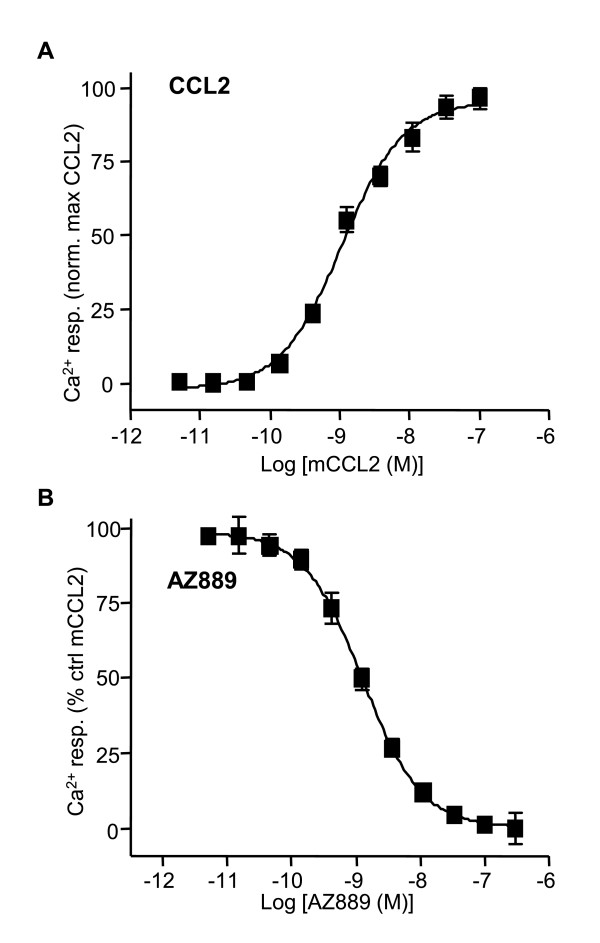
The CCR2/CCL2 system has been identified as a regulator in the pathogenesis of neuropathy-induced pain. However, CCR2 target validation in analgesia and the mechanism underlying antinociception produced by CCR2 antagonists remains poorly understood. In this study, in vitro and in vivo pharmacological approaches using a novel CCR2 antagonist, AZ889, strengthened the hypothesis of a CCR2 contribution to neuropathic pain and provided confidence over the possibilities to treat neuropathic pain with CCR2 antagonists.
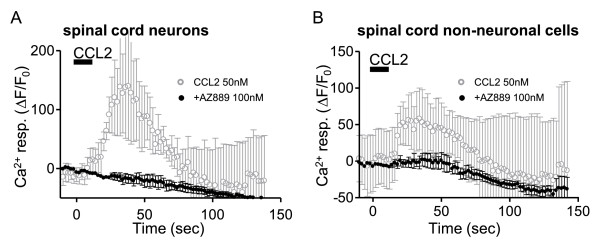
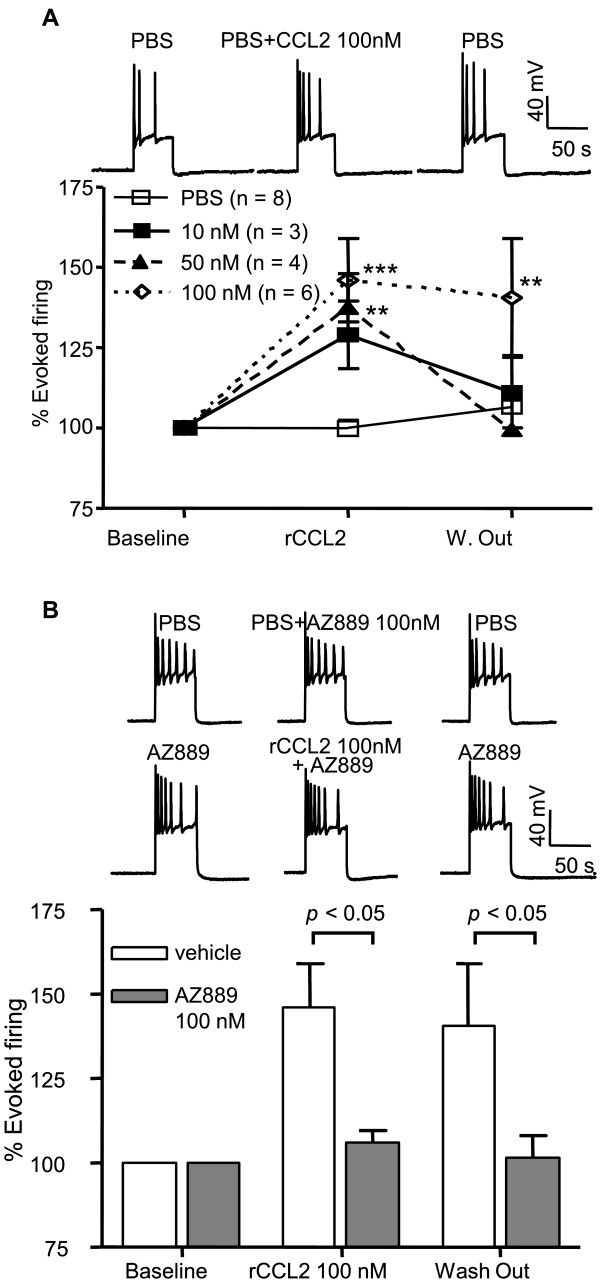
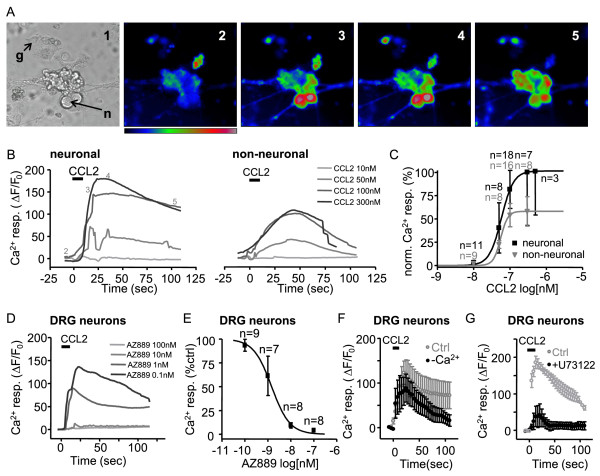
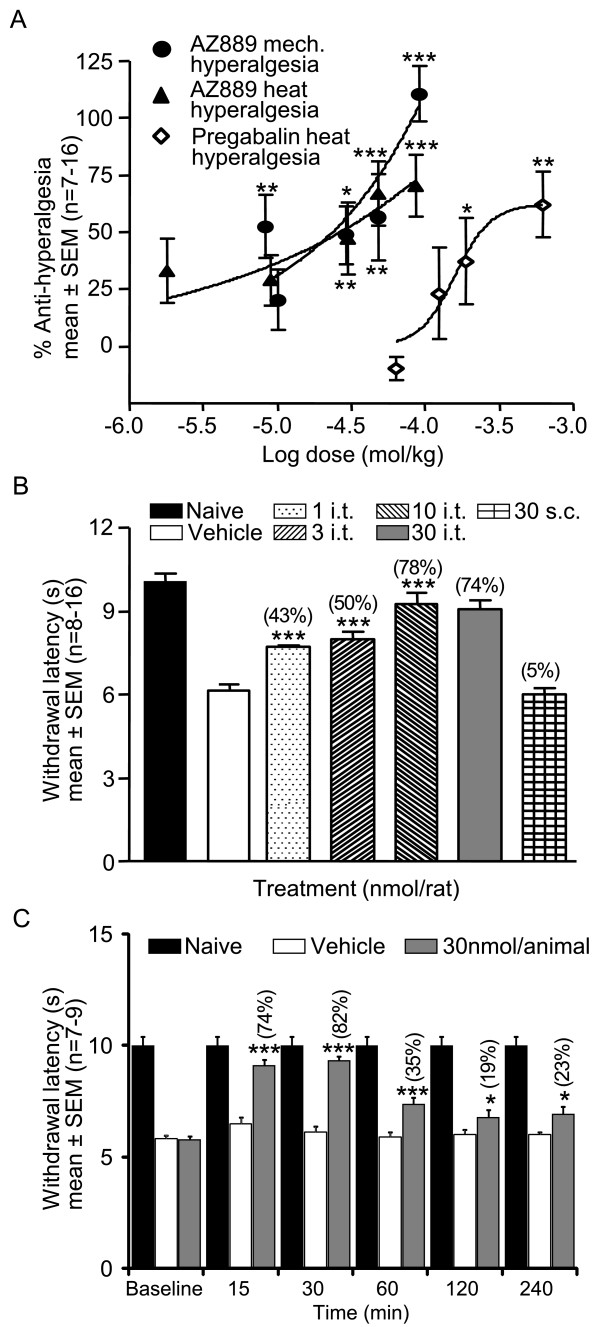
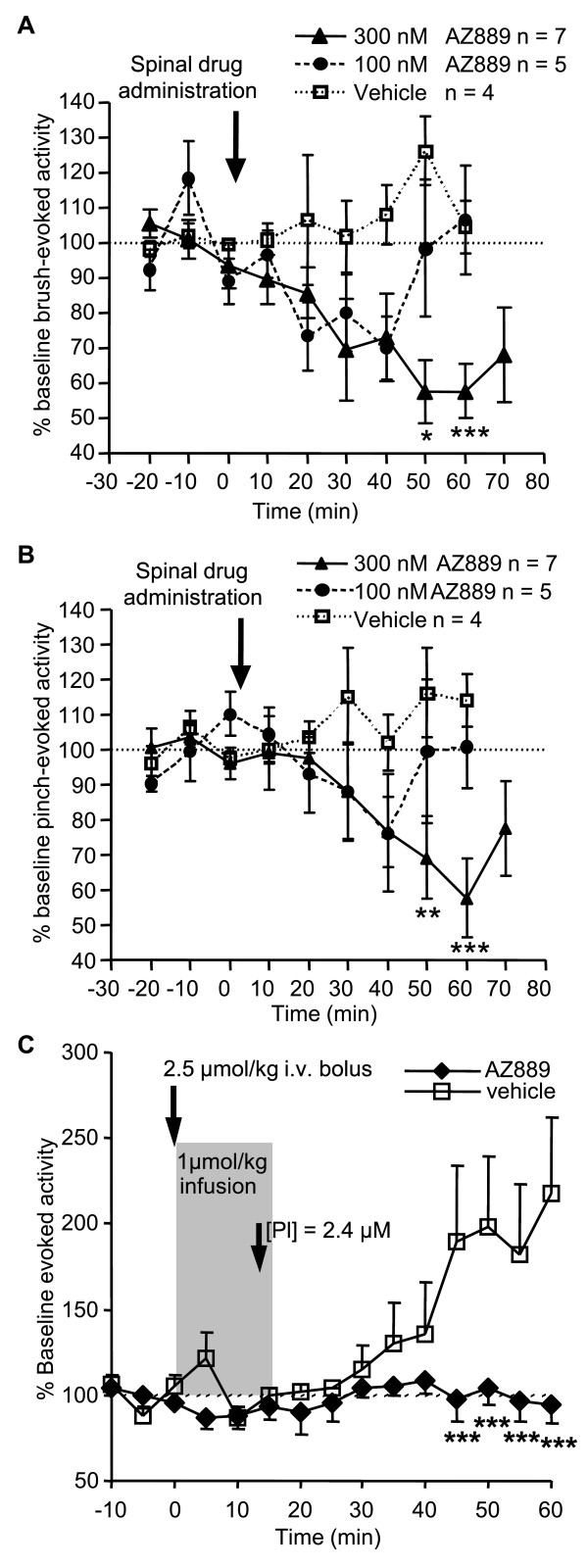
We provided evidence that dorsal root ganglia (DRG) cells harvested from CCI animals responded to stimulation by CCL2 with a concentration-dependent calcium rise involving PLC-dependent internal stores. This response was associated with an increase in evoked neuronal action potentials suggesting these cells were sensitive to CCR2 signalling. Importantly, treatment with AZ889 abolished CCL2-evoked excitation confirming that this activity is CCR2-mediated. Neuronal and non-neuronal cells in the spinal cord were also excited by CCL2 applications indicating an important role of spinal CCR2 in neuropathic pain. We next showed that in vivo spinal intrathecal injection of AZ889 produced dose-dependent analgesia in CCI rats. Additionally, application of AZ889 to the exposed spinal cord inhibited evoked neuronal activity and confirmed that CCR2-mediated analgesia involved predominantly the spinal cord. Furthermore, AZ889 abolished NMDA-dependent wind-up of spinal withdrawal reflex pathway in neuropathic animals giving insight into the spinal mechanism underlying the analgesic properties of AZ889.
Overall, this study strengthens the important role of CCR2 in neuropathic pain and highlights feasibility that interfering on this mechanism at the spinal level with a selective antagonist can provide new analgesia opportunities.
趋化因子受体 2/趋化因子配体 2(CCR2/CCL2)系统已被确定为神经病理性疼痛发病机制中的调节因子。然而,在镇痛中 CCR2 靶点的验证以及 CCR2 拮抗剂产生的抗伤害作用的机制仍知之甚少。在这项研究中,使用新型 CCR2 拮抗剂 AZ889 的体外和体内药理学方法,加强了 CCR2 对神经病理性疼痛的贡献的假设,并为使用 CCR2 拮抗剂治疗神经病理性疼痛提供了信心。
我们提供了证据表明,从 CCI 动物中收获的背根神经节(DRG)细胞对 CCL2 的刺激会产生浓度依赖性的钙升高,涉及 PLC 依赖性内部储存。这种反应与诱发神经元动作电位的增加有关,这表明这些细胞对 CCR2 信号敏感。重要的是,用 AZ889 处理可消除 CCL2 诱导的兴奋,证实这种活性是 CCR2 介导的。脊髓中的神经元和非神经元细胞也被 CCL2 应用所兴奋,表明脊髓 CCR2 在神经病理性疼痛中起着重要作用。我们接下来表明,在体内脊髓鞘内注射 AZ889 可在 CCI 大鼠中产生剂量依赖性的镇痛作用。此外,将 AZ889 应用于暴露的脊髓可抑制诱发的神经元活动,并证实 CCR2 介导的镇痛主要涉及脊髓。此外,AZ889 消除了神经病理性动物脊髓撤退反射通路中 NMDA 依赖性的冲动积累,深入了解了 AZ889 镇痛特性的脊髓机制。
总的来说,这项研究加强了 CCR2 在神经病理性疼痛中的重要作用,并强调了在脊髓水平上通过选择性拮抗剂干扰该机制可以提供新的镇痛机会的可行性。