Laboratory of Physiological Studies, National Institute on Alcohol Abuse and Alcoholism, National Institutes of Health, Bethesda, Maryland 20892-9413, USA.
J Am Coll Cardiol. 2010 Dec 14;56(25):2115-25. doi: 10.1016/j.jacc.2010.07.033.
In this study, we have investigated the effects of cannabidiol (CBD) on myocardial dysfunction, inflammation, oxidative/nitrative stress, cell death, and interrelated signaling pathways, using a mouse model of type I diabetic cardiomyopathy and primary human cardiomyocytes exposed to high glucose.
Cannabidiol, the most abundant nonpsychoactive constituent of Cannabis sativa (marijuana) plant, exerts anti-inflammatory effects in various disease models and alleviates pain and spasticity associated with multiple sclerosis in humans.
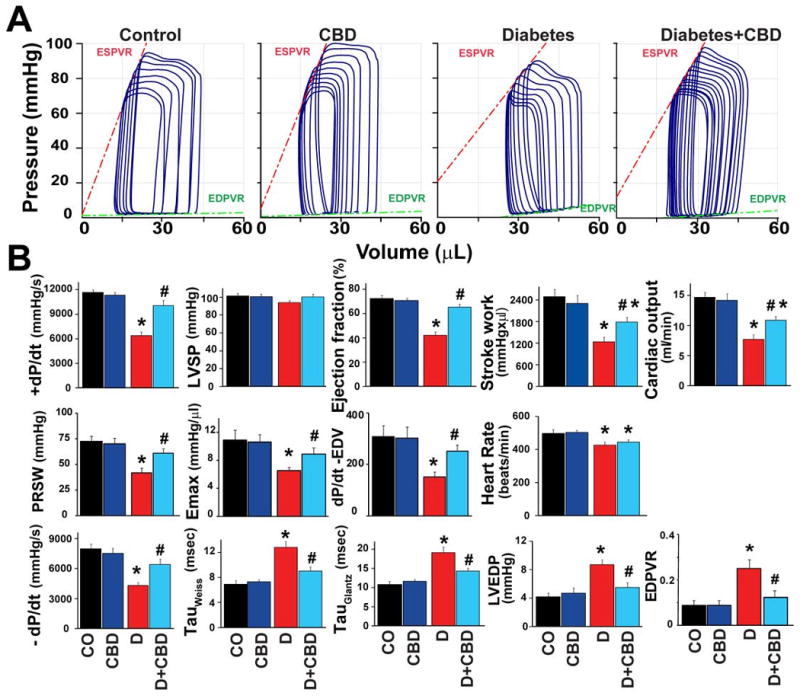
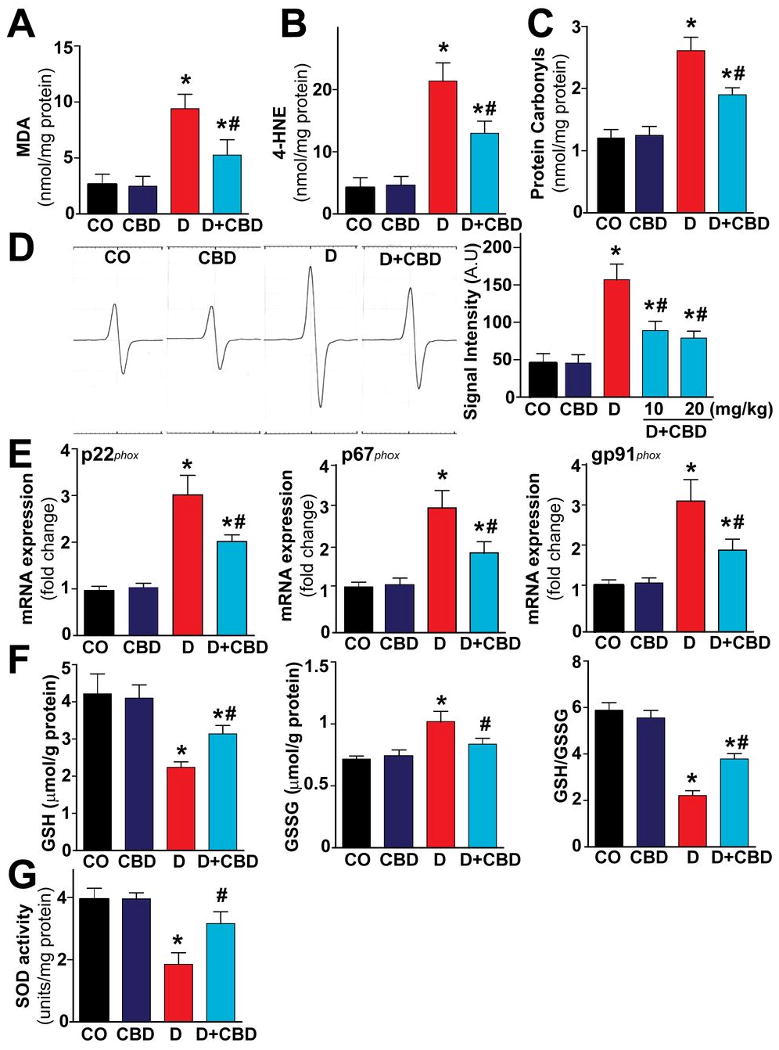
Left ventricular function was measured by the pressure-volume system. Oxidative stress, cell death, and fibrosis markers were evaluated by molecular biology/biochemical techniques, electron spin resonance spectroscopy, and flow cytometry.
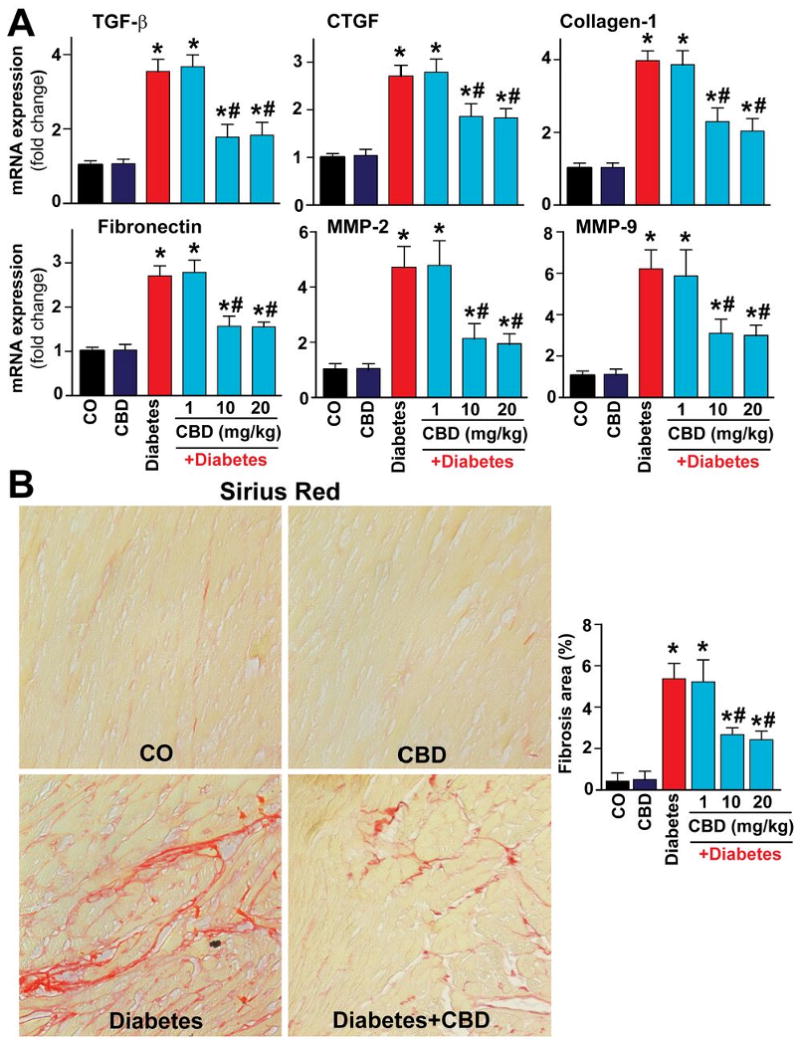
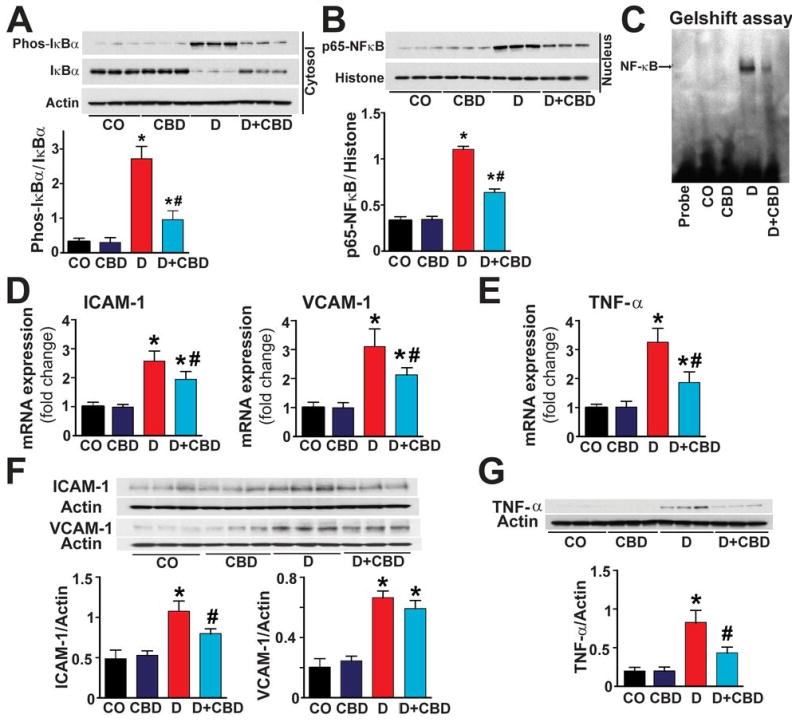
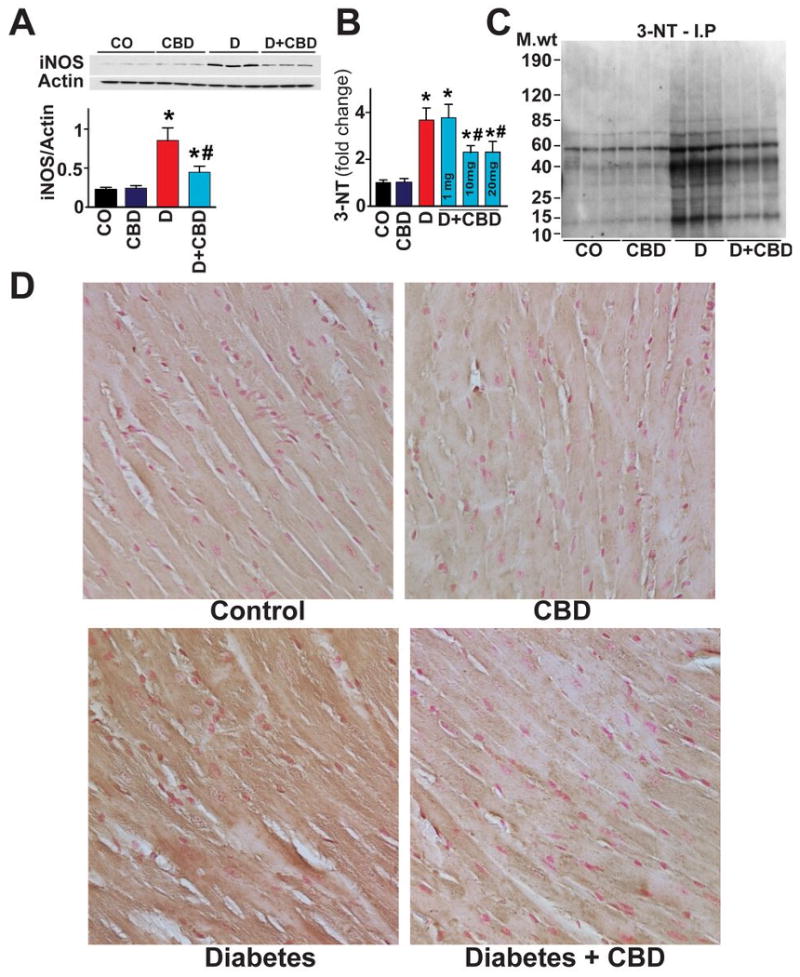
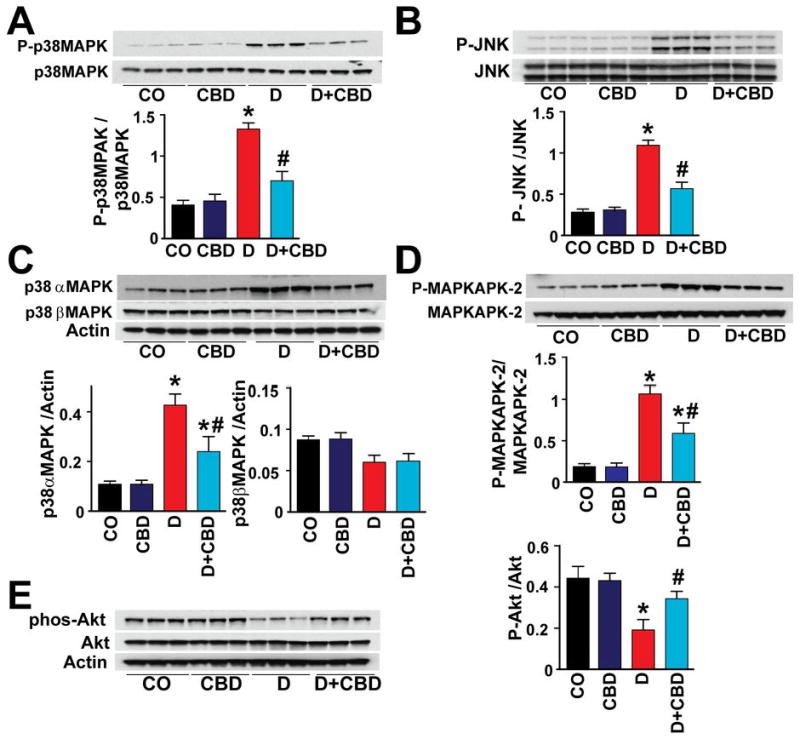
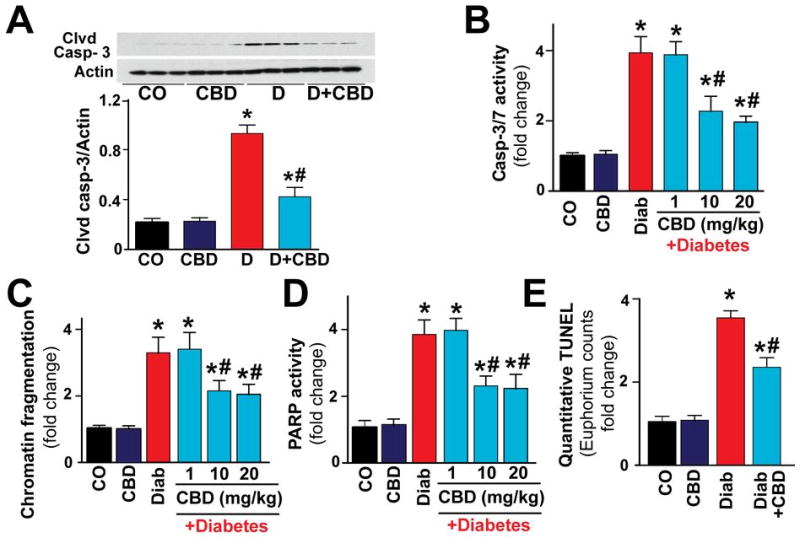
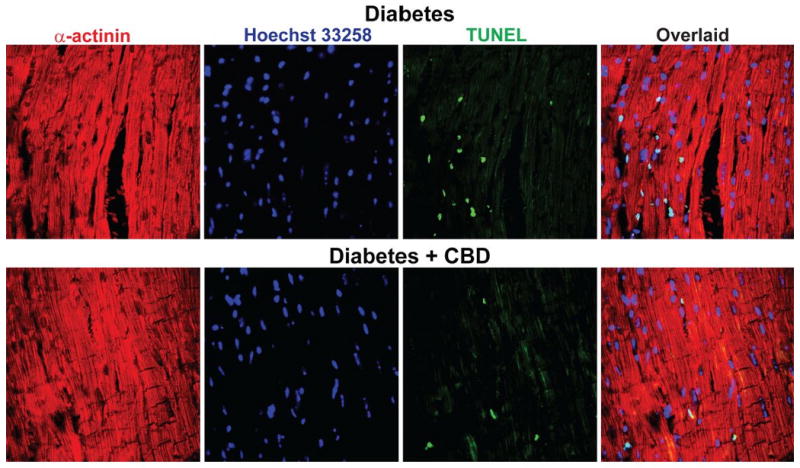
Diabetic cardiomyopathy was characterized by declined diastolic and systolic myocardial performance associated with increased oxidative-nitrative stress, nuclear factor-κB and mitogen-activated protein kinase (c-Jun N-terminal kinase, p-38, p38α) activation, enhanced expression of adhesion molecules (intercellular adhesion molecule-1, vascular cell adhesion molecule-1), tumor necrosis factor-α, markers of fibrosis (transforming growth factor-β, connective tissue growth factor, fibronectin, collagen-1, matrix metalloproteinase-2 and -9), enhanced cell death (caspase 3/7 and poly[adenosine diphosphate-ribose] polymerase activity, chromatin fragmentation, and terminal deoxynucleotidyl transferase dUTP nick end labeling), and diminished Akt phosphorylation. Remarkably, CBD attenuated myocardial dysfunction, cardiac fibrosis, oxidative/nitrative stress, inflammation, cell death, and interrelated signaling pathways. Furthermore, CBD also attenuated the high glucose-induced increased reactive oxygen species generation, nuclear factor-κB activation, and cell death in primary human cardiomyocytes.
Collectively, these results coupled with the excellent safety and tolerability profile of CBD in humans, strongly suggest that it may have great therapeutic potential in the treatment of diabetic complications, and perhaps other cardiovascular disorders, by attenuating oxidative/nitrative stress, inflammation, cell death and fibrosis.
在这项研究中,我们使用 1 型糖尿病心肌病小鼠模型和高糖暴露的原代人心肌细胞,研究了大麻二酚(CBD)对心肌功能障碍、炎症、氧化/硝化应激、细胞死亡和相关信号通路的影响。
大麻二酚是大麻植物中最丰富的非精神活性成分,在各种疾病模型中具有抗炎作用,并缓解人类多发性硬化症相关的疼痛和痉挛。
通过压力-容积系统测量左心室功能。通过分子生物学/生化技术、电子自旋共振光谱和流式细胞术评估氧化应激、细胞死亡和纤维化标志物。
糖尿病心肌病的特征是舒张和收缩心肌功能下降,与氧化/硝化应激增加、核因子-κB 和丝裂原活化蛋白激酶(c-Jun N 末端激酶、p38、p38α)激活、黏附分子(细胞间黏附分子-1、血管细胞黏附分子-1)、肿瘤坏死因子-α、纤维化标志物(转化生长因子-β、结缔组织生长因子、纤维连接蛋白、胶原-1、基质金属蛋白酶-2 和 -9)表达增强、细胞死亡(半胱天冬酶 3/7 和多聚[腺嘌呤二核苷酸]聚合酶活性、染色质片段化和末端脱氧核苷酸转移酶 dUTP 缺口末端标记)增强以及 Akt 磷酸化减少。值得注意的是,CBD 可减轻心肌功能障碍、心脏纤维化、氧化/硝化应激、炎症、细胞死亡和相关信号通路。此外,CBD 还可减轻高糖诱导的原代人心肌细胞中活性氧生成增加、核因子-κB 激活和细胞死亡。
综上所述,这些结果以及 CBD 在人类中的出色安全性和耐受性,强烈表明它可能具有治疗糖尿病并发症的巨大治疗潜力,也许还具有治疗其他心血管疾病的潜力,通过减轻氧化/硝化应激、炎症、细胞死亡和纤维化。