Baba Kenkichi, Sengupta Anamika, Tosini Manfredi, Contreras-Alcantara Susana, Tosini Gianluca
Neuroscience Institute, Morehouse School of Medicine, Atlanta, GA 30130, USA.
Mol Vis. 2010 Dec 7;16:2605-11.
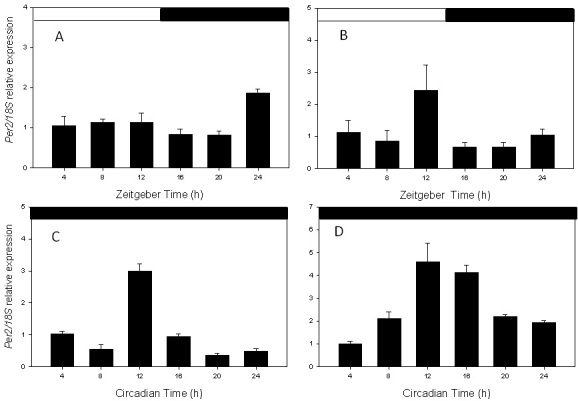
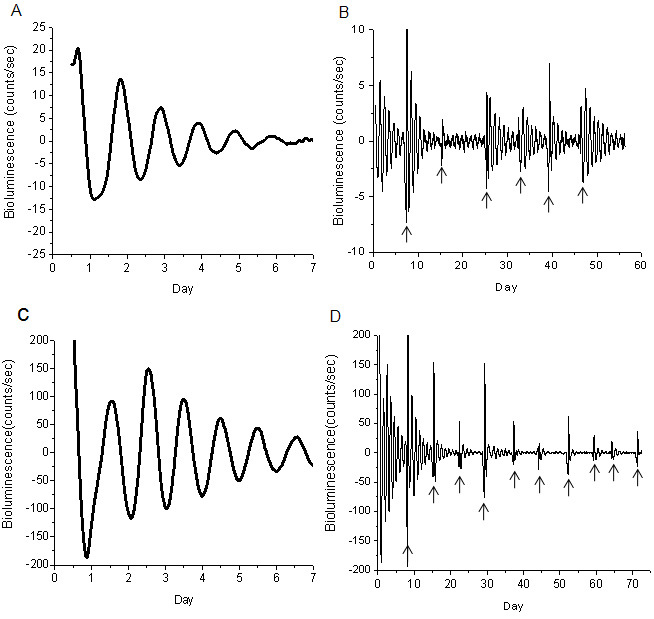
The retinal pigment epithelium (RPE) plays an important role in the maintenance of the health and function of photoreceptors. Previous studies have shown that the RPE is also involved in the regulation of disc shedding, a process that is vital for photoreceptor health. This process has been shown to be under circadian control, although the mechanisms that control it are poorly understood. The aim of the present study was to investigate Period 2 (Per2) mRNA levels in the mouse RPE in vivo, and to determine whether the cultured RPE-choroid from PERIOD 2::LUCIFERASE (PER2::LUC) knockin mice expresses a circadian rhythm in bioluminescence.
Per2 mRNA levels were measured using real-time quantitative RT-PCR, and bioluminescence was measured in PER2::LUC knockin mice using a Lumicycle®.
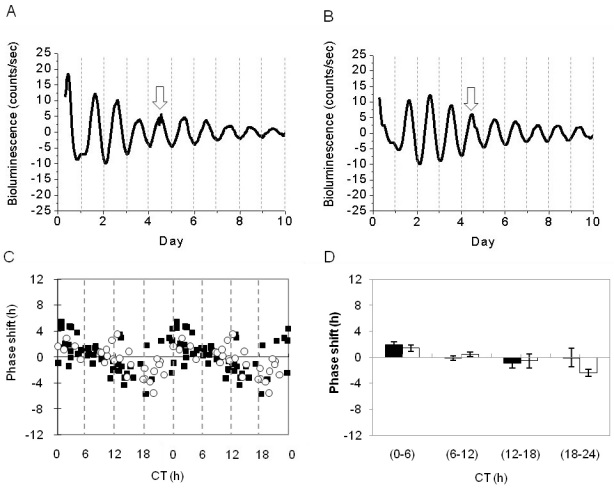
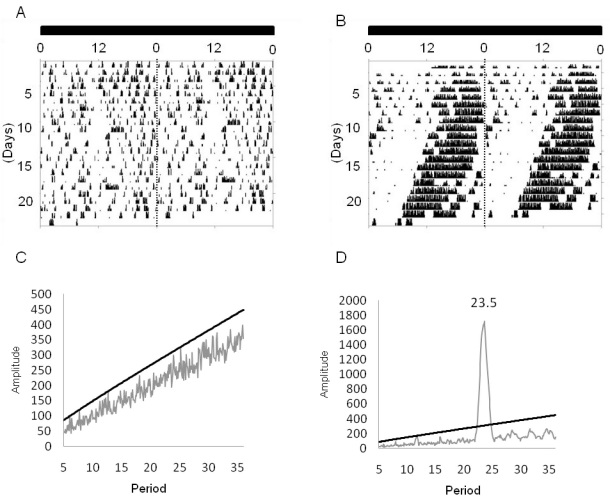
Per2 mRNA levels in the RPE-choroid show a clear circadian rhythm in vivo. A circadian rhythm in PER2::LUC bioluminescence was recorded from cultured RPE-choroid explants. Light exposure during the subjective night did not cause a circadian rhythm phase-shift of PER2::LUC bioluminescence. Finally, removal of the suprachiasmatic nuclei of the hypothalamus did not affect the bioluminescence circadian rhythm in the RPE-choroid.
Our results demonstrate that the RPE-choroid contains a circadian clock, and the regulation of this circadian rhythm resides within the eye. These new data indicate that it may be useful to design studies with the aim of elucidating the molecular mechanisms responsible for the regulation of the rhythmic event in the RPE.
视网膜色素上皮(RPE)在维持光感受器的健康和功能方面发挥着重要作用。先前的研究表明,RPE也参与了视盘脱落的调节,这一过程对光感受器的健康至关重要。尽管控制这一过程的机制尚不清楚,但该过程已被证明受昼夜节律控制。本研究的目的是在体内研究小鼠RPE中Period 2(Per2)mRNA水平,并确定来自PERIOD 2::LUCIFERASE(PER2::LUC)基因敲入小鼠的培养RPE-脉络膜是否在生物发光方面表现出昼夜节律。
使用实时定量RT-PCR测量Per2 mRNA水平,并使用Lumicycle®在PER2::LUC基因敲入小鼠中测量生物发光。
RPE-脉络膜中的Per2 mRNA水平在体内呈现明显的昼夜节律。从培养的RPE-脉络膜外植体中记录到PER2::LUC生物发光的昼夜节律。主观夜间的光照并未导致PER2::LUC生物发光的昼夜节律相位偏移。最后,切除下丘脑的视交叉上核并不影响RPE-脉络膜中的生物发光昼夜节律。
我们的结果表明,RPE-脉络膜含有昼夜节律钟,且这种昼夜节律的调节存在于眼内。这些新数据表明,设计旨在阐明负责调节RPE中有节律事件的分子机制的研究可能会有所帮助。