Department of Molecular Neurobiology, Brain Research Institute, Niigata University, Niigata, Japan.
PLoS One. 2010 Dec 9;5(12):e14185. doi: 10.1371/journal.pone.0014185.
Neuregulin-1 (NRG1) is one of the susceptibility genes for schizophrenia and implicated in the neurotrophic regulation of GABAergic and dopaminergic neurons, myelination, and NMDA receptor function. Postmortem studies often indicate a pathologic association of increased NRG1 expression or signaling with this illness. However, the psychobehavioral implication of NRG1 signaling has mainly been investigated using hypomorphic mutant mice for individual NRG1 splice variants.
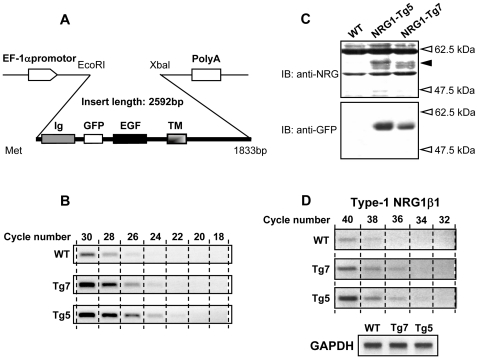
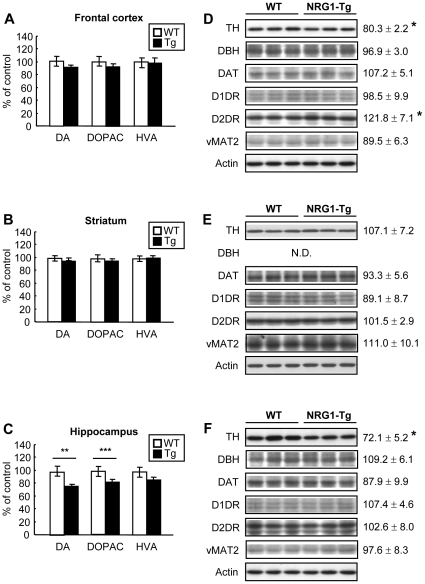
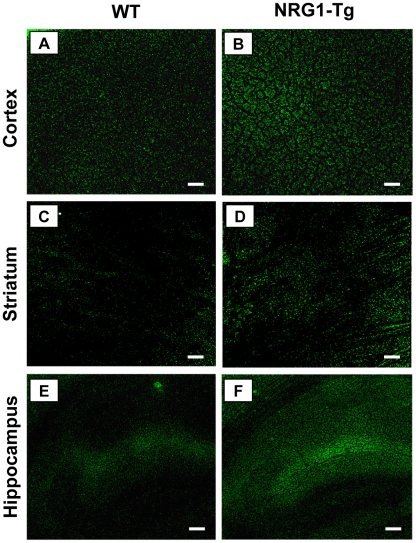
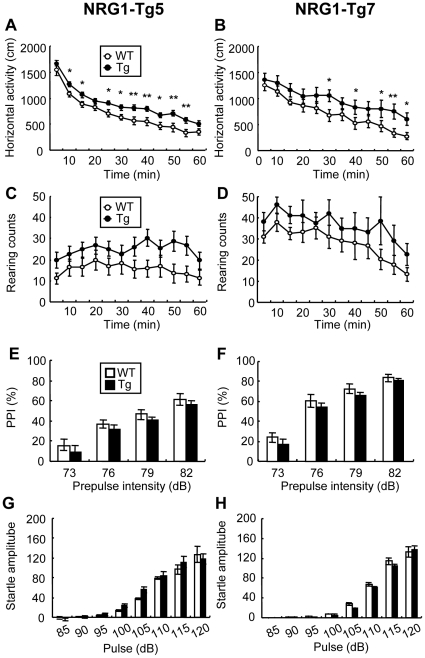
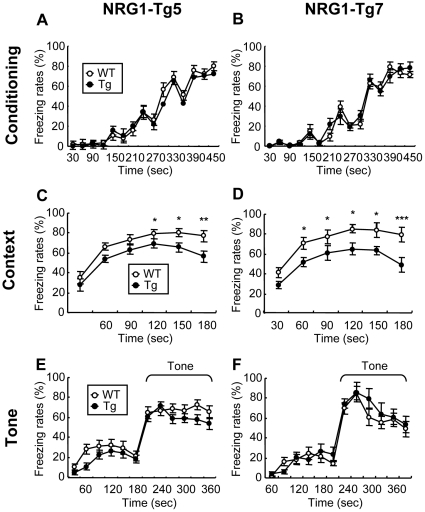
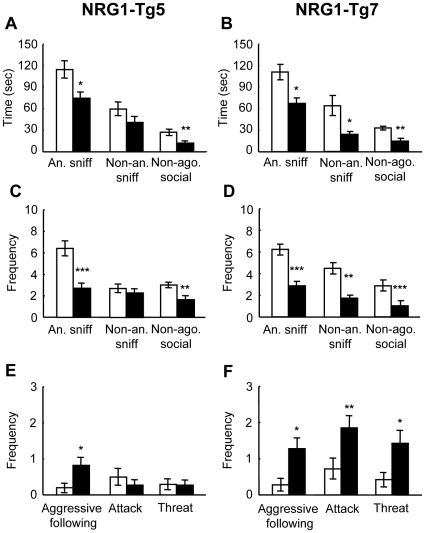
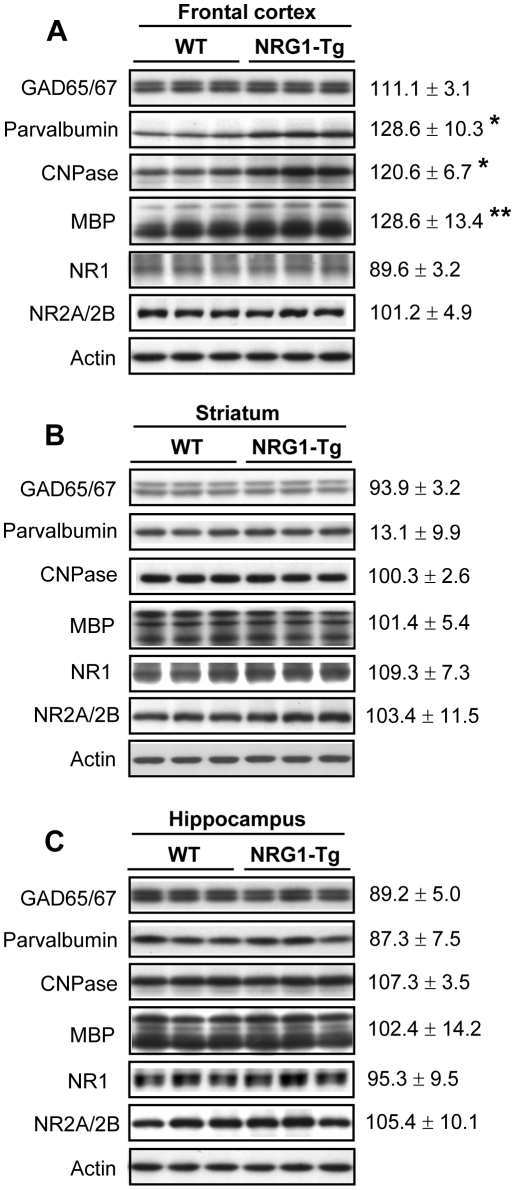
METHODOLOGY/PRINCIPAL FINDINGS: To assess the behavioral impact of hyper NRG1 signaling, we generated and analyzed two independent mouse transgenic (Tg) lines carrying the transgene of green fluorescent protein (GFP)-tagged type-1 NRG1 cDNA. The promoter of elongation-factor 1α gene drove ubiquitous expression of GFP-tagged NRG1 in the whole brain. As compared to control littermates, both heterozygous NRG1-Tg lines showed increased locomotor activity, a nonsignificant trend toward decreasing prepulse inhibition, and decreased context-dependent fear learning but exhibited normal levels of tone-dependent learning. In addition, social interaction scores in both Tg lines were reduced in an isolation-induced resident-intruder test. There were also phenotypic increases in a GABAergic marker (parvalbumin) as well as in myelination markers (myelin basic protein and 2',3'-cyclic nucleotide 3'-phosphodiesterase) in their frontal cortex, indicating the authenticity of NRG1 hyper-signaling, although there were marked decreases in tyrosine hydroxylase levels and dopamine content in the hippocampus.
These findings suggest that aberrant hyper-signals of NRG1 also disrupt various cognitive and behavioral processes. Thus, neuropathological implication of hyper NRG1 signaling in psychiatric diseases should be evaluated with further experimentation.
神经调节蛋白 1(NRG1)是精神分裂症的易感基因之一,参与 GABA 能和多巴胺能神经元的神经营养调节、髓鞘形成和 NMDA 受体功能。尸检研究经常表明,NRG1 表达或信号的增加与这种疾病有病理关联。然而,NRG1 信号的心理行为意义主要是通过使用单个 NRG1 剪接变体的功能减弱突变体小鼠进行研究。
方法/主要发现:为了评估 NRG1 信号超表达的行为影响,我们生成并分析了两个携带 GFP 标记的 1 型 NRG1 cDNA 转基因(Tg)的独立小鼠品系。延伸因子 1α 基因的启动子驱动 GFP 标记的 NRG1 在整个大脑中的普遍表达。与对照同窝仔相比,两种杂合 NRG1-Tg 系均表现出运动活性增加、前脉冲抑制减少的趋势不显著、情景依赖性恐惧学习减少,但表现出正常的音调依赖性学习。此外,在隔离诱导的居民入侵者测试中,两种 Tg 系的社交互动评分均降低。它们的前额叶皮层中 GABA 能标记物(parvalbumin)和髓鞘形成标记物(髓鞘碱性蛋白和 2',3'-环核苷酸 3'-磷酸二酯酶)也出现了表型增加,表明 NRG1 超信号的真实性,尽管海马中的酪氨酸羟化酶水平和多巴胺含量有明显下降。
这些发现表明,NRG1 的异常超信号也会破坏各种认知和行为过程。因此,应该通过进一步的实验来评估超 NRG1 信号在精神疾病中的神经病理学意义。