IPAP-Department of Pathophysiology and Allergy Research, Center of Pathophysiology, Infectiology, and Immunology, Medical University of Vienna, Vienna, Austria.
World Allergy Organ J. 2010 Jun;3(6):195-201. doi: 10.1097/WOX.0b013e3181e61ebf.
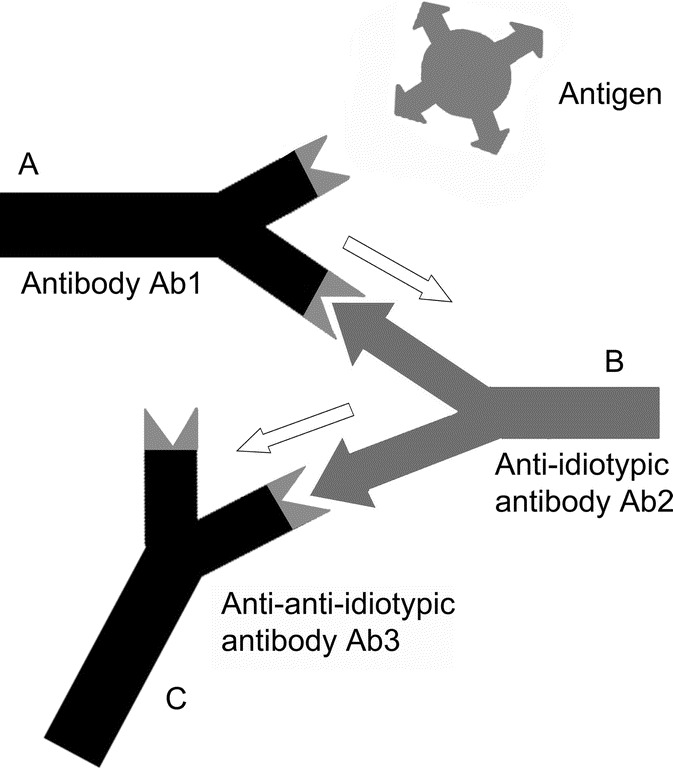
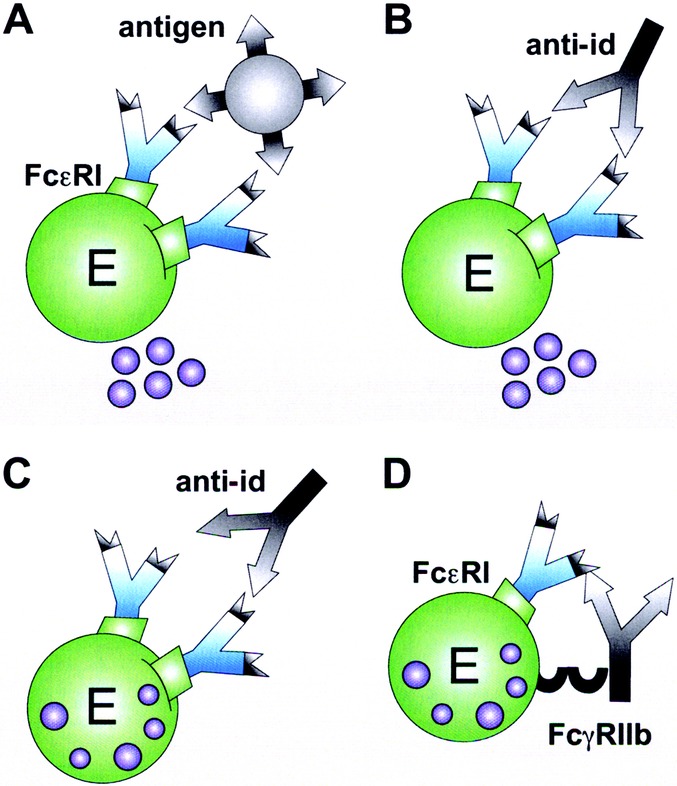
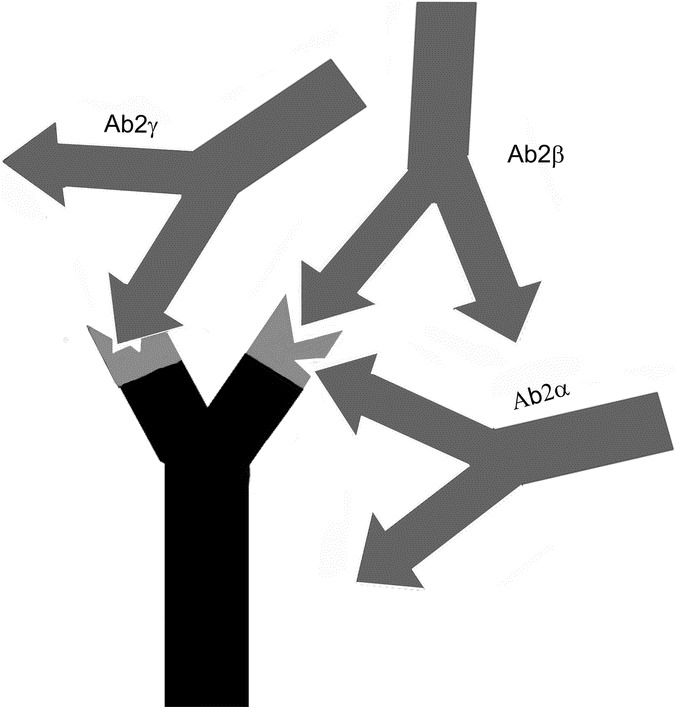
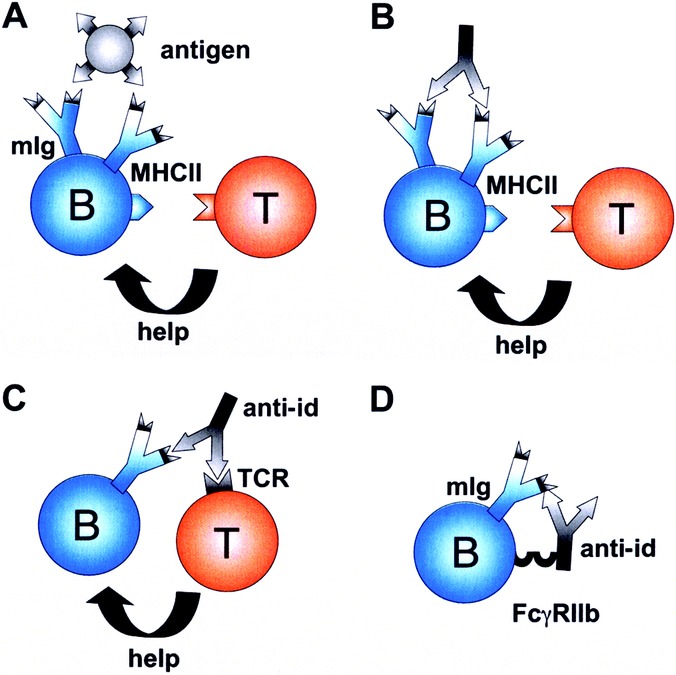
Anti-idiotypic antibodies (anti-ids) are part of natural immune responses with regulatory capacity. Their effect on an antigen-specific, so-called Ab1 antibody response, is dependent on 1) the original antigen, which they mirror, being Ab2 antibodies, and 2) their isotype. In the case of IgE-mediated allergy, natural anti-ids against allergen-specific IgE represent internal images of allergen molecules. A key biologic feature of allergens is that they can crosslink IgE, expressed by B-lymphocytes or passively bound via high affinity receptors to effector cells, which renders cellular activation. Therefore, the IgE cross linking capability of anti-ids determines whether they dampen or enhance immediate-type hypersensitivity. Correspondingly to classic antiallergen blocking IgG antibodies, anti-ids may also interact with inhibitory FcγRIIb receptors and, thereby, down-regulate T(H)2-type inflammation. Anti-ids and other B-cell epitope mimetics, like mimotopes and DARPins, represent antigen surrogates, which can be used for vaccination. Intriguingly, they may induce antibody responses without activating potentially proinflammatory, antiallergen T-lymphocytes. Taken together, collective evidence suggests that anti-ids, although representing immunologic classics, are a timeless concept in allergology.
抗独特型抗体(anti-ids)是具有调节能力的天然免疫反应的一部分。它们对特定抗原的所谓 Ab1 抗体反应的影响取决于 1)它们所模拟的原始抗原是 Ab2 抗体,以及 2)它们的同种型。在 IgE 介导的过敏反应中,针对过敏原特异性 IgE 的天然抗独特型抗体代表过敏原分子的内部图像。过敏原的一个关键生物学特征是它们可以交联 IgE,这些 IgE 由 B 淋巴细胞表达,或者通过高亲和力受体被动结合到效应细胞上,从而导致细胞激活。因此,抗独特型抗体的 IgE 交联能力决定了它们是抑制还是增强速发型超敏反应。与经典的抗过敏原阻断 IgG 抗体相对应,抗独特型抗体也可以与抑制性 FcγRIIb 受体相互作用,从而下调 T(H)2 型炎症。抗独特型抗体和其他 B 细胞表位模拟物,如模拟肽和 DARPins,代表抗原替代物,可用于疫苗接种。有趣的是,它们可以在不激活潜在促炎、抗过敏原 T 淋巴细胞的情况下诱导抗体反应。综上所述,大量证据表明,抗独特型抗体虽然是免疫经典,但在变态反应学中是一个永恒的概念。