Department of Otorhinolaryngology, Medical University of Vienna, Vienna, Austria.
Division of Immunopathology, Department of Pathophysiology and Allergy Research, Center for Pathophysiology, Infectiology and Immunology, Medical University of Vienna, Vienna, Austria.
Front Immunol. 2019 Jan 17;9:3131. doi: 10.3389/fimmu.2018.03131. eCollection 2018.
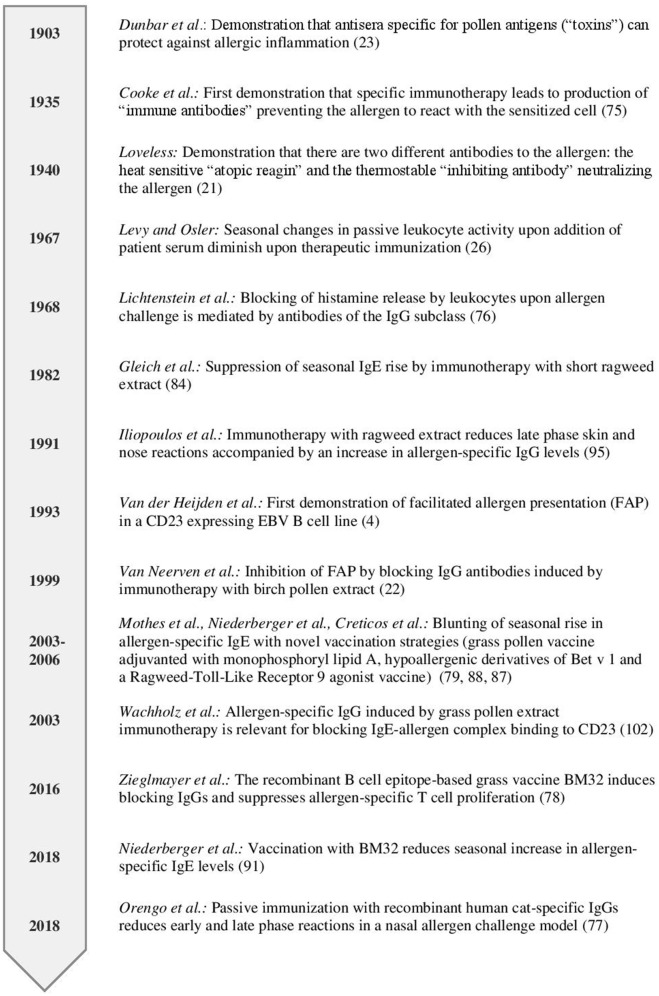
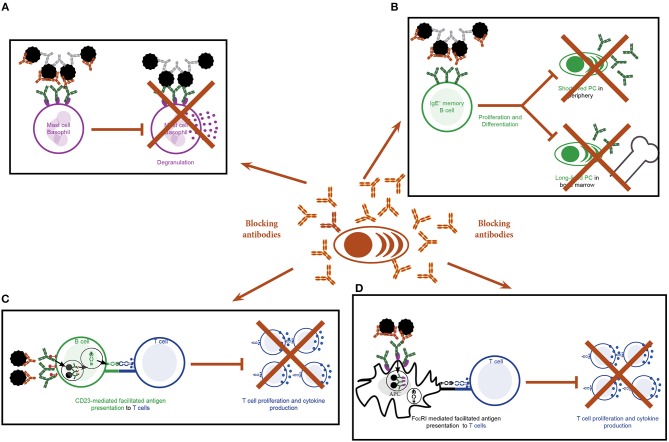
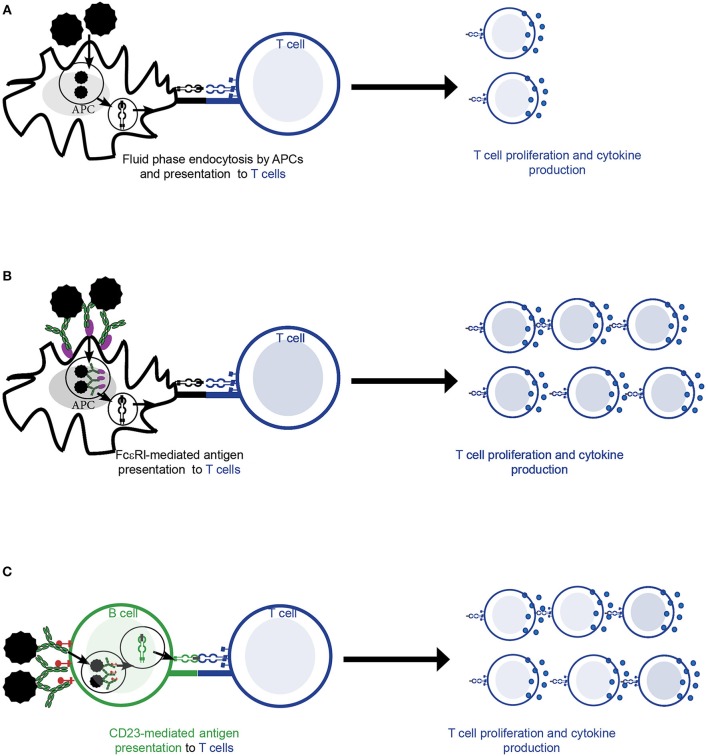
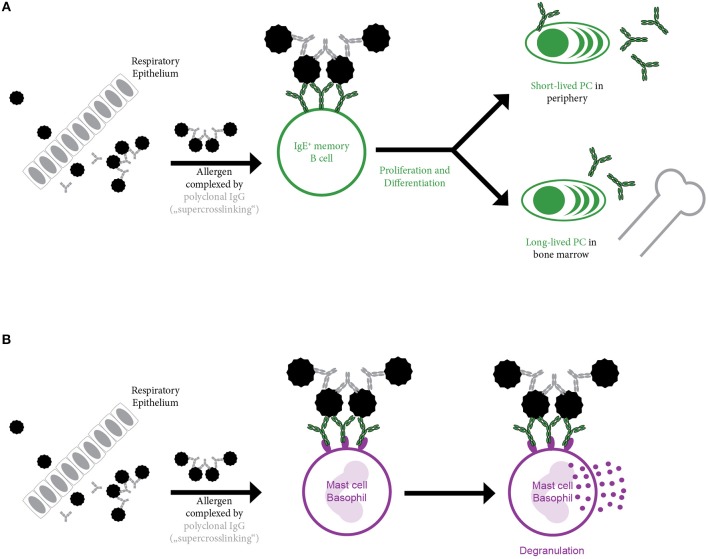
Immunoglobulin E (IgE)-associated allergy is the most common immunologically-mediated hypersensensitivity disease. It is based on the production of IgE antibodies and T cell responses against innocuous antigens (i.e., allergens) and subsequent allergen-induced inflammation in genetically pre-disposed individuals. While allergen exposure in sensitized subjects mainly boosts IgE production and T cell activation, successful allergen-specific immunotherapy (AIT) induces the production of allergen-specific IgG antibodies and reduces T cell activity. Under both circumstances, the resulting allergen-antibody complexes play a major role in modulating secondary allergen-specific immune responses: Allergen-IgE complexes induce mast cell and basophil activation and perpetuate allergen-specific T cell responses via presentation of allergen by allergen presenting cells to T cells, a process called IgE-facilitated antigen presentation (FAP). In addition, they may induce activation of IgE memory B cells. Allergen-induced production of specific IgGs usually exerts ameliorating effects but under certain circumstances may also contribute to exacerbation. Allergen-specific IgG antibodies induced by AIT which compete with IgE for allergen binding (i.e., blocking IgG) inhibit formation of IgE-allergen complexes and reduce activation of effector cells, B cells and indirectly T cells as FAP is prevented. Experimental data provide evidence that by binding of allergen-specific IgG to epitopes different from those recognized by IgE, allergen-specific IgG may enhance IgE-mediated activation of mast cells, basophils and allergen-specific IgE B cells. In this review we provide an overview about the role of allergen-specific antibodies in regulating secondary allergen-specific immune responses.
免疫球蛋白 E(IgE)相关过敏是最常见的免疫介导的超敏反应性疾病。它基于 IgE 抗体和针对无害抗原(即过敏原)的 T 细胞反应的产生,以及随后在遗传易感个体中发生的过敏原诱导的炎症。虽然致敏个体中的过敏原暴露主要增强 IgE 产生和 T 细胞激活,但成功的过敏原特异性免疫治疗(AIT)会诱导过敏原特异性 IgG 抗体的产生并降低 T 细胞活性。在这两种情况下,产生的过敏原-抗体复合物在调节二次过敏原特异性免疫反应中起着主要作用:过敏原-IgE 复合物通过过敏原呈递细胞向 T 细胞呈递过敏原诱导肥大细胞和嗜碱性粒细胞激活,并维持过敏原特异性 T 细胞反应,这一过程称为 IgE 促进的抗原呈递(FAP)。此外,它们可能诱导 IgE 记忆 B 细胞的激活。过敏原诱导的特异性 IgG 的产生通常会产生缓解作用,但在某些情况下也可能导致恶化。AIT 诱导产生的与 IgE 竞争过敏原结合的特异性 IgG 抗体(即阻断 IgG)抑制 IgE-过敏原复合物的形成,并减少效应细胞、B 细胞和间接 T 细胞的激活,因为 FAP 被阻止。实验数据提供了证据表明,通过过敏原特异性 IgG 与不同于 IgE 识别的表位结合,过敏原特异性 IgG 可增强 IgE 介导的肥大细胞、嗜碱性粒细胞和过敏原特异性 IgE B 细胞的激活。在这篇综述中,我们概述了过敏原特异性抗体在调节二次过敏原特异性免疫反应中的作用。