State Key Laboratory of Agrobiotechnology, College of Biological Sciences, China Agricultural University, Beijing, China.
PLoS Genet. 2010 Dec 2;6(12):e1001232. doi: 10.1371/journal.pgen.1001232.
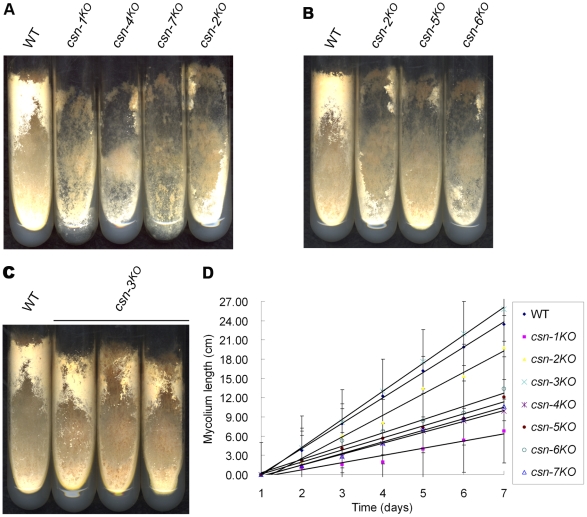
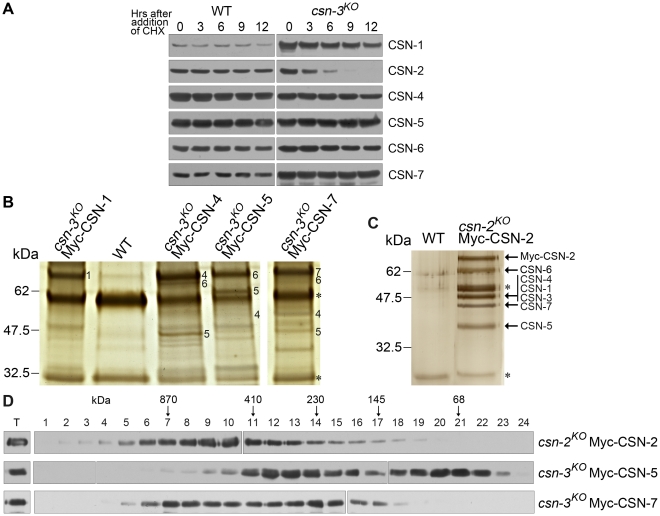
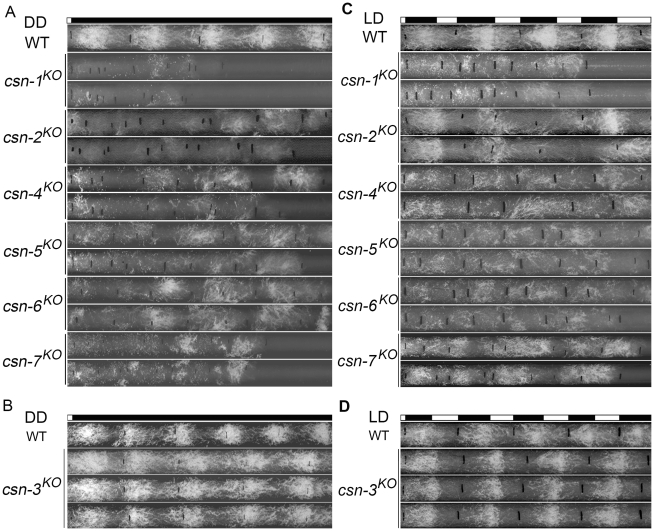
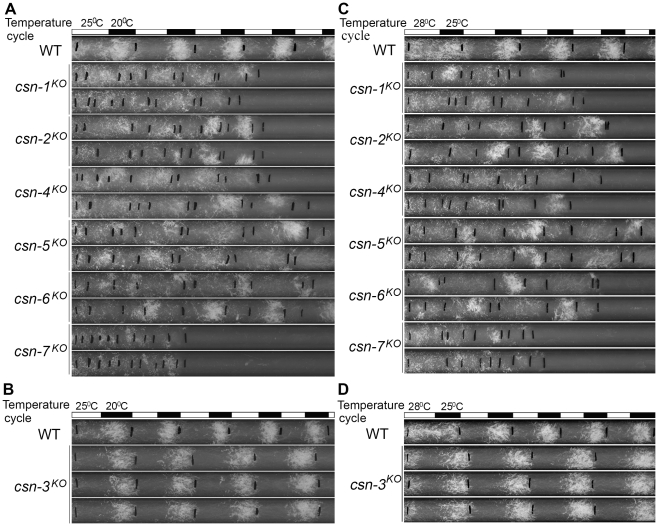
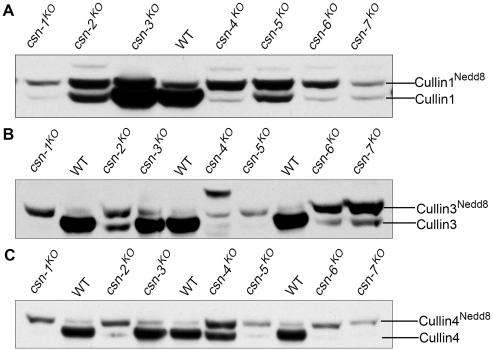
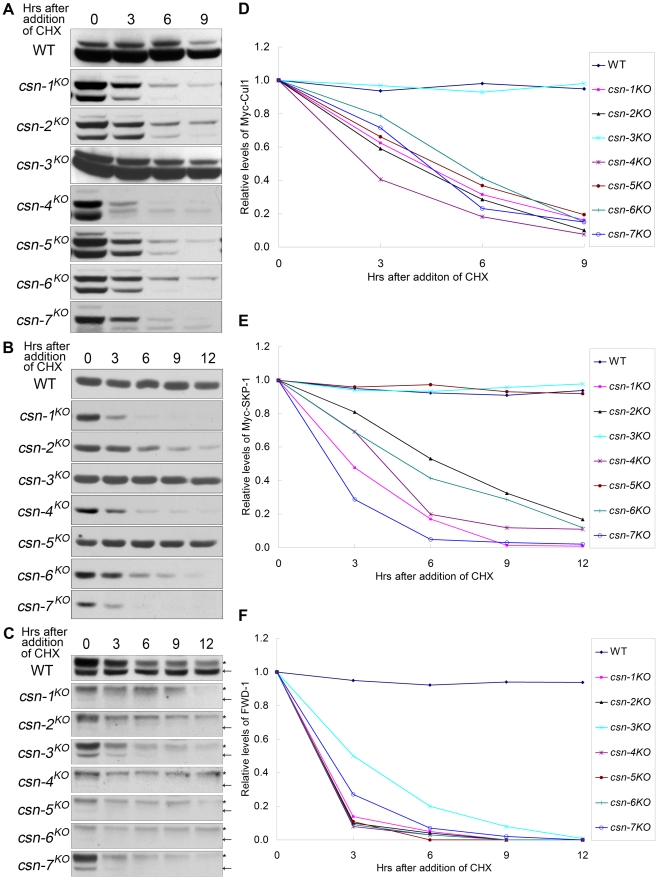
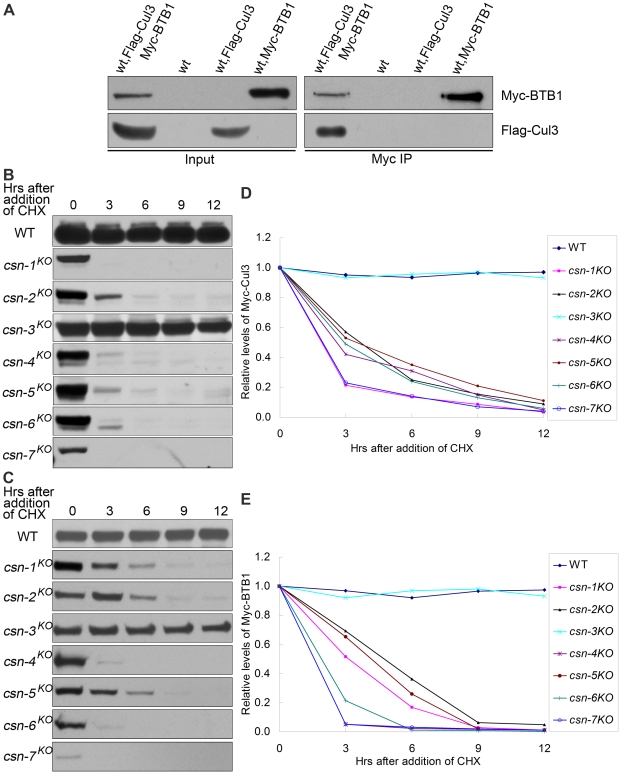
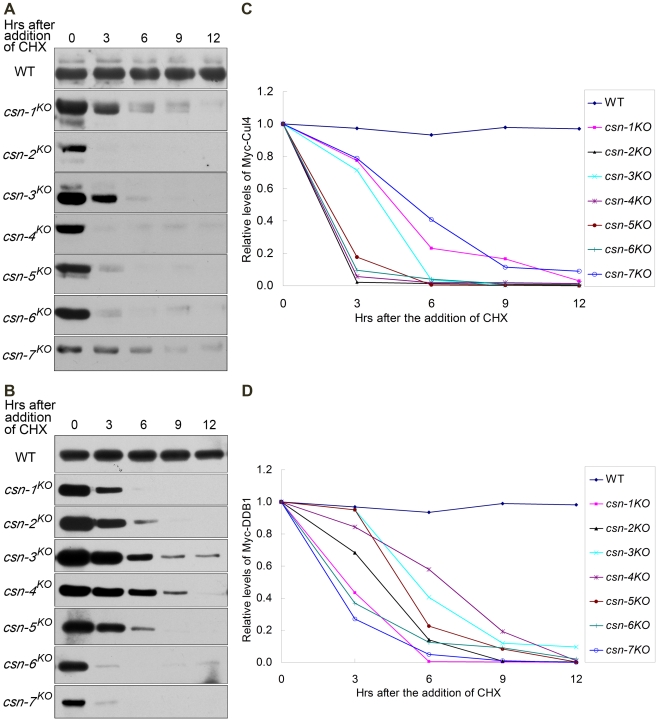
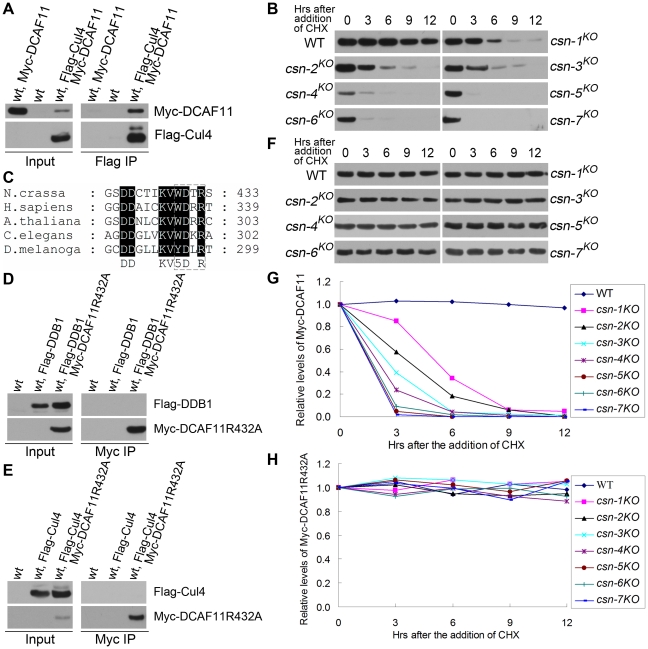
The Cop9 signalosome (CSN) is an evolutionarily conserved multifunctional complex that controls ubiquitin-dependent protein degradation in eukaryotes. We found seven CSN subunits in Neurospora crassa in a previous study, but only one subunit, CSN-2, was functionally characterized. In this study, we created knockout mutants for the remaining individual CSN subunits in N. crassa. By phenotypic observation, we found that loss of CSN-1, CSN-2, CSN-4, CSN-5, CSN-6, or CSN-7 resulted in severe defects in growth, conidiation, and circadian rhythm; the defect severity was gene-dependent. Unexpectedly, CSN-3 knockout mutants displayed the same phenotype as wild-type N. crassa. Consistent with these phenotypic observations, deneddylation of cullin proteins in csn-1, csn-2, csn-4, csn-5, csn-6, or csn-7 mutants was dramatically impaired, while deletion of csn-3 did not cause any alteration in the neddylation/deneddylation state of cullins. We further demonstrated that CSN-1, CSN-2, CSN-4, CSN-5, CSN-6, and CSN-7, but not CSN-3, were essential for maintaining the stability of Cul1 in SCF complexes and Cul3 and BTB proteins in Cul3-BTB E3s, while five of the CSN subunits, but not CSN-3 and CSN-5, were also required for maintaining the stability of SKP-1 in SCF complexes. All seven CSN subunits were necessary for maintaining the stability of Cul4-DDB1 complexes. In addition, CSN-3 was also required for maintaining the stability of the CSN-2 subunit and FWD-1 in the SCF(FWD-1) complex. Together, these results not only provide functional insights into the different roles of individual subunits in the CSN complex, but also establish a functional framework for understanding the multiple functions of the CSN complex in biological processes.
Cop9 信号小体(CSN)是一种进化上保守的多功能复合物,它控制着真核生物中泛素依赖性蛋白的降解。在之前的一项研究中,我们在粗糙脉孢菌中发现了七个 CSN 亚基,但只有一个亚基 CSN-2 具有功能特征。在本研究中,我们创建了粗糙脉孢菌中剩余单个 CSN 亚基的敲除突变体。通过表型观察,我们发现 CSN-1、CSN-2、CSN-4、CSN-5、CSN-6 或 CSN-7 的缺失导致生长、分生孢子形成和昼夜节律严重缺陷;缺陷严重程度与基因有关。出乎意料的是,CSN-3 敲除突变体表现出与野生型粗糙脉孢菌相同的表型。与这些表型观察一致,CSN-1、CSN-2、CSN-4、CSN-5、CSN-6 或 CSN-7 突变体中 Cul 蛋白的去泛素化显著受损,而 CSN-3 的缺失不会导致 Cul 蛋白的 neddylation/deneddylation 状态发生任何改变。我们进一步证明,CSN-1、CSN-2、CSN-4、CSN-5、CSN-6 和 CSN-7,但不是 CSN-3,对于维持 SCF 复合物中 Cul1 和 Cul3-BTB E3 中 Cul3 和 BTB 蛋白的稳定性是必需的,而 CSN 亚基中的五个,而不是 CSN-3 和 CSN-5,对于维持 SCF 复合物中 SKP-1 的稳定性也是必需的。七个 CSN 亚基都需要维持 Cul4-DDB1 复合物的稳定性。此外,CSN-3 对于维持 CSN-2 亚基和 SCF(FWD-1)复合物中的 FWD-1 的稳定性也是必需的。总之,这些结果不仅为单个亚基在 CSN 复合物中的不同作用提供了功能见解,而且为理解 CSN 复合物在生物过程中的多种功能建立了一个功能框架。