Cancer Genomics Center, Department of Medical Genetics, Hubrecht Institute and University Medical Center Utrecht, Utrecht, The Netherlands.
PLoS One. 2010 Nov 30;5(11):e15092. doi: 10.1371/journal.pone.0015092.
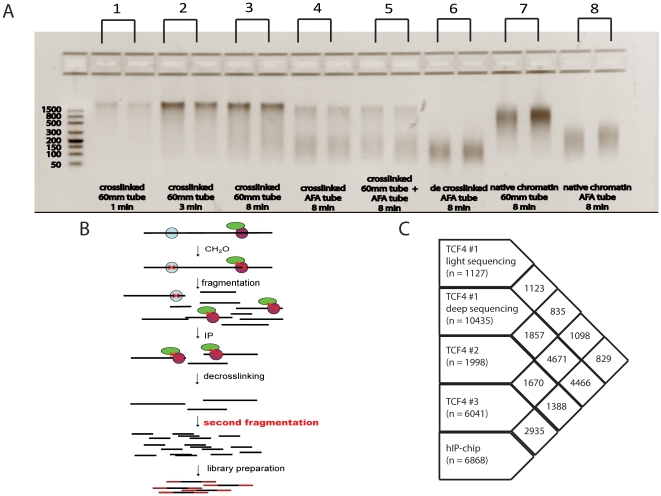
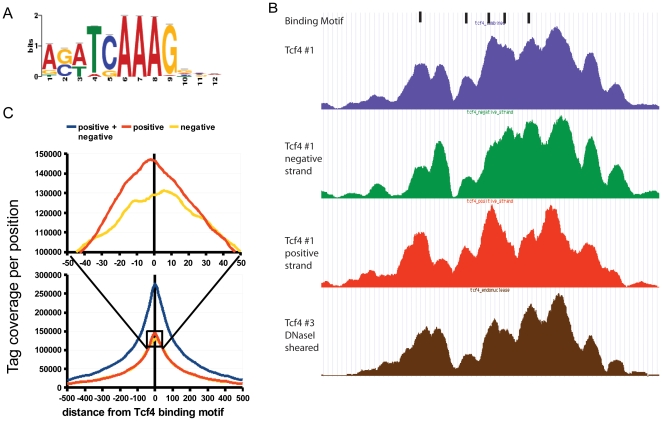
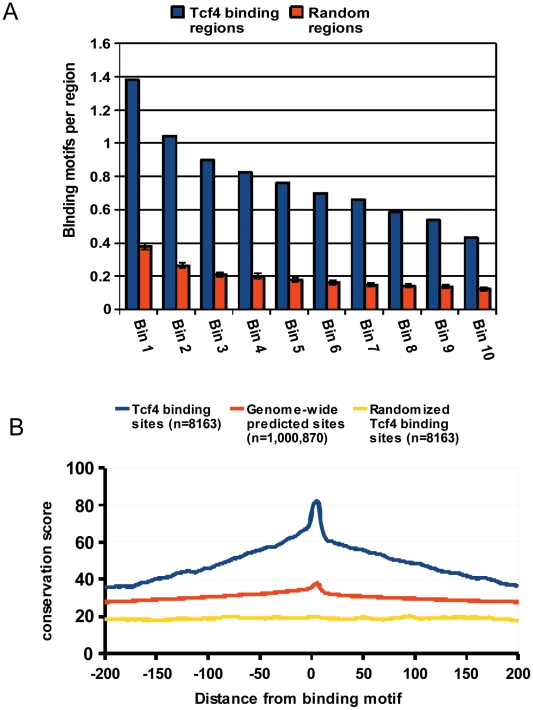
Immunoprecipitated crosslinked protein-DNA fragments typically range in size from several hundred to several thousand base pairs, with a significant part of chromatin being much longer than the optimal length for next-generation sequencing (NGS) procedures. Because these larger fragments may be non-random and represent relevant biology that may otherwise be missed, but also because they represent a significant fraction of the immunoprecipitated material, we designed a double-fragmentation ChIP-seq procedure. After conventional crosslinking and immunoprecipitation, chromatin is de-crosslinked and sheared a second time to concentrate fragments in the optimal size range for NGS. Besides the benefits of increased chromatin yields, the procedure also eliminates a laborious size-selection step. We show that the double-fragmentation ChIP-seq approach allows for the generation of biologically relevant genome-wide protein-DNA binding profiles from sub-nanogram amounts of TCF7L2/TCF4, TBP and H3K4me3 immunoprecipitated material. Although optimized for the AB/SOLiD platform, the same approach may be applied to other platforms.
免疫沉淀交联蛋白-DNA 片段通常大小在几百到几千个碱基对之间,而大部分染色质的长度都超过了下一代测序(NGS)程序的最佳长度。由于这些较大的片段可能是非随机的,代表了可能被遗漏的相关生物学信息,但也因为它们代表了免疫沉淀物质的很大一部分,所以我们设计了一种双片段化 ChIP-seq 程序。在常规交联和免疫沉淀之后,染色质去交联并再次剪切,以将片段集中在适合 NGS 的最佳大小范围内。除了增加染色质产量的好处外,该程序还消除了繁琐的大小选择步骤。我们表明,双片段化 ChIP-seq 方法允许从亚纳克数量的 TCF7L2/TCF4、TBP 和 H3K4me3 免疫沉淀物质中生成与生物学相关的全基因组蛋白-DNA 结合图谱。虽然该方法针对 AB/SOLiD 平台进行了优化,但也可以应用于其他平台。