Institute of Molecular Medicine and Cell Research, Faculty of Medicine, University of Freiburg, Stefan-Meier-Str. 17, 79104, Freiburg, Germany.
Faculty of Biology, University of Freiburg, Schänzlestraße 1, 79104, Freiburg, Germany.
Oncogene. 2020 May;39(19):3893-3909. doi: 10.1038/s41388-020-1259-7. Epub 2020 Mar 20.
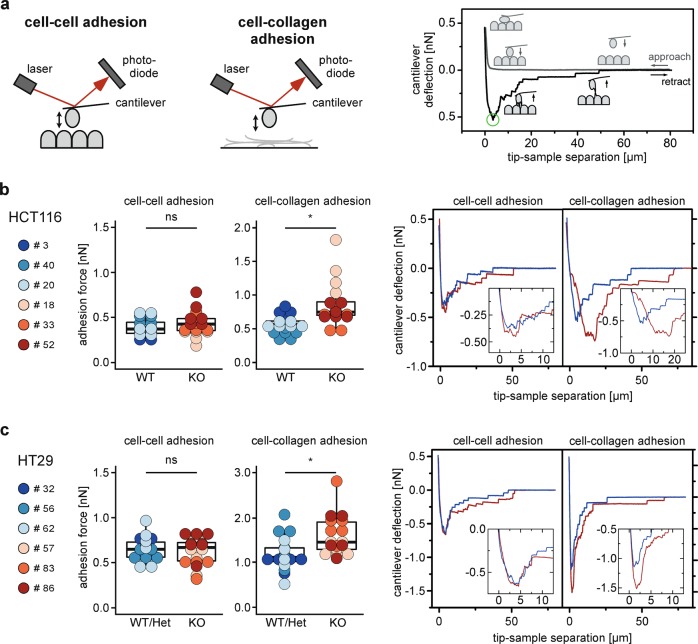
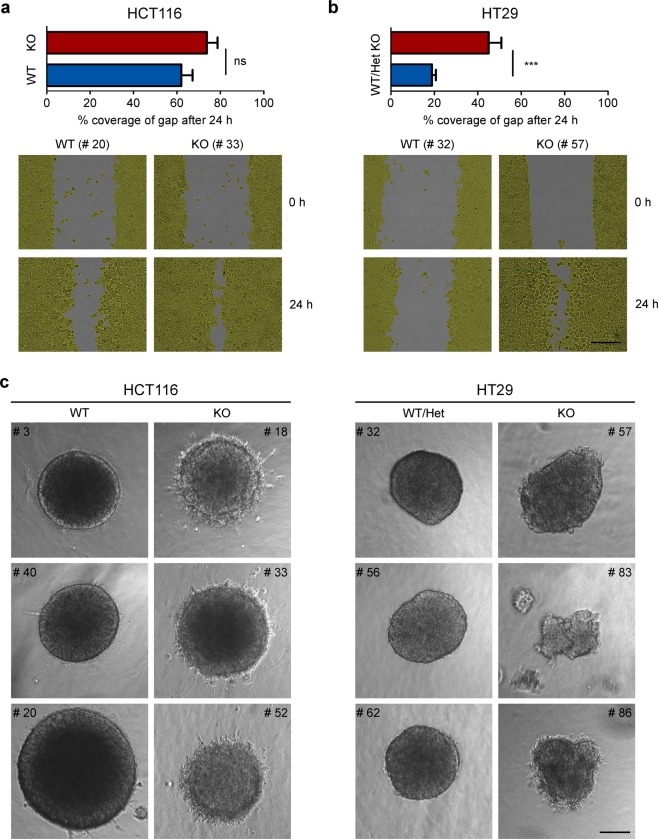
The transcription factor TCF7L2 is indispensable for intestinal tissue homeostasis where it transmits mitogenic Wnt/β-Catenin signals in stem and progenitor cells, from which intestinal tumors arise. Yet, TCF7L2 belongs to the most frequently mutated genes in colorectal cancer (CRC), and tumor-suppressive functions of TCF7L2 were proposed. This apparent paradox warrants to clarify the role of TCF7L2 in colorectal carcinogenesis. Here, we investigated TCF7L2 dependence/independence of CRC cells and the cellular and molecular consequences of TCF7L2 loss-of-function. By genome editing we achieved complete TCF7L2 inactivation in several CRC cell lines without loss of viability, showing that CRC cells have widely lost the strict requirement for TCF7L2. TCF7L2 deficiency impaired G1/S progression, reminiscent of the physiological role of TCF7L2. In addition, TCF7L2-negative cells exhibited morphological changes, enhanced migration, invasion, and collagen adhesion, albeit the severity of the phenotypic alterations manifested in a cell-line-specific fashion. To provide a molecular framework for the observed cellular changes, we performed global transcriptome profiling and identified gene-regulatory networks in which TCF7L2 positively regulates the proto-oncogene MYC, while repressing the cell cycle inhibitors CDKN2C/CDKN2D. Consistent with its function in curbing cell motility and invasion, TCF7L2 directly suppresses the pro-metastatic transcription factor RUNX2 and impinges on the expression of cell adhesion molecules. Altogether, we conclude that the proliferation-stimulating activity of TCF7L2 persists in CRC cells. In addition, TCF7L2 acts as invasion suppressor. Despite its negative impact on cell cycle progression, TCF7L2 loss-of-function may thereby increase malignancy, which could explain why TCF7L2 is mutated in a sizeable fraction of colorectal tumors.
转录因子 TCF7L2 对于肠道组织稳态是不可或缺的,它在干细胞和祖细胞中传递有丝分裂 Wnt/β-连环蛋白信号,而肠道肿瘤正是由此产生的。然而,TCF7L2 属于结直肠癌(CRC)中最常突变的基因之一,并且提出了 TCF7L2 的肿瘤抑制功能。这一明显的悖论需要澄清 TCF7L2 在结直肠肿瘤发生中的作用。在这里,我们研究了 TCF7L2 对 CRC 细胞的依赖性/独立性以及 TCF7L2 功能丧失的细胞和分子后果。通过基因组编辑,我们在没有丧失活力的情况下在几种 CRC 细胞系中实现了 TCF7L2 的完全失活,表明 CRC 细胞已经广泛失去了对 TCF7L2 的严格要求。TCF7L2 缺陷会损害 G1/S 进展,这让人联想到 TCF7L2 的生理作用。此外,TCF7L2 阴性细胞表现出形态变化,增强了迁移、侵袭和胶原黏附,尽管表型改变的严重程度以细胞系特异性的方式表现出来。为了为观察到的细胞变化提供分子框架,我们进行了全基因组转录组谱分析,并确定了 TCF7L2 正向调节原癌基因 MYC、同时抑制细胞周期抑制剂 CDKN2C/CDKN2D 的基因调控网络。与它在抑制细胞运动和侵袭中的作用一致,TCF7L2 直接抑制促转移转录因子 RUNX2,并影响细胞黏附分子的表达。总的来说,我们得出结论,TCF7L2 的增殖刺激活性在 CRC 细胞中仍然存在。此外,TCF7L2 作为侵袭抑制剂发挥作用。尽管它对细胞周期进程有负面影响,但 TCF7L2 功能丧失可能会增加恶性程度,这可以解释为什么 TCF7L2 在相当一部分结直肠肿瘤中发生突变。