Stephanou Anastasis, Latchman David S
Medical Molecular Biology Unit, Institute of Child Health, University College London, 30 Guilford Street, London WC1N 1EH, UK.
Biochem Res Int. 2011;2011:238601. doi: 10.1155/2011/238601. Epub 2010 Sep 15.
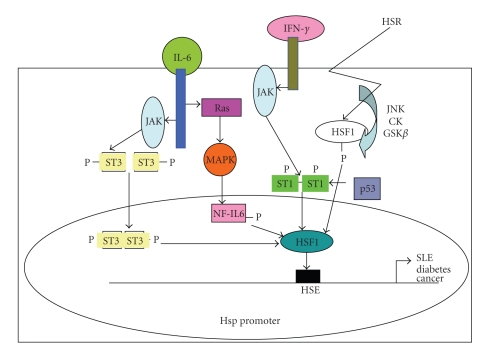
Heat-shock proteins (Hsps) are molecular chaperones that are ubiquitously expressed but are also induced in cells exposed to stressful stimuli. Hsps have been implicated in the induction and propagation of several diseases. This paper focuses on regulatory factors that control the transcription of the genes encoding Hsps. We also highlight how distinct transcription factors are able to interact and modulate Hsps in different pathological states. Thus, a better understanding of the complex signaling pathways regulating Hsp expression may lead to novel therapeutic targets.
热休克蛋白(Hsps)是分子伴侣,它们在细胞中普遍表达,但在受到应激刺激的细胞中也会被诱导产生。Hsps与多种疾病的诱导和传播有关。本文重点关注控制Hsps编码基因转录的调控因子。我们还强调了不同的转录因子如何在不同的病理状态下相互作用并调节Hsps。因此,更好地理解调节Hsp表达的复杂信号通路可能会带来新的治疗靶点。