Center for Neurodegeneration and Experimental Therapeutics, Department of Neurology, University of Alabama at Birmingham, Birmingham, AL 35294, USA.
Cell Death Dis. 2010;1(1):e2. doi: 10.1038/cddis.2009.4.
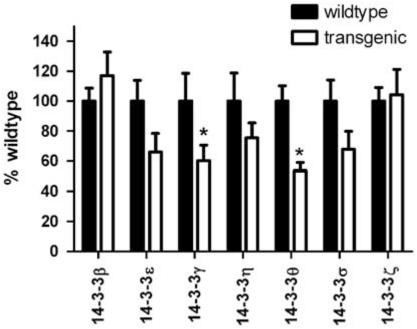
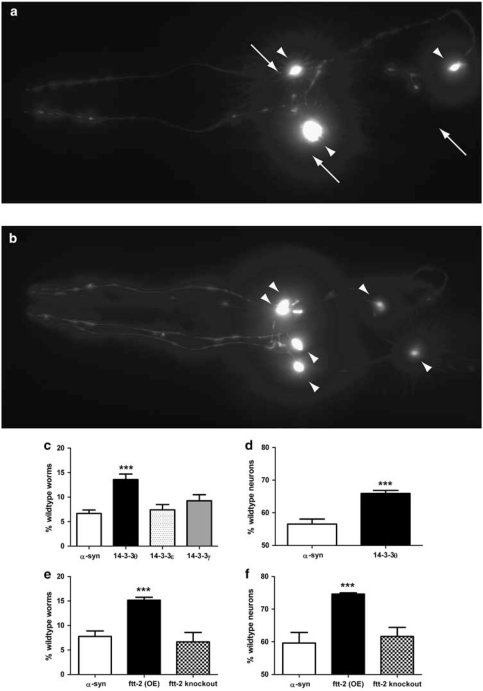
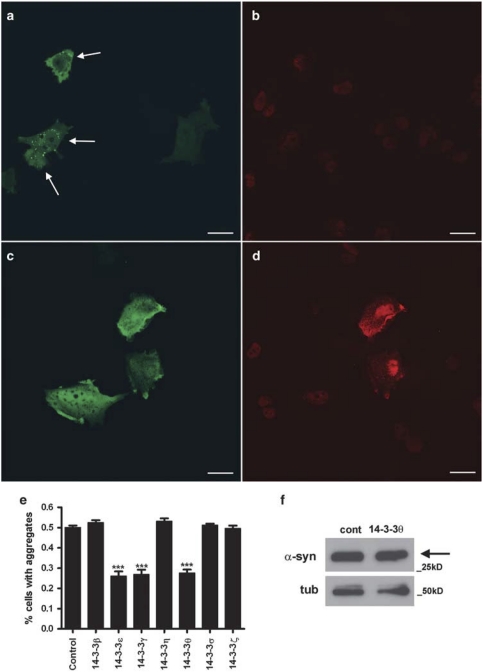
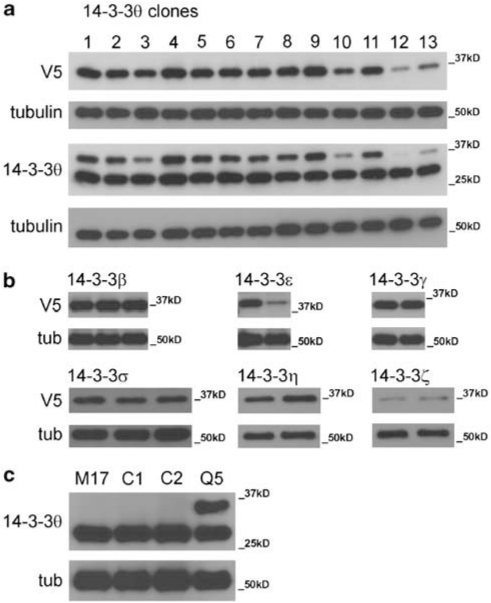
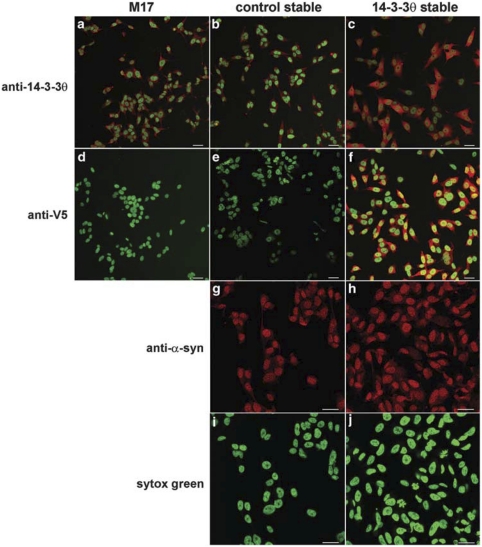
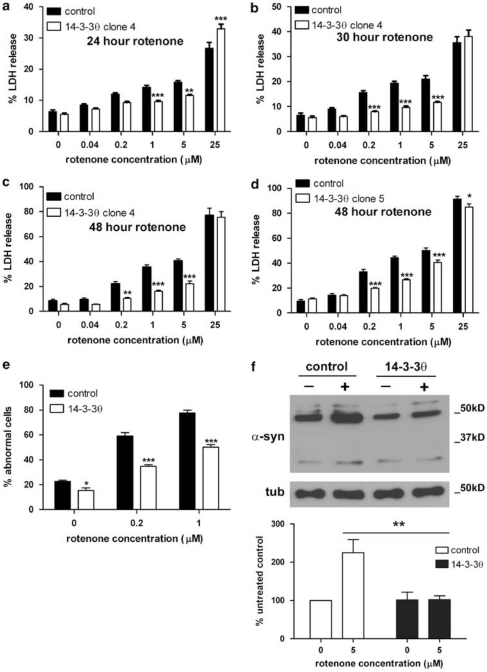
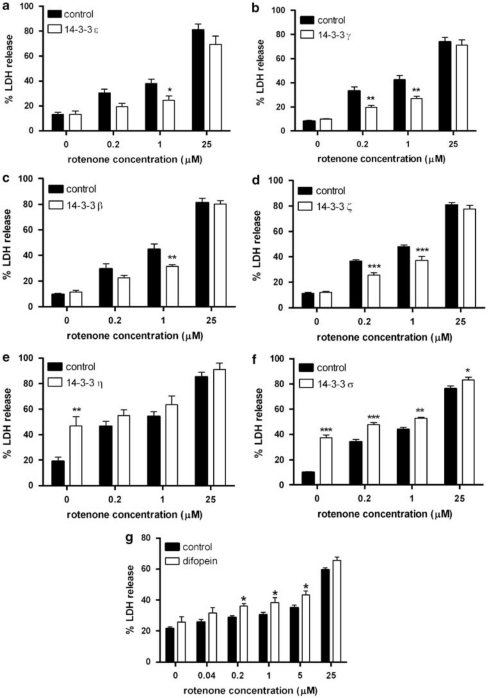
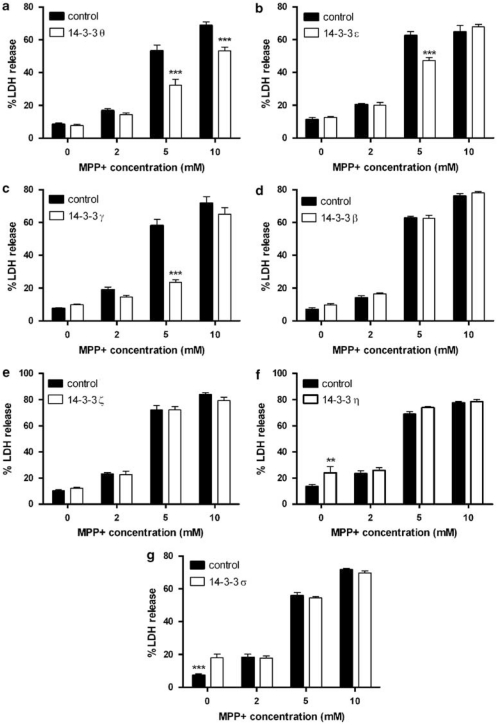
14-3-3 proteins are important negative regulators of cell death pathways. Recent studies have revealed alterations in 14-3-3s in Parkinson's disease (PD) and the ability of 14-3-3s to interact with alpha-synuclein (α-syn), a protein central to PD pathophysiology. In a transgenic α-syn mouse model, we found reduced expression of 14-3-3θ, ε, and γ. These same isoforms prevent α-syn inclusion formation in an H4 neuroglioma cell model. Using dopaminergic cell lines stably overexpressing each 14-3-3 isoform, we found that overexpression of 14-3-3θ, ε, or γ led to resistance to both rotenone and 1-methyl-4-phenylpyridinium (MPP(+)), while other isoforms were not protective against both toxins. Inhibition of a single protective isoform, 14-3-3θ, by shRNA did not increase vulnerability to neurotoxic injury, but toxicity was enhanced by broad-based inhibition of 14-3-3 action with the peptide inhibitor difopein. Using a transgenic C. elegans model of PD, we confirmed the ability of both human 14-3-3θ and a C. elegans 14-3-3 homolog (ftt-2) to protect dopaminergic neurons from α-syn toxicity. Collectively, these data show a strong neuroprotective effect of enhanced 14-3-3 expression - particularly of the 14-3-3θ, ε, and γ isoforms - in multiple cellular and animal models of PD, and point to the potential value of these proteins in the development of neuroprotective therapies for human PD.
14-3-3 蛋白是细胞死亡途径的重要负调控因子。最近的研究表明,帕金森病(PD)中 14-3-3 发生改变,并且 14-3-3 能够与α-突触核蛋白(α-syn)相互作用,α-syn 是 PD 病理生理学的关键蛋白。在转基因α-syn 小鼠模型中,我们发现 14-3-3θ、ε 和 γ 的表达减少。这些相同的同工型可防止α-syn 在 H4 神经胶质瘤细胞模型中形成包涵体。使用稳定过表达每种 14-3-3 同工型的多巴胺能细胞系,我们发现 14-3-3θ、ε 或 γ 的过表达可导致对鱼藤酮和 1-甲基-4-苯基吡啶(MPP(+))的抗性,而其他同工型则不能对两种毒素都有保护作用。通过 shRNA 抑制单一保护性同工型 14-3-3θ 不会增加对神经毒性损伤的易感性,但用肽抑制剂 difopein 广泛抑制 14-3-3 作用会增强毒性。使用 PD 的转基因秀丽隐杆线虫模型,我们证实了人 14-3-3θ 和秀丽隐杆线虫 14-3-3 同源物(ftt-2)均有能力保护多巴胺能神经元免受α-syn 毒性的影响。总的来说,这些数据表明增强 14-3-3 表达 - 特别是 14-3-3θ、ε 和 γ 同工型 - 在多种细胞和动物 PD 模型中具有很强的神经保护作用,并指出这些蛋白质在开发人类 PD 的神经保护疗法方面具有潜在价值。