Zoccolan Davide, Graham Brett J, Cox David D
The Rowland Institute at Harvard, Harvard University Cambridge, MA, USA.
Front Neurosci. 2010 Nov 29;4:193. doi: 10.3389/fnins.2010.00193. eCollection 2010.
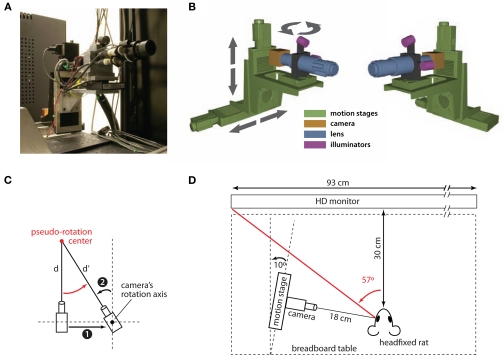
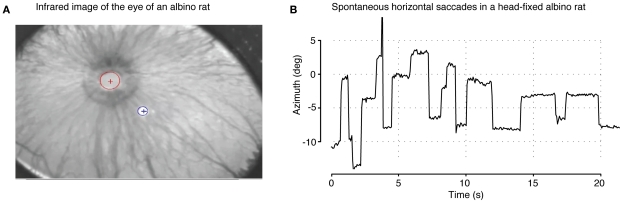
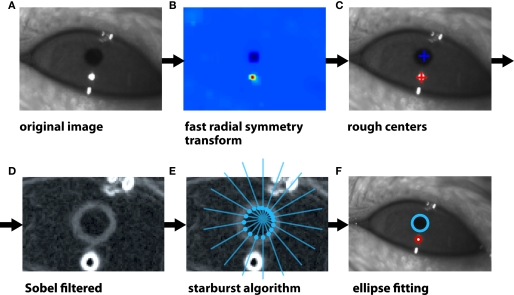
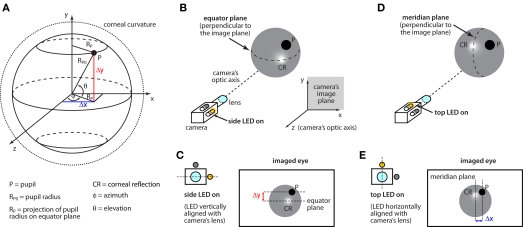
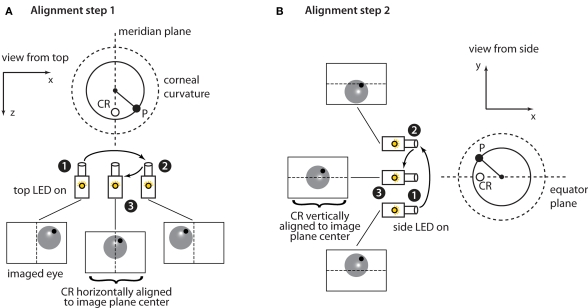
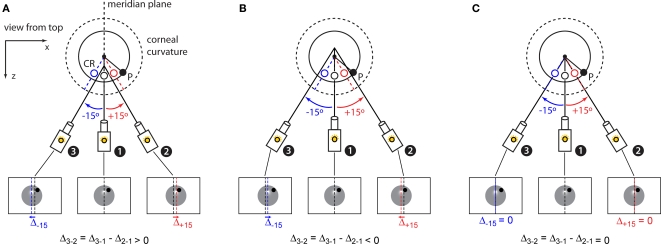
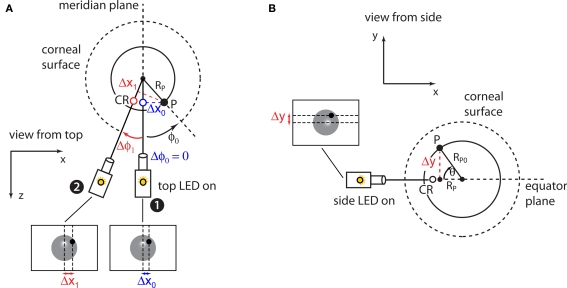
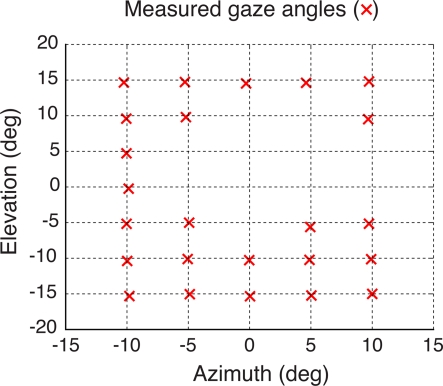
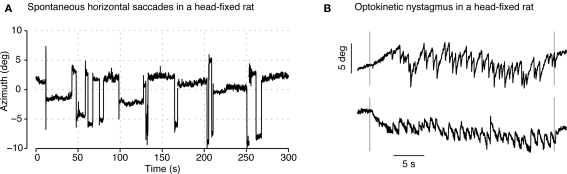
Much of neurophysiology and vision science relies on careful measurement of a human or animal subject's gaze direction. Video-based eye trackers have emerged as an especially popular option for gaze tracking, because they are easy to use and are completely non-invasive. However, video eye trackers typically require a calibration procedure in which the subject must look at a series of points at known gaze angles. While it is possible to rely on innate orienting behaviors for calibration in some non-human species, other species, such as rodents, do not reliably saccade to visual targets, making this form of calibration impossible. To overcome this problem, we developed a fully automated infrared video eye-tracking system that is able to quickly and accurately calibrate itself without requiring co-operation from the subject. This technique relies on the optical geometry of the cornea and uses computer-controlled motorized stages to rapidly estimate the geometry of the eye relative to the camera. The accuracy and precision of our system was carefully measured using an artificial eye, and its capability to monitor the gaze of rodents was verified by tracking spontaneous saccades and evoked oculomotor reflexes in head-fixed rats (in both cases, we obtained measurements that are consistent with those found in the literature). Overall, given its fully automated nature and its intrinsic robustness against operator errors, we believe that our eye-tracking system enhances the utility of existing approaches to gaze-tracking in rodents and represents a valid tool for rodent vision studies.
神经生理学和视觉科学的许多内容都依赖于对人类或动物受试者注视方向的精确测量。基于视频的眼动仪已成为注视跟踪中特别受欢迎的选择,因为它们易于使用且完全无创。然而,视频眼动仪通常需要一个校准程序,在此过程中受试者必须注视一系列已知注视角度的点。虽然在某些非人类物种中可以依靠先天的定向行为进行校准,但其他物种,如啮齿动物,不能可靠地向视觉目标进行扫视,使得这种校准形式无法实现。为了克服这个问题,我们开发了一种全自动红外视频眼动跟踪系统,该系统能够快速准确地自行校准,而无需受试者的配合。这项技术依赖于角膜的光学几何形状,并使用计算机控制的电动平台来快速估计眼睛相对于相机的几何形状。我们使用人工眼仔细测量了系统的准确性和精度,并通过跟踪头部固定大鼠的自发扫视和诱发的动眼反射,验证了其监测啮齿动物注视的能力(在这两种情况下,我们获得的测量结果与文献中的结果一致)。总体而言,鉴于其全自动性质以及对操作员错误的内在鲁棒性,我们相信我们的眼动跟踪系统提高了现有啮齿动物注视跟踪方法的实用性,并代表了一种用于啮齿动物视觉研究的有效工具。