Govan H L, Valles-Ayoub Y, Braun J
Department of Pathology, UCLA School of Medicine 90024-1732.
Nucleic Acids Res. 1990 Jul 11;18(13):3823-30. doi: 10.1093/nar/18.13.3823.
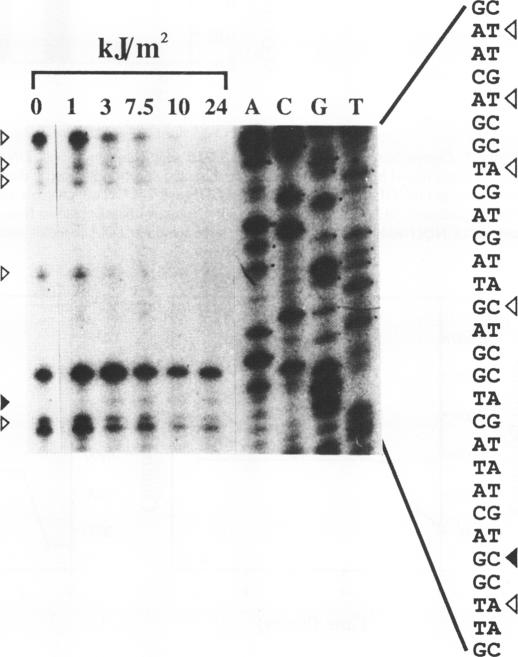
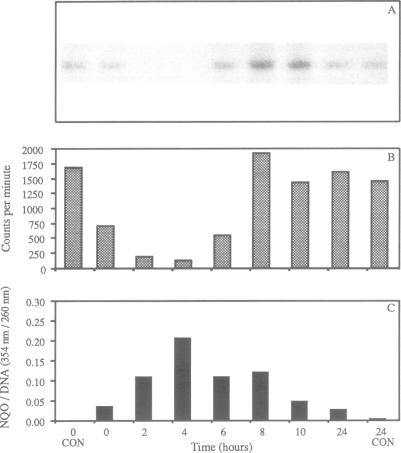
The susceptibility of various genomic regions to DNA damage and repair is heterogeneous. While this can be related to factors such as primary sequence, physical conformation, and functional status, the exact mechanisms involved remain unclear. To more precisely define the key features of a genomic region targeted for these processes, a useful tool would be a method for fine-mapping gene-specific DNA damage and repair in vivo. Here, a polymerase chain reaction-based assay is described for measuring DNA damage and repair in small (less than 500 bp) genomic segments of three transcriptionally active but functionally distinct loci (rearranged immunoglobulin heavy chain variable region [Ig VDJ], low-density lipoprotein receptor gene, and N-ras proto-oncogene) in human tonsillar B lymphocytes. Analysis of ultraviolet (254 nm)-induced DNA damage revealed single-hit kinetics and a similar level of sensitivity (D50% approximately 6000 joule/m2) in all three regions, indicating that a single photoproduct was sufficient to fully block PCR amplification. A similar time period per unit length was required for repair of this DNA damage (average t1/2 per fragment length = 23.5 seconds per bp). DNA damage and repair was also detectable with the base adducting agent, 4-nitroquinoline-1-oxide. However, in this case IgVDJ differed from segments within the other two loci by its relative inaccessibility to alkylation. This assay thus permits high-resolution mapping of DNA damage and repair activity.
不同基因组区域对DNA损伤和修复的敏感性是异质的。虽然这可能与诸如一级序列、物理构象和功能状态等因素有关,但其中的确切机制仍不清楚。为了更精确地定义这些过程所靶向的基因组区域的关键特征,一种有用的工具将是一种在体内对基因特异性DNA损伤和修复进行精细定位的方法。在此,描述了一种基于聚合酶链反应的测定方法,用于测量人扁桃体B淋巴细胞中三个转录活跃但功能不同的基因座(重排的免疫球蛋白重链可变区[Ig VDJ]、低密度脂蛋白受体基因和N-ras原癌基因)的小(小于500 bp)基因组片段中的DNA损伤和修复。对紫外线(254 nm)诱导的DNA损伤的分析显示,所有三个区域均呈现单打击动力学和相似的敏感性水平(D50%约为6000焦耳/平方米),表明单个光产物足以完全阻断PCR扩增。修复这种DNA损伤所需的单位长度时间相似(每个片段长度的平均t1/2 = 每碱基对23.5秒)。碱基加合物试剂4-硝基喹啉-1-氧化物也可检测到DNA损伤和修复。然而,在这种情况下,IgVDJ与其他两个基因座内的片段不同,其对烷基化的相对不可及性。因此,该测定法允许对DNA损伤和修复活性进行高分辨率定位。