Department of Biochemistry, University of Washington, Box 357350, Seattle, WA 98195-97350, USA.
Biochem J. 2011 Jan 1;433(1):31-42. doi: 10.1042/BJ20100985.
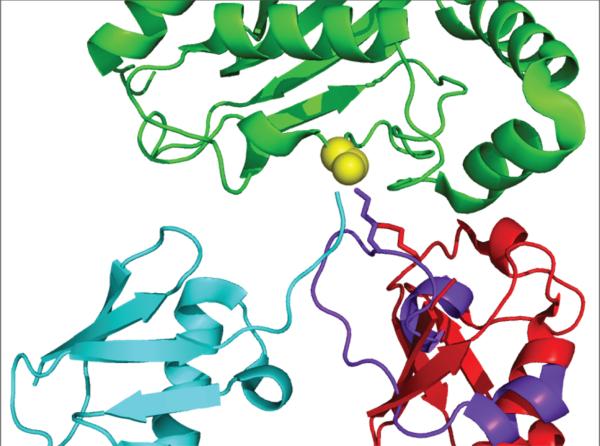
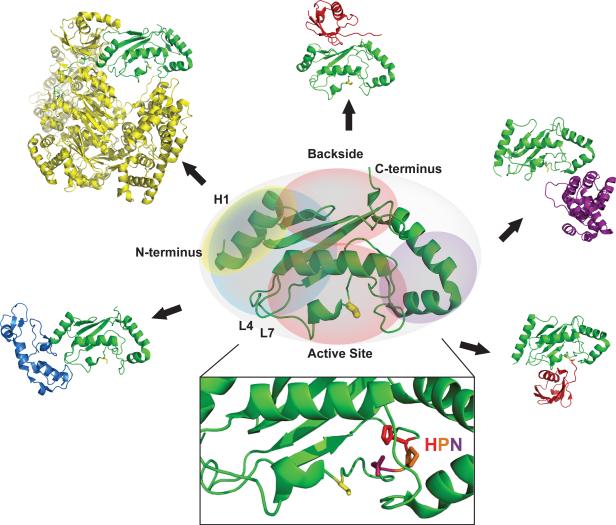
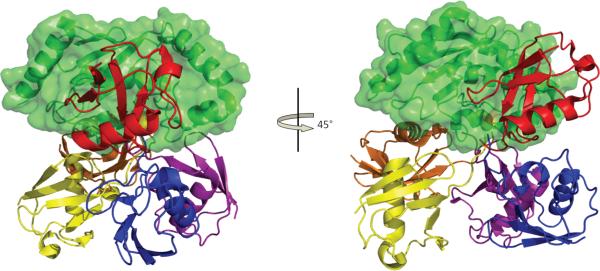
Ubiquitination is a post-translational modification pathway involved in myriad cellular regulation and disease pathways. The Ub (ubiquitin) transfer cascade requires three enzyme activities: a Ub-activating (E1) enzyme, a Ub-conjugating (E2) enzyme, and a Ub ligase (E3). Because the E2 is responsible both for E3 selection and substrate modification, E2s function at the heart of the Ub transfer pathway and are responsible for much of the diversity of Ub cellular signalling. There are currently over 90 three-dimensional structures for E2s, both alone and in complex with protein binding partners, providing a wealth of information regarding how E2s are recognized by a wide variety of proteins. In the present review, we describe the prototypical E2-E3 interface and discuss limitations of current methods to identify cognate E2-E3 partners. We present non-canonical E2-protein interactions and highlight the economy of E2s in their ability to facilitate many protein-protein interactions at nearly every surface on their relatively small and compact catalytic domain. Lastly, we compare the structures of conjugated E2~Ub species, their unique protein interactions and the mechanistic insights provided by species that are poised to transfer Ub.
泛素化是一种参与众多细胞调节和疾病途径的翻译后修饰途径。Ub(泛素)转移级联反应需要三种酶活性:泛素激活酶(E1)、泛素结合酶(E2)和泛素连接酶(E3)。由于 E2 负责 E3 的选择和底物的修饰,因此 E2 处于 Ub 转移途径的核心,负责 Ub 细胞信号传递的多样性。目前已有超过 90 种 E2 的三维结构,包括单独的 E2 和与蛋白质结合伙伴的复合物,提供了大量关于 E2 如何被多种蛋白质识别的信息。在本综述中,我们描述了典型的 E2-E3 界面,并讨论了当前识别同源 E2-E3 伙伴的方法的局限性。我们介绍了非典型的 E2-蛋白相互作用,并强调了 E2 在其相对较小和紧凑的催化结构域的几乎每个表面上促进许多蛋白质-蛋白质相互作用的经济性。最后,我们比较了缀合的 E2~Ub 物种的结构、它们独特的蛋白质相互作用以及那些准备转移 Ub 的物种所提供的机制见解。