School of Allied Health Sciences, Medical College of Georgia, Augusta, GA 30912, USA.
Cytokine. 2011 Feb;53(2):141-4. doi: 10.1016/j.cyto.2010.11.011. Epub 2010 Dec 14.
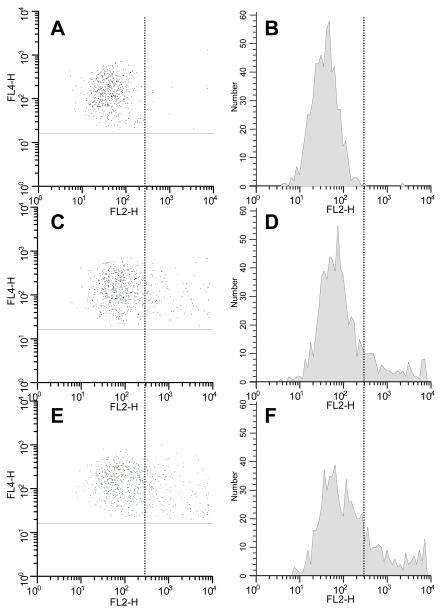
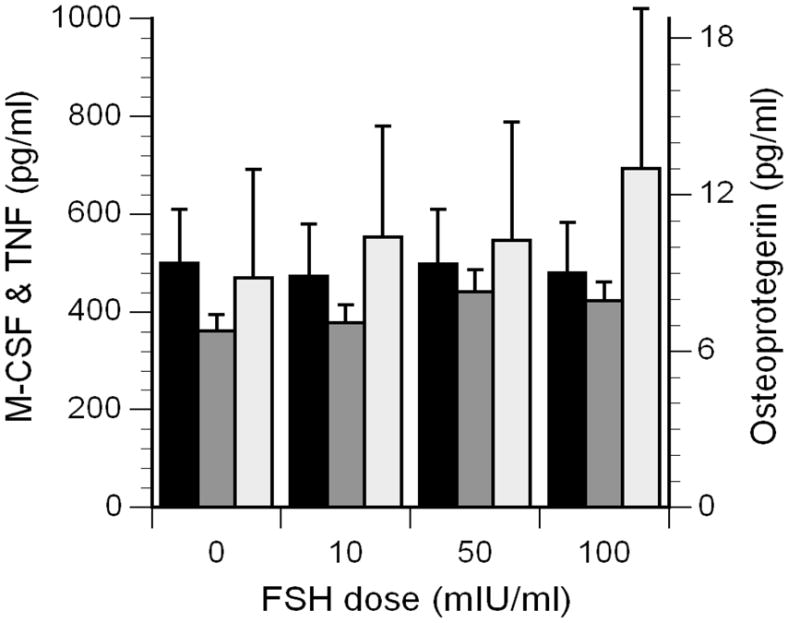
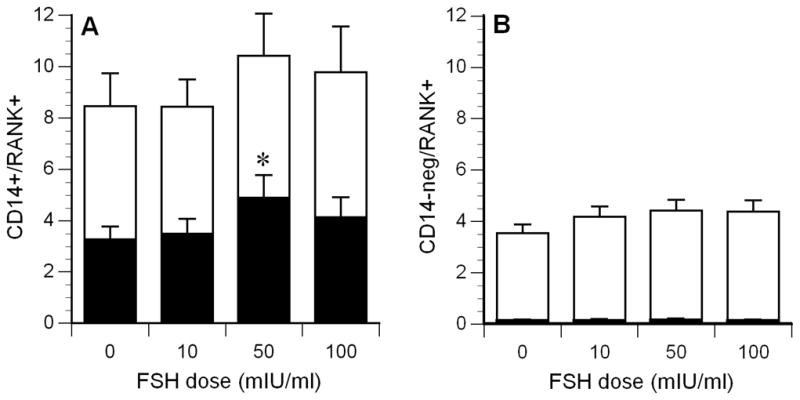
Elevated serum concentrations of follicle-stimulating hormone (FSH) are associated with diminished bone density in women, beginning years before menopause and the decline in estradiol. We hypothesized that FSH promotes development of myeloid cells toward the bone-resorbing osteoclast phenotype. This was tested by isolating peripheral blood mononuclear cells from nine healthy adults, incubating them in the presence of FSH at three different concentrations spanning the physiological range, and then measuring the expression of receptor activator for NF-κB (RANK, a surface marker for osteoclasts) on CD14(+) cells by flow cytometry. In the absence of FSH, 3.3±0.5% of the cells expressed high levels of the receptor (RANK(high)). Increasing concentrations of FSH caused a biphasic dose-response, with a maximal (1.5-fold) increase in RANK(high) cells achieved with 50 mIU/ml FSH (P=0.02). Cytokines that influence development of osteoclasts were also measured in culture supernatants: macrophage colony stimulating factor (M-CSF), osteoprotegerin (OPG) and tumor necrosis factor-α (TNFα) concentrations were not significantly influenced by FSH, whereas RANK-ligand was undetectable. This study supports the concept that the elevated circulating concentrations of FSH during perimenopause may contribute to the increased rate of bone loss by promoting the development of osteoclast precursor cells.
血清卵泡刺激素(FSH)浓度升高与女性的骨密度降低有关,这种情况在绝经前和雌二醇下降多年前就开始出现。我们假设 FSH 促进骨髓细胞向破骨细胞表型发展。本研究通过从 9 名健康成年人中分离外周血单核细胞,在生理范围内的 3 种不同 FSH 浓度下孵育,并通过流式细胞术测量 CD14+细胞上核因子-κB 受体激活剂(RANK,破骨细胞的表面标志物)的表达,来验证这一假设。在没有 FSH 的情况下,有 3.3±0.5%的细胞表达高水平的受体(RANK(高))。FSH 的浓度呈双相剂量反应,50 mIU/ml 的 FSH 可使 RANK(高)细胞最大增加 1.5 倍(P=0.02)。在培养上清液中还测量了影响破骨细胞发育的细胞因子:巨噬细胞集落刺激因子(M-CSF)、骨保护素(OPG)和肿瘤坏死因子-α(TNFα)的浓度不受 FSH 的显著影响,而 RANK 配体则无法检测到。这项研究支持这样一种观点,即绝经前循环中 FSH 浓度升高可能通过促进破骨细胞前体细胞的发育,导致骨丢失率增加。