Kogan Inna, Richter-Levin Gal
Department of Psychology and the Brain and Behavior Research Center, University of Haifa Haifa, Israel.
Front Behav Neurosci. 2010 Dec 6;4:183. doi: 10.3389/fnbeh.2010.00183. eCollection 2010.
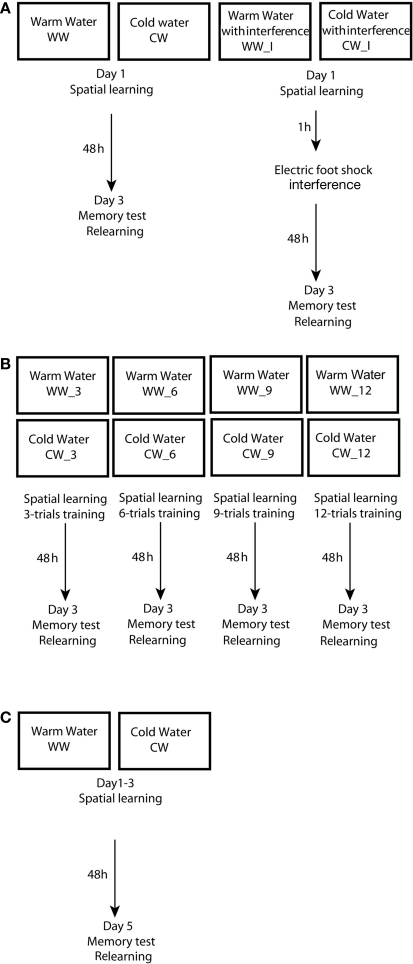
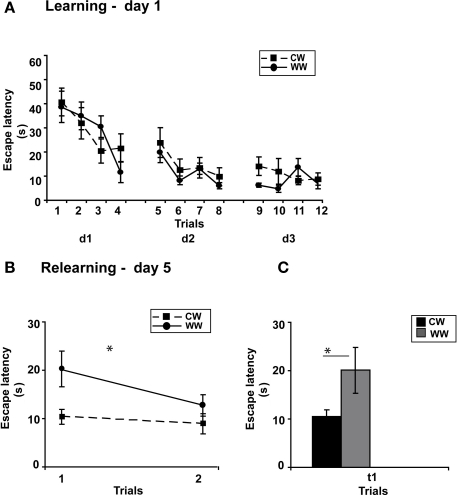
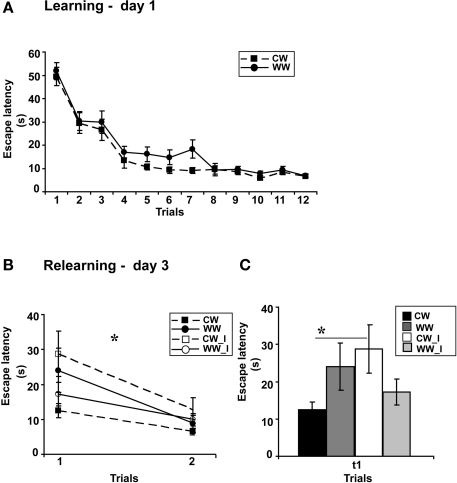
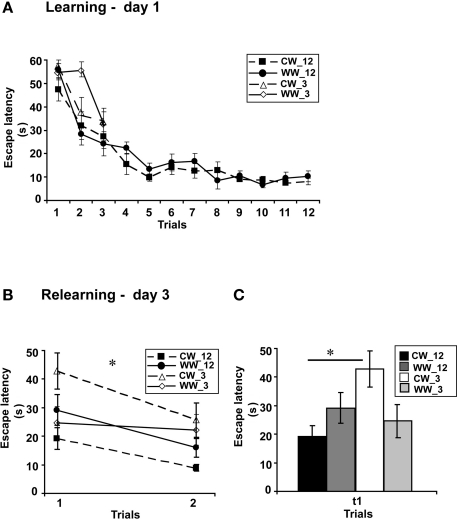
An exposure to stress can enhance memory for emotionally arousing experiences. The phenomenon is suggested to be amygdala-dependent and in accordance with that view the amygdala was found to modulate mnemonic processes in other brain regions. Previously, we illustrated increased amygdala activation and reduced activation of CA1 following spatial learning under higher versus lower stress conditions. When spatial learning was followed by reversal training interference, impaired retention was detected only under higher stress condition. Here we further evaluate the potential implications of the difference in the level of amygdala activation on the quality of the memory formed under these stress conditions. We attempted to affect spatial memory consolidation under lower or higher stress conditions by either introducing a foot shock interference following massed training in the water maze; by manipulating the threshold for acquisition employing either brief (3 trials) or full (12 trials) training sessions; or by employing a spaced training (over 3 days) rather than massed training protocol. The current findings reveal that under heightened emotionality, the process of consolidation seems to become less effective and more vulnerable to interference; however, when memory consolidation is not interrupted, retention is improved. These differential effects might underlie the complex interactions of stress, and, particularly, of traumatic stress with memory formation processes.
暴露于应激状态可增强对情绪唤起经历的记忆。该现象被认为依赖于杏仁核,并且与此观点一致的是,杏仁核被发现可调节其他脑区的记忆过程。此前,我们发现,在高应激与低应激条件下进行空间学习后,杏仁核激活增强,而CA1区激活减弱。当空间学习后进行逆向训练干扰时,仅在高应激条件下检测到记忆保持受损。在此,我们进一步评估在这些应激条件下,杏仁核激活水平差异对所形成记忆质量的潜在影响。我们试图通过以下方式在低应激或高应激条件下影响空间记忆巩固:在水迷宫集中训练后引入足部电击干扰;通过采用简短(3次试验)或完整(12次试验)训练课程来操纵习得阈值;或者采用间隔训练(持续3天)而非集中训练方案。当前研究结果表明,在情绪高度唤起状态下,巩固过程似乎变得效率更低且更容易受到干扰;然而,当记忆巩固未被打断时,记忆保持会得到改善。这些不同的效应可能是应激,尤其是创伤性应激与记忆形成过程之间复杂相互作用的基础。