Proteolysis Lab, Department of Structural Biology, Molecular Biology Institute of Barcelona, CSIC, Barcelona Science Park, Helix Building, c/ Baldiri Reixac, 15-21, E-08028 Barcelona, Catalunya, Spain.
Mol Microbiol. 2011 Jan;79(1):119-32. doi: 10.1111/j.1365-2958.2010.07434.x. Epub 2010 Nov 2.
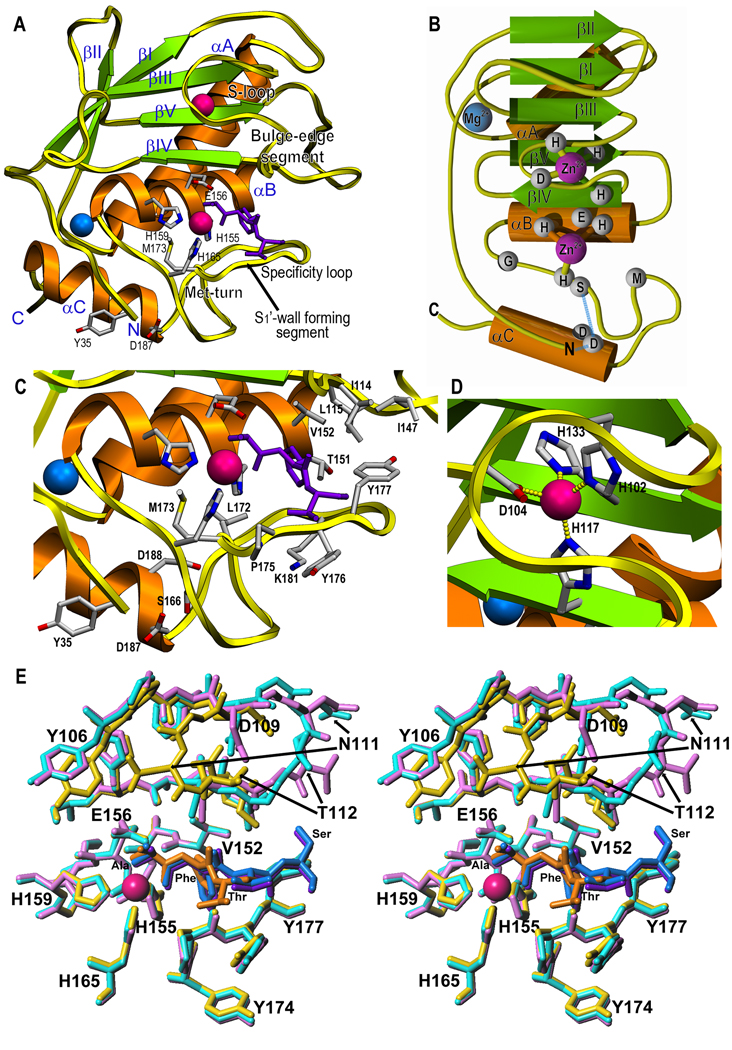
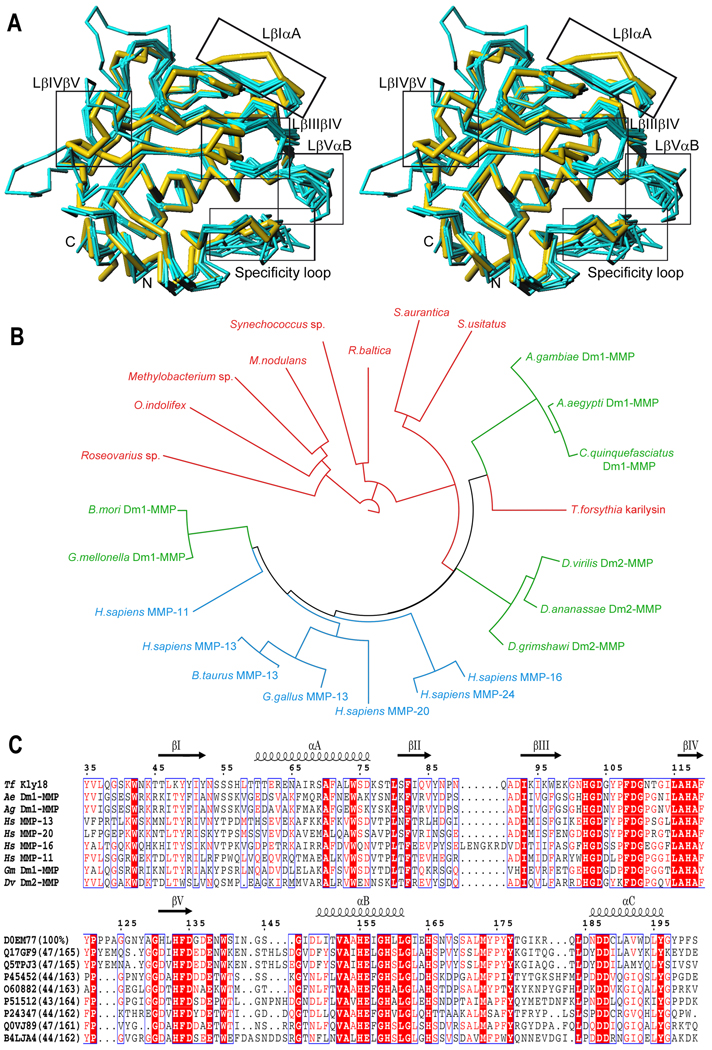
Metallopeptidases (MPs) are among virulence factors secreted by pathogenic bacteria at the site of infection. One such pathogen is Tannerella forsythia, a member of the microbial consortium that causes peridontitis, arguably the most prevalent infective chronic inflammatory disease known to mankind. The only reported MP secreted by T. forsythia is karilysin, a 52 kDa multidomain protein comprising a central 18 kDa catalytic domain (CD), termed Kly18, flanked by domains unrelated to any known protein. We analysed the 3D structure of Kly18 in the absence and presence of Mg(2+) or Ca(2+) , which are required for function and stability, and found that it evidences most of the structural features characteristic of the CDs of mammalian matrix metalloproteinases (MMPs). Unexpectedly, a peptide was bound to the active-site cleft of Kly18 mimicking a left-behind cleavage product, which revealed that the specificity pocket accommodates bulky hydrophobic side-chains of substrates as in mammalian MMPs. In addition, Kly18 displayed a unique Mg(2+) or Ca(2+) binding site and two flexible segments that could play a role in substrate binding. Phylogenetic and sequence similarity studies revealed that Kly18 is evolutionarily much closer to winged-insect and mammalian MMPs than to potential bacterial counterparts found by genomic sequencing projects. Therefore, we conclude that this first structurally characterized non-mammalian MMP is a xenologue co-opted through horizontal gene transfer during the intimate coexistence between T. forsythia and humans or other animals, in a very rare case of gene shuffling from eukaryotes to prokaryotes. Subsequently, this protein would have evolved in a bacterial environment to give rise to full-length karilysin that is furnished with unique flanking domains that do not conform to the general multidomain architecture of animal MMPs.
金属肽酶 (MPs) 是病原体在感染部位分泌的毒力因子之一。其中一种病原体是坦纳菌属福赛斯亚种,它是导致牙周炎的微生物群落的成员,牙周炎可以说是人类已知的最普遍的感染性慢性炎症性疾病。目前仅报道该菌分泌的 MPs 是卡拉林,这是一种 52 kDa 的多结构域蛋白,由一个中央 18 kDa 的催化结构域 (CD) 组成,称为 Kly18,两侧是与任何已知蛋白均无关系的结构域。我们分析了 Kly18 在缺乏或存在功能和稳定性必需的 Mg2+或 Ca2+时的 3D 结构,发现它具有大多数哺乳动物基质金属蛋白酶 (MMPs) CDs 的结构特征。出乎意料的是,一个肽段结合在 Kly18 的活性位点裂隙中,模拟了一个留下的切割产物,这表明该特异性口袋可容纳底物的大体积疏水性侧链,就像在哺乳动物 MMPs 中一样。此外,Kly18 还显示出一个独特的 Mg2+或 Ca2+结合位点和两个柔性片段,它们可能在底物结合中发挥作用。系统发生和序列相似性研究表明,Kly18 与昆虫和哺乳动物 MMPs 的进化关系比通过基因组测序项目发现的潜在细菌对应物更密切。因此,我们得出结论,这是第一个结构上被表征的非哺乳动物 MMP,是通过坦纳菌属福赛斯亚种与人类或其他动物的密切共生过程中的水平基因转移而被引入的,这种基因从真核生物转移到原核生物的情况非常罕见。随后,该蛋白在细菌环境中进化,产生全长的卡拉林,其具有独特的侧翼结构域,不符合动物 MMPs 的一般多结构域架构。