Department of Chemistry and Biochemistry, University of California, San Diego, 9500 Gilman Drive #0314, La Jolla, CA 92093-0314, USA.
Methods. 2011 Jan;53(1):68-77. doi: 10.1016/j.ymeth.2010.12.006. Epub 2010 Dec 16.
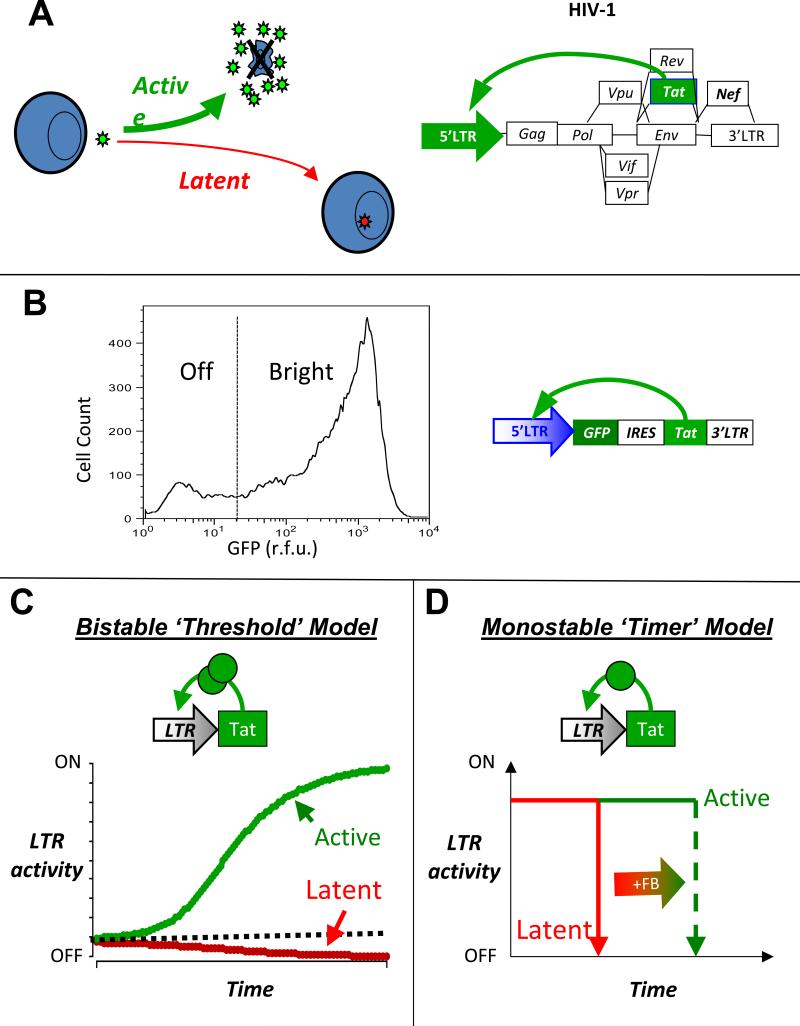
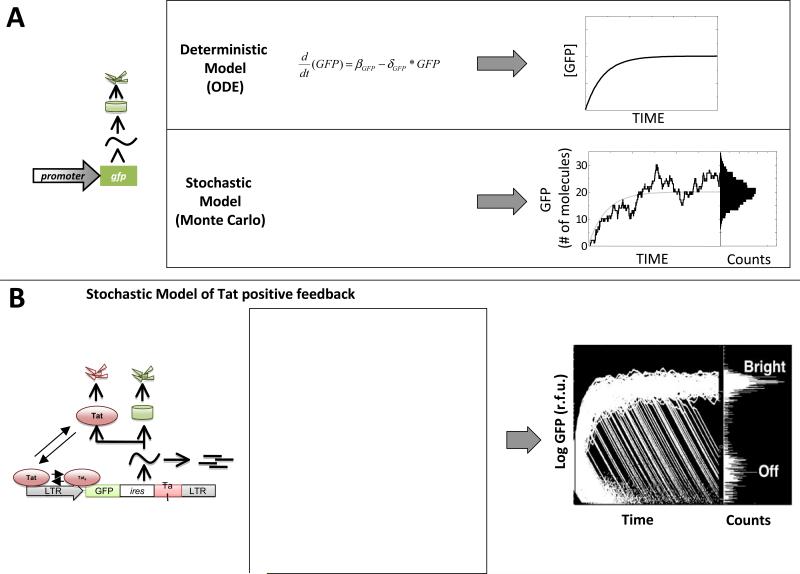
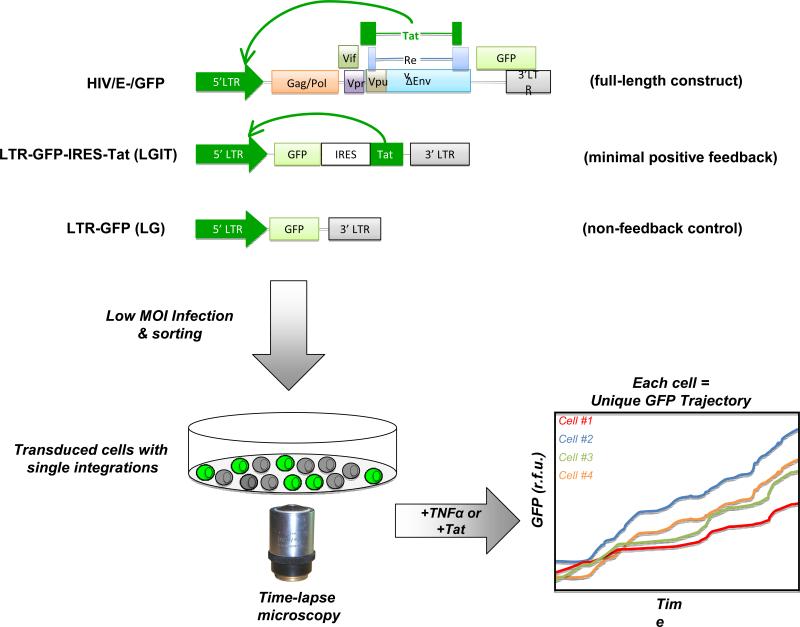
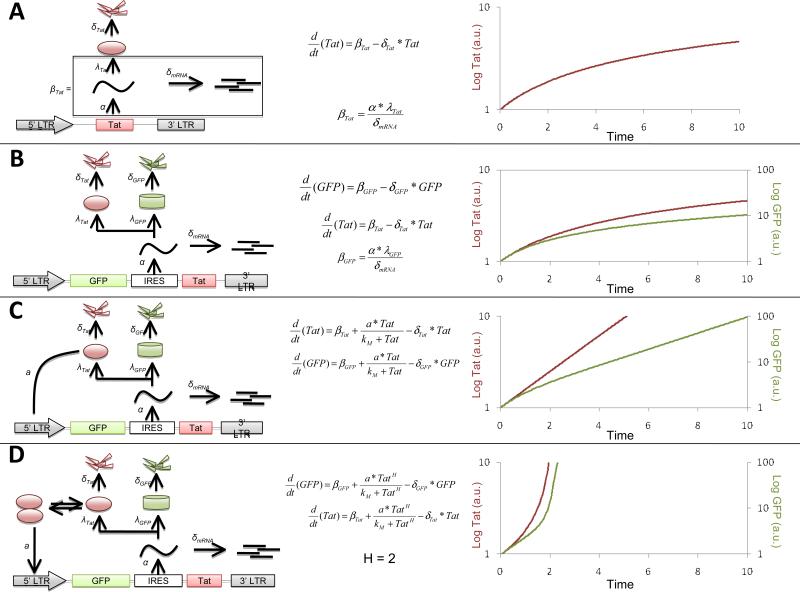
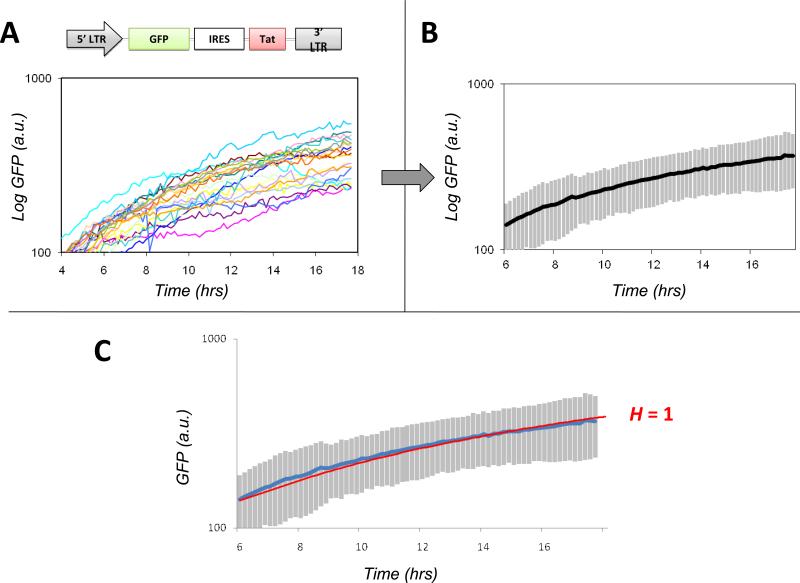
Upon infection of a CD4(+) T cell, HIV-1 appears to 'choose' between two alternate fates: active replication or a long-lived dormant state termed proviral latency. A transcriptional positive-feedback loop generated by the HIV-1 Tat protein appears sufficient to mediate this decision. Here, we describe a coupled wet-lab and computational approach that uses mathematical modeling and live-cell time-lapse microscopy to map the architecture of the HIV-1 Tat transcriptional regulatory circuit and generate predictive models of HIV-1 latency. This approach provided the first characterization of a 'decision-making' circuit that lacks bistability and instead exploits stochastic fluctuations in cellular molecules (i.e. noise) to generate a decision between an on or off transcriptional state.
当 CD4(+)T 细胞被感染时,HIV-1 似乎会在两种替代命运之间“选择”:积极复制或称为潜伏前病毒的长期休眠状态。HIV-1 Tat 蛋白产生的转录正反馈环似乎足以介导这一决定。在这里,我们描述了一种结合了湿实验室和计算方法的方法,该方法使用数学建模和活细胞延时显微镜来绘制 HIV-1 Tat 转录调控回路的结构,并生成 HIV-1 潜伏的预测模型。这种方法首次对缺乏双稳态性的“决策”电路进行了描述,而是利用细胞分子(即噪声)的随机波动来在开或关转录状态之间做出决策。