Division of Molecular Biosciences, Membrane Protein Crystallography Group, Imperial College, London SW7 2AZ, UK.
J Synchrotron Radiat. 2011 Jan;18(1):20-3. doi: 10.1107/S0909049510032449. Epub 2010 Nov 5.
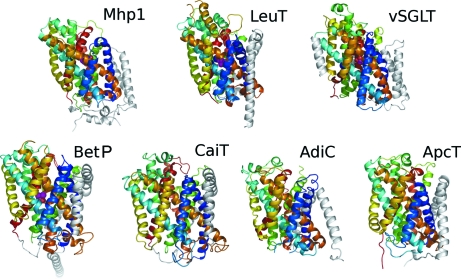
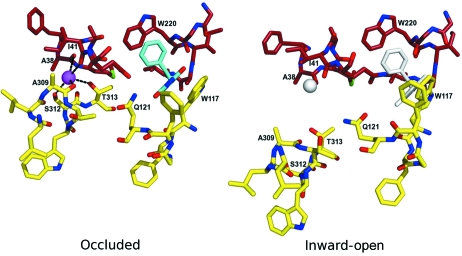
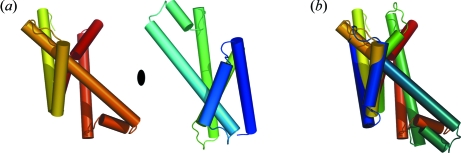
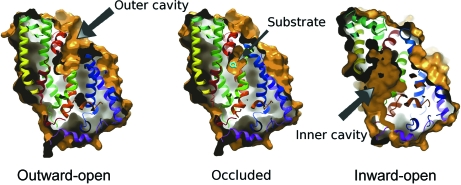
Secondary active transporters move molecules across cell membranes by coupling this process to the energetically favourable downhill movement of ions or protons along an electrochemical gradient. They function by the alternating access model of transport in which, through conformational changes, the substrate binding site alternately faces either side of the membrane. Owing to the difficulties in obtaining the crystal structure of a single transporter in different conformational states, relatively little structural information is known to explain how this process occurs. Here, the structure of the sodium-benzylhydantoin transporter, Mhp1, from Microbacterium liquefaciens, has been determined in three conformational states; from this a mechanism is proposed for switching from the outward-facing open conformation through an occluded structure to the inward-facing open state.
继发性主动转运通过将此过程与离子或质子沿着电化学梯度的有利能量向下运动偶联,将分子转运穿过细胞膜。它们通过转运的交替访问模型起作用,其中,通过构象变化,底物结合位点交替面向膜的任一侧。由于难以获得不同构象状态下单一转运蛋白的晶体结构,因此相对较少的结构信息可用于解释该过程如何发生。在这里,已经确定了来自液化微杆菌的钠-苯并噻唑啉转运蛋白 Mhp1 的三种构象状态的结构;由此提出了从外向开放构象通过阻塞结构切换到内向开放状态的机制。