Haleem Amgad M, Singergy Abdel Aziz El, Sabry Dina, Atta Hazem M, Rashed Laila A, Chu Constance R, El Shewy Mohammed T, Azzam Akram, Abdel Aziz Mohammed T
Department of Orthopedic Surgery, Cairo University School of Medicine, Cairo, Egypt.
Cartilage. 2010 Oct;1(4):253-261. doi: 10.1177/1947603510366027.
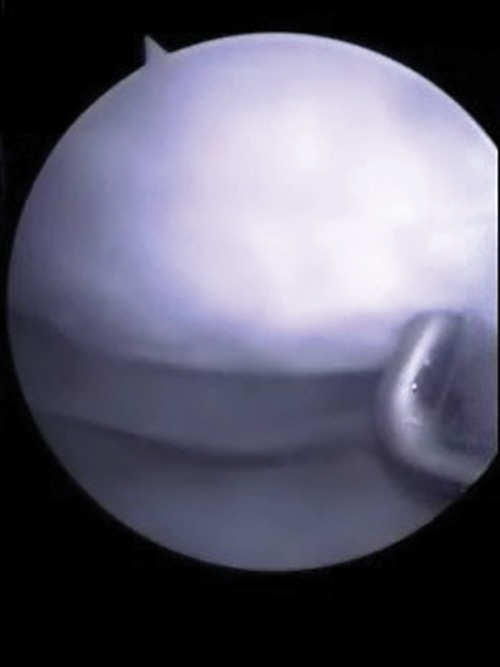
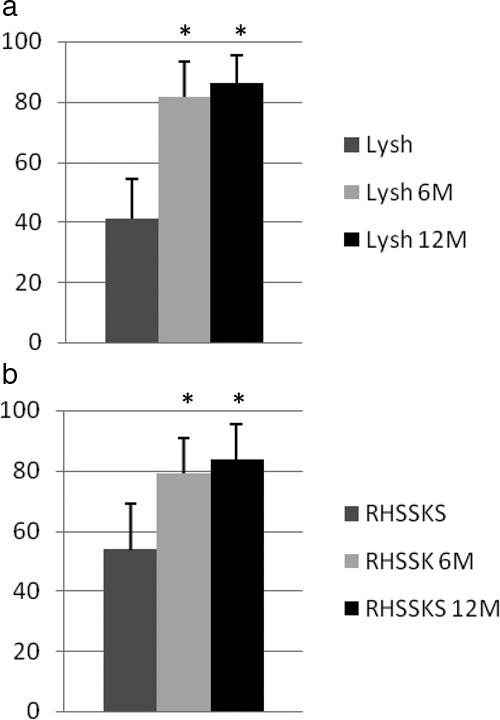
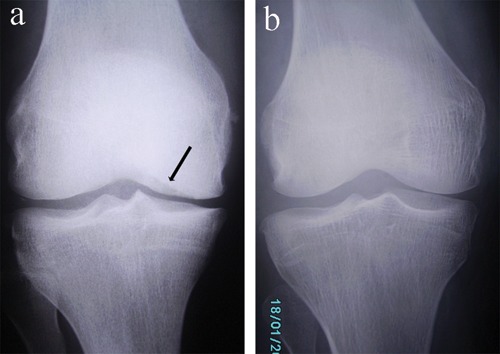
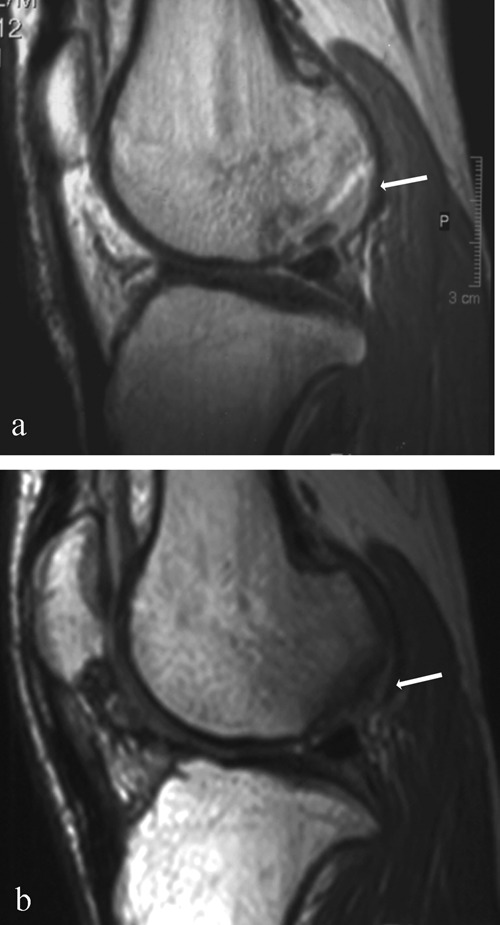
To test the hypothesis that platelet-rich fibrin glue (PR-FG) can be used clinically as a scaffold to deliver autologous culture-expanded bone marrow mesenchymal stem cells (BM-MSCs) for cartilage repair and to report clinical results 1 y after implantation of MSCs PR-FG. PATIENTS AND METHODS: Autologous BM-MSCs were culture expanded, placed on PR-FG intraoperatively, and then transplanted into 5 full-thickness cartilage defects of femoral condyles of 5 patients and covered with an autologous periosteal flap. Patients were evaluated clinically at 6 and 12 mo by the Lysholm and Revised Hospital for Special Surgery Knee (RHSSK) scores and radiographically by x-rays and magnetic resonance imaging (MRI) at the same time points. Repair tissue in 2 patients was rated arthroscopically after 12 mo using the International Cartilage Repair Society (ICRS) Arthroscopic Score. STUDY DESIGN: Case series; level of evidence 4. RESULTS: All patients' symptoms improved over the follow-up period of 12 mo. Average Lysholm and RHSSK scores for all patients showed statistically significant improvement at 6 and 12 mo postoperatively (P < 0.05). There was no statistically significant difference between the 6 and 12 mo postoperative clinical scores (P = 0.18). ICRS arthroscopic scores were 8/12 and 11/12 (nearly normal) for the 2 patients who consented to arthroscopy. MRI of 3 patients at 12 mo postoperatively revealed complete defect fill and complete surface congruity with native cartilage, whereas that of 2 patients showed incomplete congruity. CONCLUSION: Autologous BM-MSC transplantation on PR-FG as a cell scaffold may be an effective approach to promote the repair of articular cartilage defects of the knee in human patients.
验证富含血小板纤维蛋白胶(PR-FG)可在临床上用作支架来递送自体培养扩增的骨髓间充质干细胞(BM-MSCs)以修复软骨,并报告植入MSCs-PR-FG 1年后的临床结果。患者与方法:将自体BM-MSCs进行培养扩增,术中置于PR-FG上,然后移植到5例患者股骨髁的5个全层软骨缺损处,并用自体骨膜瓣覆盖。在6个月和12个月时通过Lysholm评分和修订的特种外科医院膝关节(RHSSK)评分对患者进行临床评估,同时在相同时间点通过X线和磁共振成像(MRI)进行影像学评估。12个月后,对2例患者的修复组织使用国际软骨修复协会(ICRS)关节镜评分进行关节镜检查评级。研究设计:病例系列;证据等级4。结果:在12个月的随访期内,所有患者的症状均有改善。所有患者的平均Lysholm评分和RHSSK评分在术后6个月和12个月时均有统计学意义的改善(P < 0.05)。术后6个月和12个月的临床评分之间无统计学显著差异(P = 0.18)。同意接受关节镜检查的2例患者的ICRS关节镜评分为8/12和11/12(接近正常)。3例患者术后12个月的MRI显示缺损完全填充,表面与天然软骨完全一致;而2例患者显示一致性不完全。结论:将自体BM-MSCs移植到PR-FG作为细胞支架可能是促进人类患者膝关节软骨缺损修复的有效方法。