Centre for Molecular Biology and Neuroscience, Institute of Medical Microbiology, Oslo University Hospital, Oslo, Norway.
PLoS Genet. 2010 Dec 9;6(12):e1001242. doi: 10.1371/journal.pgen.1001242.
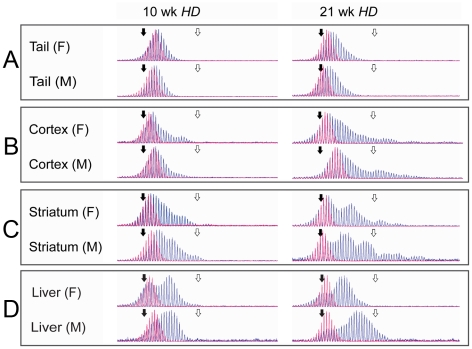
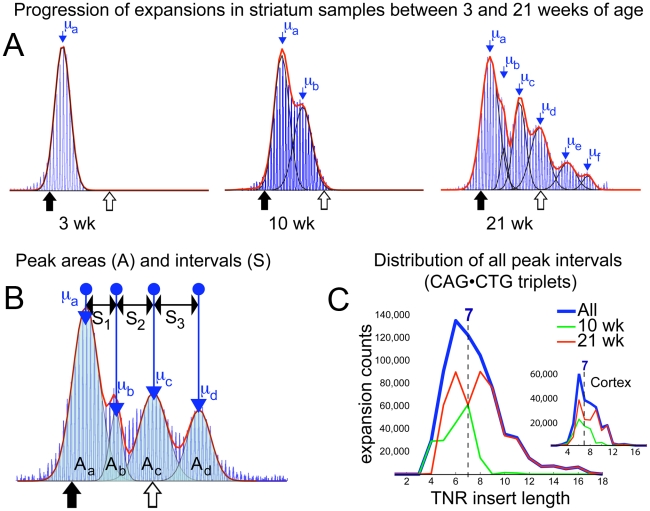
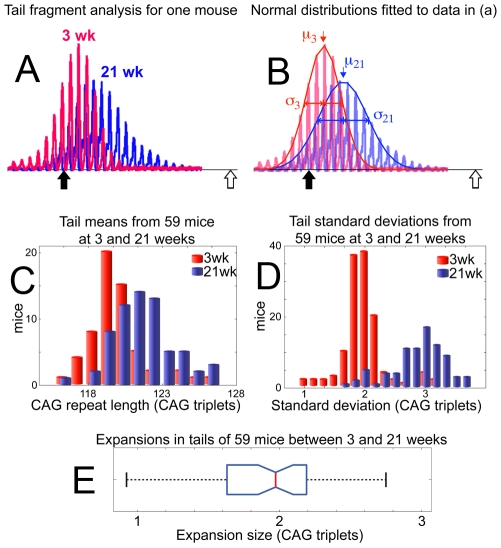
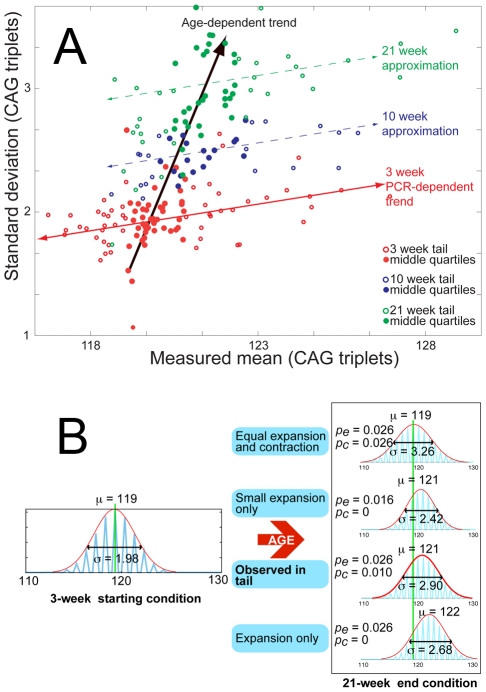
Huntington's disease (HD) is one of several neurodegenerative disorders caused by expansion of CAG repeats in a coding gene. Somatic CAG expansion rates in HD vary between organs, and the greatest instability is observed in the brain, correlating with neuropathology. The fundamental mechanisms of somatic CAG repeat instability are poorly understood, but locally formed secondary DNA structures generated during replication and/or repair are believed to underlie triplet repeat expansion. Recent studies in HD mice have demonstrated that mismatch repair (MMR) and base excision repair (BER) proteins are expansion inducing components in brain tissues. This study was designed to simultaneously investigate the rates and modes of expansion in different tissues of HD R6/1 mice in order to further understand the expansion mechanisms in vivo. We demonstrate continuous small expansions in most somatic tissues (exemplified by tail), which bear the signature of many short, probably single-repeat expansions and contractions occurring over time. In contrast, striatum and cortex display a dramatic--and apparently irreversible--periodic expansion. Expansion profiles displaying this kind of periodicity in the expansion process have not previously been reported. These in vivo findings imply that mechanistically distinct expansion processes occur in different tissues.
亨廷顿病(HD)是由编码基因中 CAG 重复扩展引起的几种神经退行性疾病之一。HD 中体细胞 CAG 扩展率在不同器官之间存在差异,在大脑中观察到最大的不稳定性,与神经病理学相关。体细胞 CAG 重复不稳定性的基本机制尚不清楚,但人们认为复制和/或修复过程中形成的局部二级 DNA 结构是三核苷酸重复扩展的基础。HD 小鼠的最近研究表明,错配修复(MMR)和碱基切除修复(BER)蛋白是脑组织中诱导扩展的成分。本研究旨在同时研究 HD R6/1 小鼠不同组织中的扩展率和模式,以便进一步了解体内扩展机制。我们证明了大多数体细胞组织(以尾巴为例)的连续小扩展,这些组织具有随着时间推移发生的许多短的、可能是单个重复扩展和收缩的特征。相比之下,纹状体和皮层显示出明显的——而且显然是不可逆的——周期性扩展。在扩展过程中显示这种周期性的扩展谱以前没有报道过。这些体内发现表明,不同组织中发生了机制上不同的扩展过程。