Gopalakrishnan Kalpana, Low Grace Kah Mun, Ting Aloysius Poh Leong, Srikanth Prarthana, Slijepcevic Predrag, Hande M Prakash
Department of Physiology, Yong Loo Lin School of Medicine, National University of Singapore, 117597, Singapore.
Division of Biosciences, School of Health Sciences and Social Care, Brunel University, Uxbridge UB8 3PH, UK.
Genome Integr. 2010 Dec 22;1(1):16. doi: 10.1186/2041-9414-1-16.
The Nucleotide Excision Repair (NER) pathway specialises in UV-induced DNA damage repair. Inherited defects in the NER can predispose individuals to Xeroderma Pigmentosum (XP). UV-induced DNA damage cannot account for the manifestation of XP in organ systems not directly exposed to sunlight. While the NER has recently been implicated in the repair of oxidative DNA lesions, it is not well characterised. Therefore we sought to investigate the role of NER factors Xeroderma Pigmentosum A (XPA), XPB and XPD in oxidative DNA damage-repair by subjecting lymphoblastoid cells from patients suffering from XP-A, XP-D and XP-B with Cockayne Syndrome to hydrogen peroxide (H2O2).
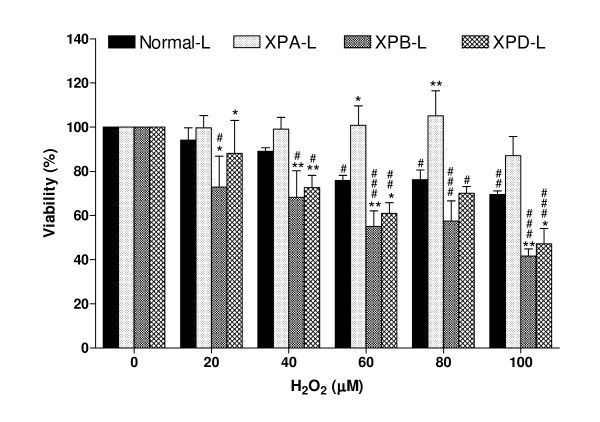
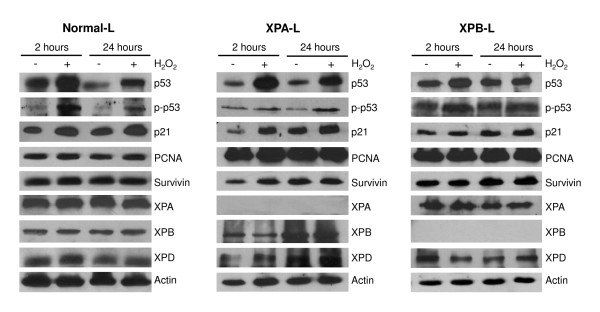
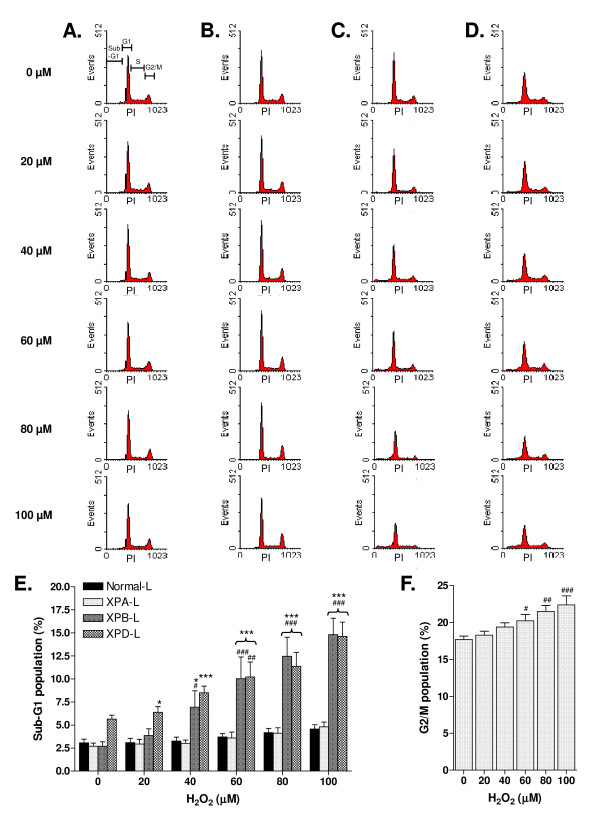
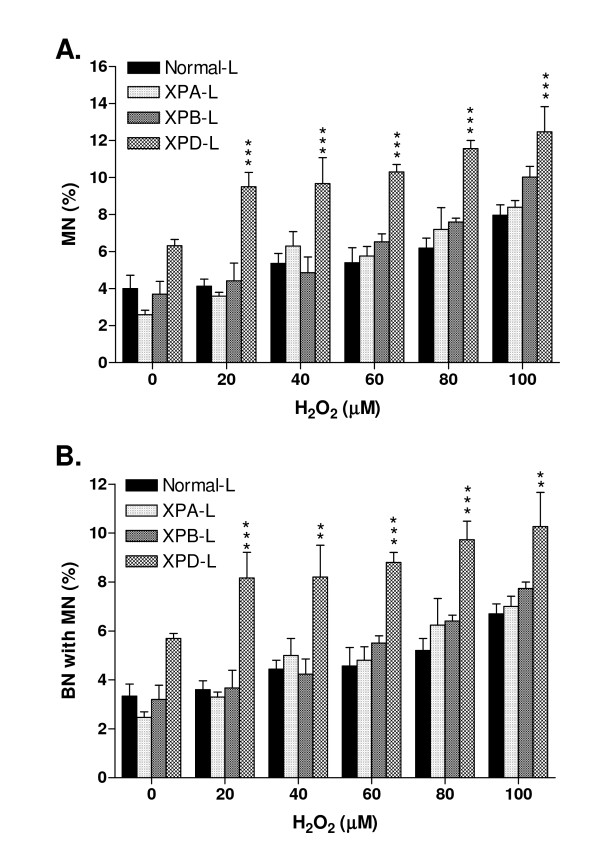
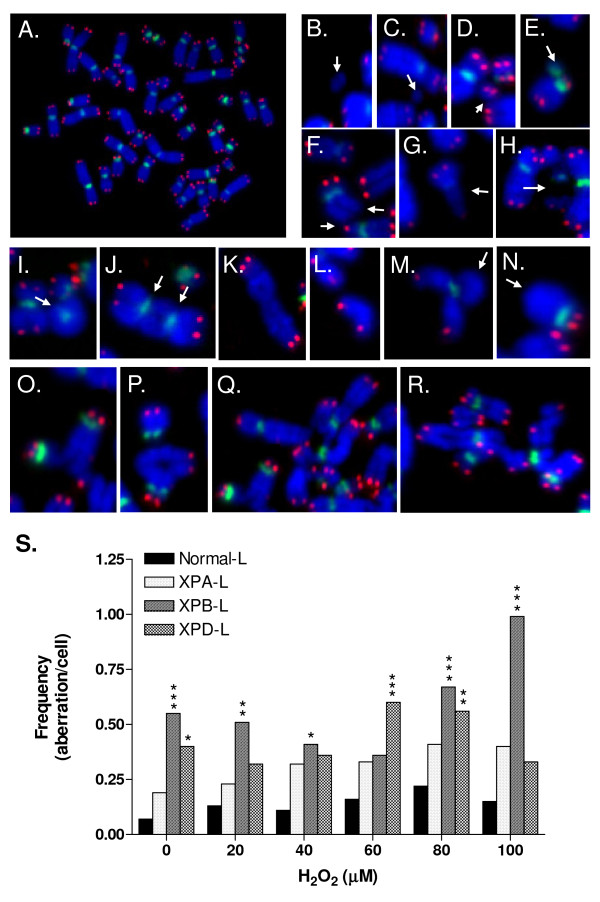
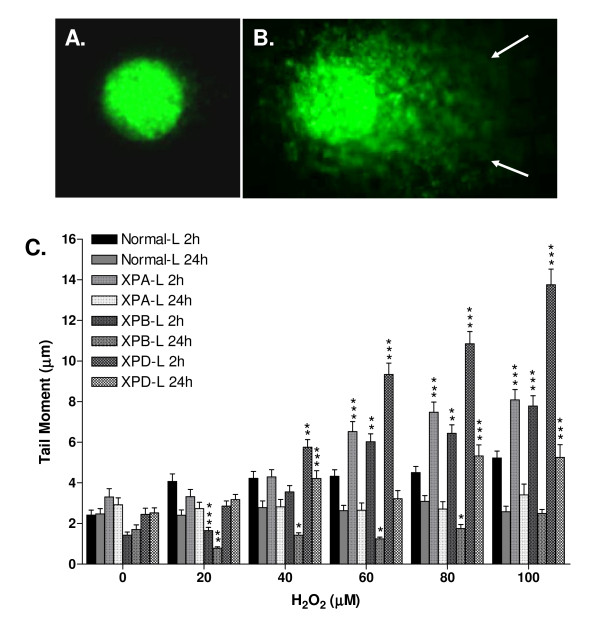
Loss of functional XPB or XPD but not XPA led to enhanced sensitivity towards H2O2-induced cell death. XP-deficient lymphoblastoid cells exhibited increased susceptibility to H2O2-induced DNA damage with XPD showing the highest susceptibility and lowest repair capacity. Furthermore, XPB- and XPD-deficient lymphoblastoid cells displayed enhanced DNA damage at the telomeres. XPA- and XPB-deficient lymphoblastoid cells also showed differential regulation of XPD following H2O2 treatment.
Taken together, our data implicate a role for the NER in H2O2-induced oxidative stress management and further corroborates that oxidative stress is a significant contributing factor in XP symptoms. Resistance of XPA-deficient lymphoblastoid cells to H2O2-induced cell death while harbouring DNA damage poses a potential cancer risk factor for XPA patients. Our data implicate XPB and XPD in the protection against oxidative stress-induced DNA damage and telomere shortening, and thus premature senescence.
核苷酸切除修复(NER)途径专门负责紫外线诱导的DNA损伤修复。NER的遗传性缺陷可使个体易患着色性干皮病(XP)。紫外线诱导的DNA损伤无法解释未直接暴露于阳光下的器官系统中XP的表现。虽然最近发现NER参与氧化DNA损伤的修复,但其特征尚不明确。因此,我们通过用过氧化氢(H2O2)处理患有XP-A、XP-D和XP-B伴科凯恩综合征患者的淋巴母细胞,来研究NER因子着色性干皮病A(XPA)、XPB和XPD在氧化DNA损伤修复中的作用。
功能性XPB或XPD的缺失而非XPA的缺失导致对H2O2诱导的细胞死亡敏感性增强。XP缺陷的淋巴母细胞对H2O2诱导的DNA损伤敏感性增加,其中XPD表现出最高的敏感性和最低的修复能力。此外,XPB和XPD缺陷的淋巴母细胞在端粒处显示出增强的DNA损伤。XPA和XPB缺陷的淋巴母细胞在H2O2处理后也显示出XPD的差异调节。
综上所述,我们的数据表明NER在H2O2诱导的氧化应激管理中发挥作用,并进一步证实氧化应激是XP症状的一个重要促成因素。XPA缺陷的淋巴母细胞在存在DNA损伤的情况下对H2O2诱导的细胞死亡具有抗性,这对XPA患者构成了潜在的癌症风险因素。我们的数据表明XPB和XPD在保护细胞免受氧化应激诱导的DNA损伤和端粒缩短从而防止过早衰老方面发挥作用。