Fouquerel Elise, Parikh Dhvani, Opresko Patricia
Department of Environmental and Occupational Health, University of Pittsburgh Graduate School of Public Health, University of Pittsburgh Cancer Institute Research Pavilion, 5117 Centre Avenue, University of Pittsburgh, Pittsburgh, PA 15213, United States.
Department of Environmental and Occupational Health, University of Pittsburgh Graduate School of Public Health, University of Pittsburgh Cancer Institute Research Pavilion, 5117 Centre Avenue, University of Pittsburgh, Pittsburgh, PA 15213, United States.
DNA Repair (Amst). 2016 Aug;44:159-168. doi: 10.1016/j.dnarep.2016.05.022. Epub 2016 May 16.
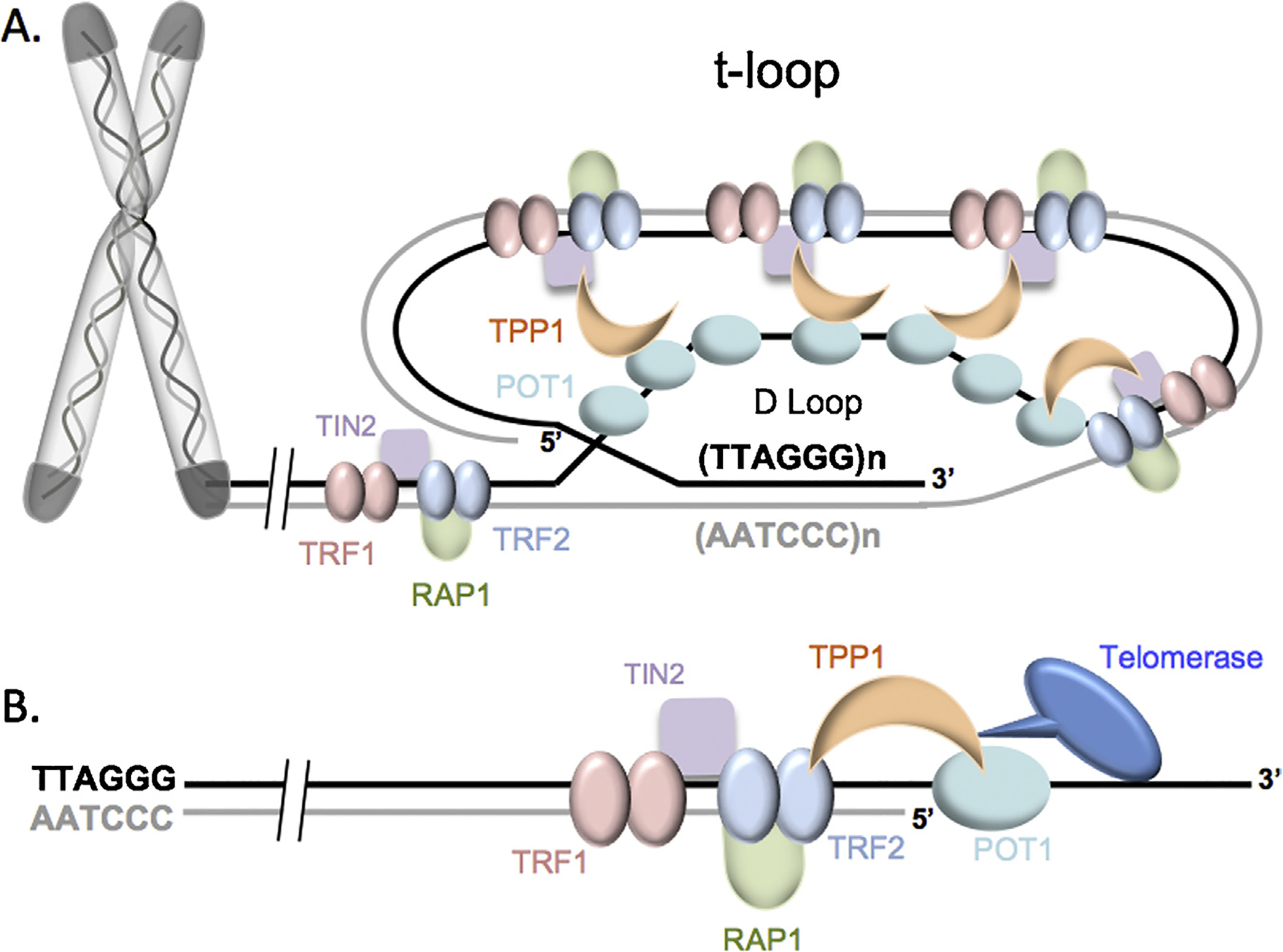
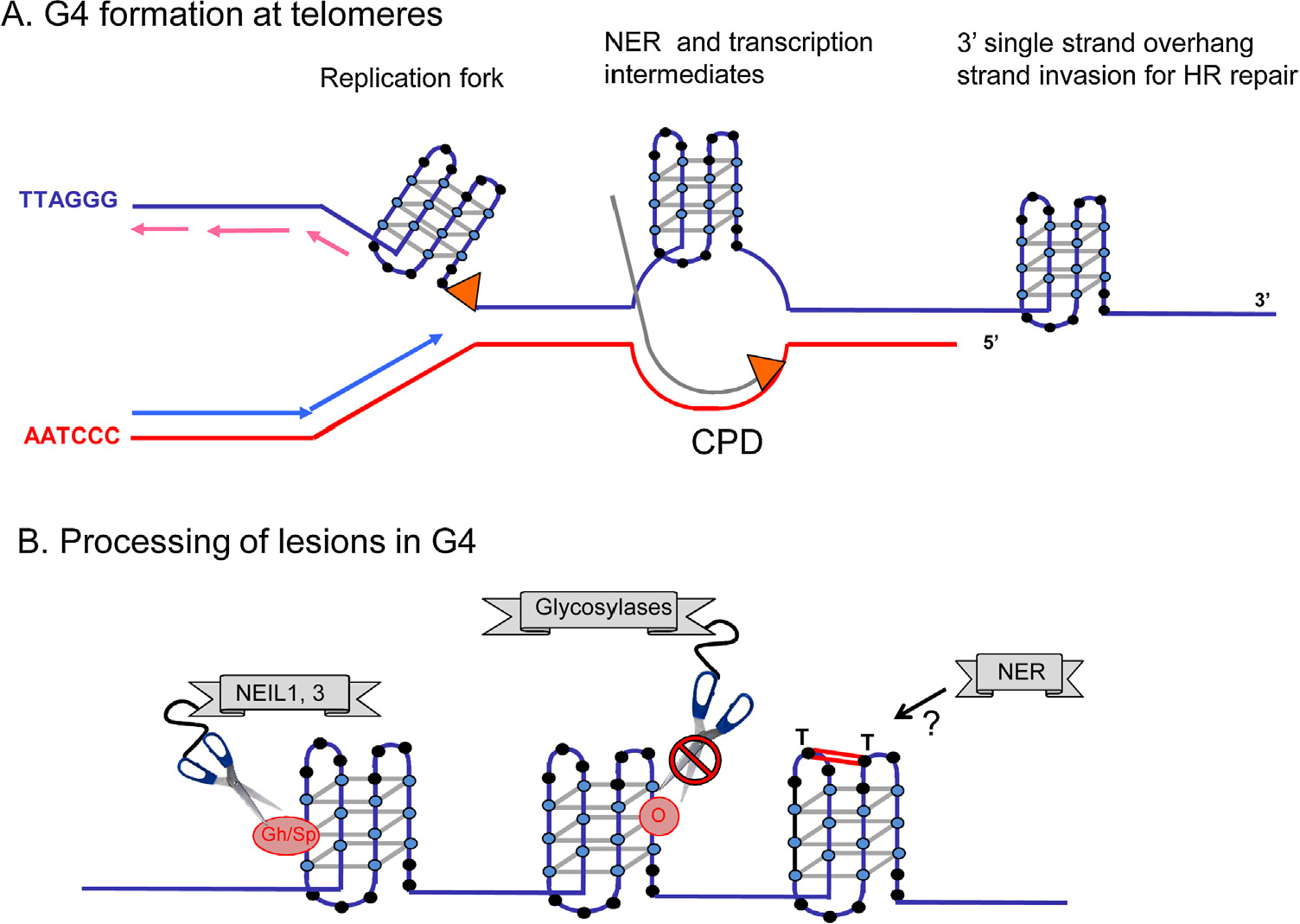
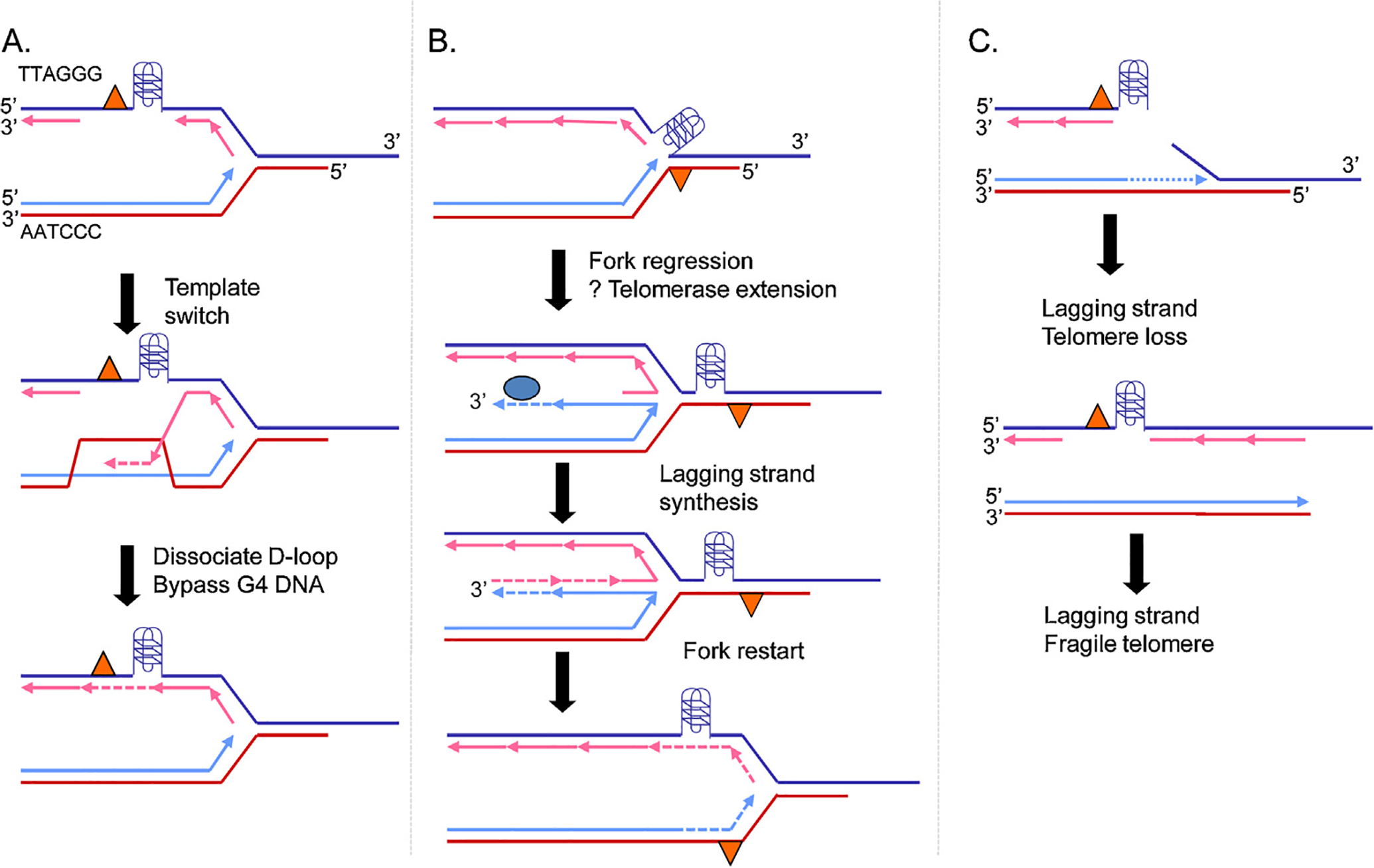
Telomeres at chromosome ends are nucleoprotein structures consisting of tandem TTAGGG repeats and a complex of proteins termed shelterin. DNA damage and repair at telomeres is uniquely influenced by the ability of telomeric DNA to form alternate structures including loops and G-quadruplexes, coupled with the ability of shelterin proteins to interact with and regulate enzymes in every known DNA repair pathway. The role of shelterin proteins in preventing telomeric ends from being falsely recognized and processed as DNA double strand breaks is well established. Here we focus instead on recent developments in understanding the roles of shelterin proteins and telomeric DNA sequence and structure in processing genuine damage at telomeres induced by endogenous and exogenous DNA damage agents. We will highlight advances in double strand break repair, base excision repair and nucleotide excision repair at telomeres, and will discuss important questions remaining in the field.
染色体末端的端粒是由串联的 TTAGGG 重复序列和一组称为端粒保护蛋白复合体的核蛋白结构组成。端粒处的 DNA 损伤与修复受到端粒 DNA 形成包括环和 G-四链体等交替结构的能力的独特影响,同时也受到端粒保护蛋白与已知的每条 DNA 修复途径中的酶相互作用并进行调控的能力的影响。端粒保护蛋白在防止端粒末端被错误识别并当作 DNA 双链断裂进行处理方面的作用已得到充分证实。在此,我们转而关注在理解端粒保护蛋白以及端粒 DNA 序列和结构在处理由内源性和外源性 DNA 损伤剂诱导的端粒处真正损伤中的作用方面的最新进展。我们将重点介绍端粒处双链断裂修复、碱基切除修复和核苷酸切除修复的进展,并讨论该领域中仍然存在的重要问题。