Computer Science and Artificial Intelligence Laboratory, Massachusetts Institute of Technology (MIT), Cambridge, MA 02139, USA.
Science. 2010 Dec 24;330(6012):1787-97. doi: 10.1126/science.1198374. Epub 2010 Dec 22.
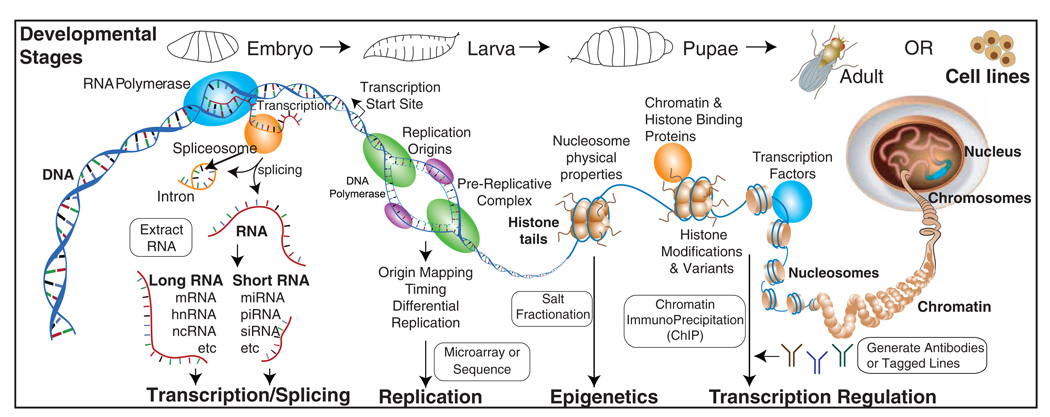
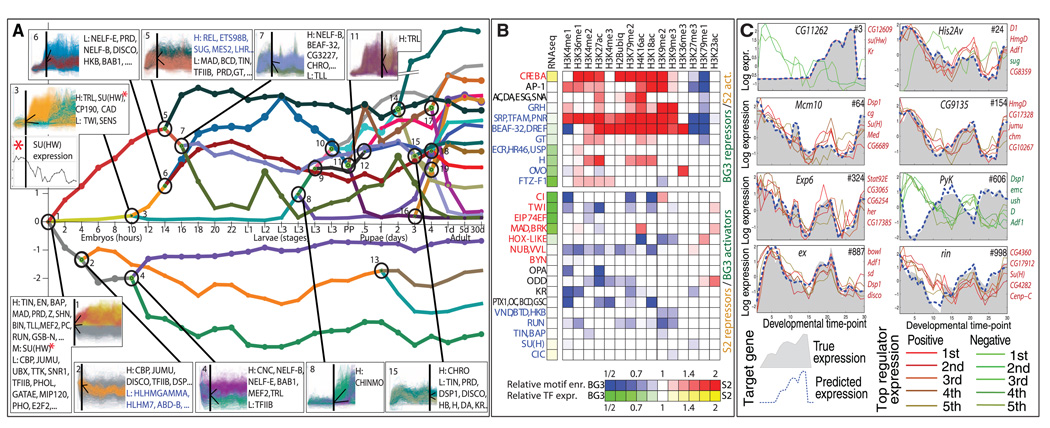
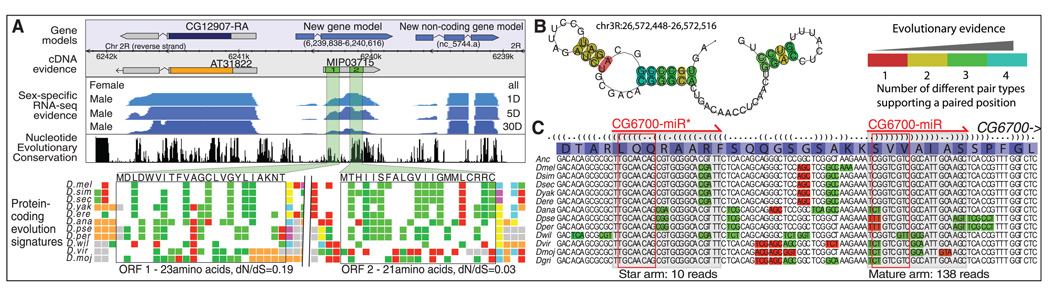
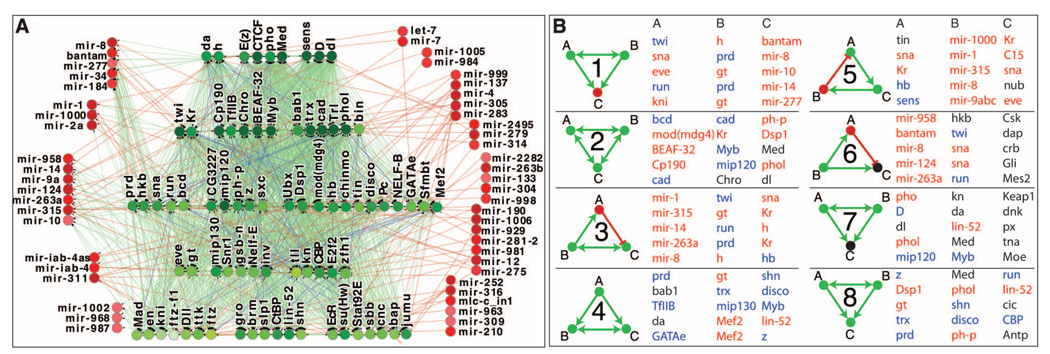
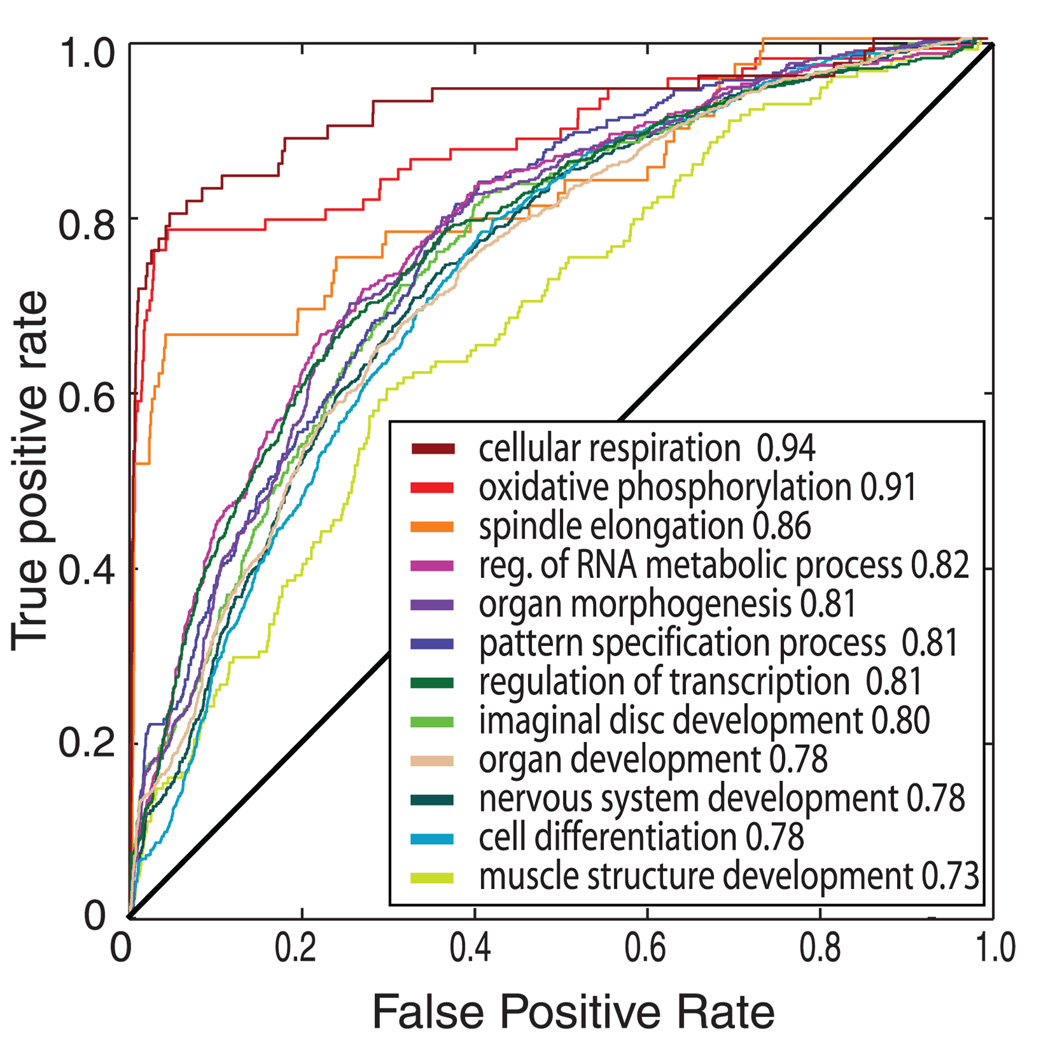
To gain insight into how genomic information is translated into cellular and developmental programs, the Drosophila model organism Encyclopedia of DNA Elements (modENCODE) project is comprehensively mapping transcripts, histone modifications, chromosomal proteins, transcription factors, replication proteins and intermediates, and nucleosome properties across a developmental time course and in multiple cell lines. We have generated more than 700 data sets and discovered protein-coding, noncoding, RNA regulatory, replication, and chromatin elements, more than tripling the annotated portion of the Drosophila genome. Correlated activity patterns of these elements reveal a functional regulatory network, which predicts putative new functions for genes, reveals stage- and tissue-specific regulators, and enables gene-expression prediction. Our results provide a foundation for directed experimental and computational studies in Drosophila and related species and also a model for systematic data integration toward comprehensive genomic and functional annotation.
为了深入了解基因组信息如何转化为细胞和发育程序,果蝇模式生物 DNA 元件百科全书(modENCODE)项目正在全面绘制转录本、组蛋白修饰、染色体蛋白、转录因子、复制蛋白及其中间体以及核小体特性图谱,跨越发育时间过程并在多个细胞系中进行。我们已经生成了 700 多个数据集,发现了蛋白质编码、非编码、RNA 调控、复制和染色质元件,是注释的果蝇基因组部分的三倍多。这些元件的相关活性模式揭示了一个功能调节网络,该网络预测了基因的潜在新功能,揭示了阶段和组织特异性调节剂,并能够进行基因表达预测。我们的研究结果为在果蝇和相关物种中进行有针对性的实验和计算研究提供了基础,也为系统的数据整合以实现全面的基因组和功能注释提供了模型。