Gene Therapy Center, University of Massachusetts Medical School, Worcester, Massachusetts 01655, USA.
Mol Ther. 2011 Mar;19(3):526-35. doi: 10.1038/mt.2010.279. Epub 2010 Dec 21.
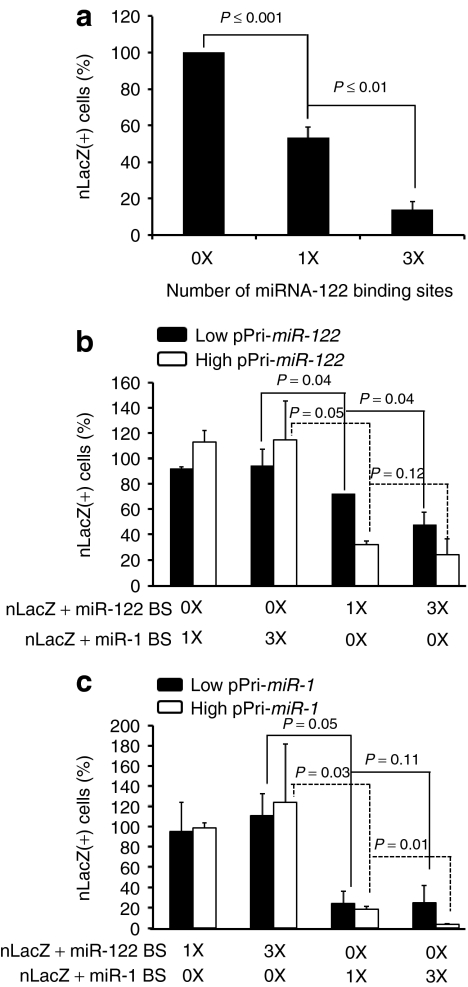
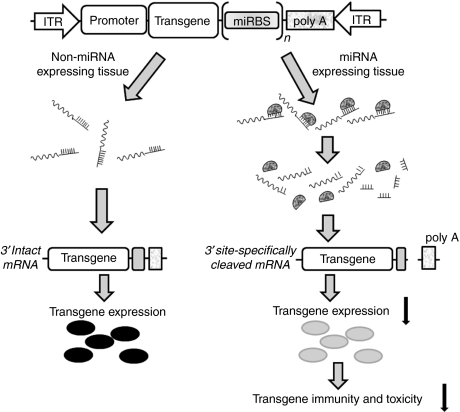
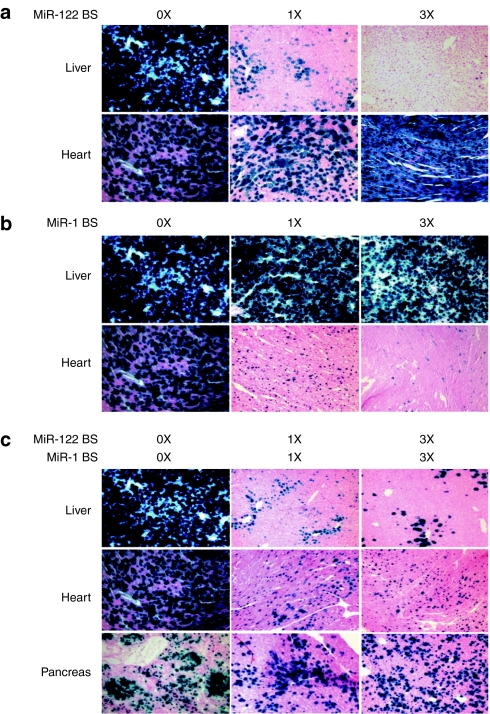
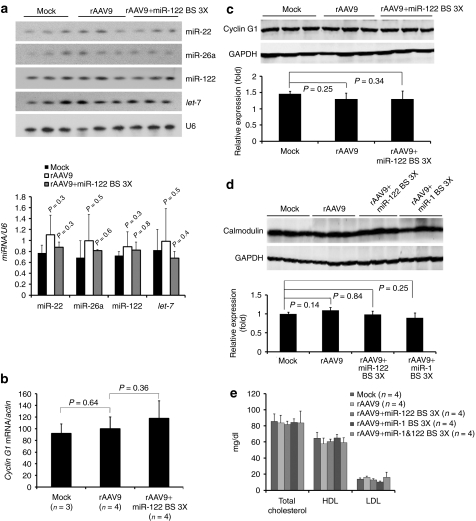
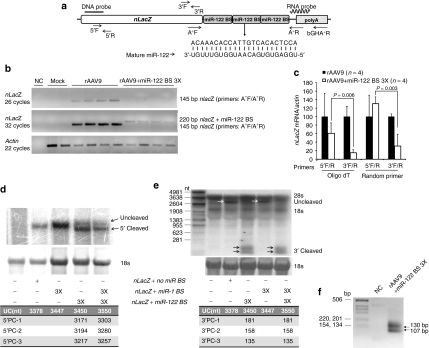
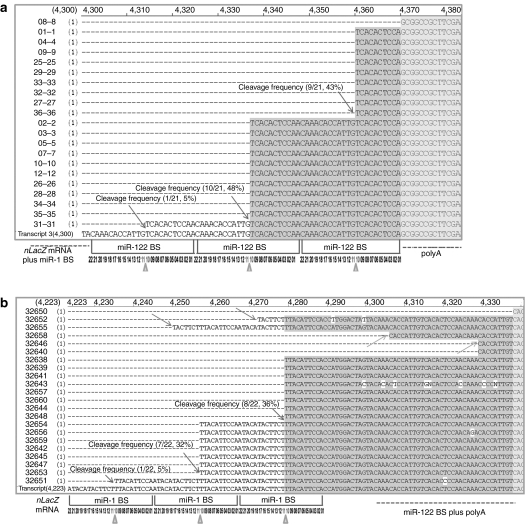
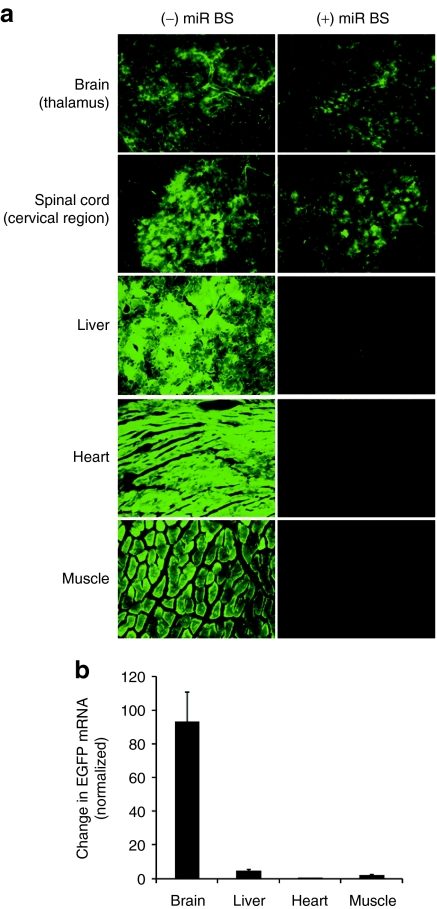
Recombinant adeno-associated viruses (rAAVs) that can cross the blood-brain-barrier and achieve efficient and stable transvascular gene transfer to the central nervous system (CNS) hold significant promise for treating CNS disorders. However, following intravascular delivery, these vectors also target liver, heart, skeletal muscle, and other tissues, which may cause untoward effects. To circumvent this, we used tissue-specific, endogenous microRNAs (miRNAs) to repress rAAV expression outside the CNS, by engineering perfectly complementary miRNA-binding sites into the rAAV9 genome. This approach allowed simultaneous multi-tissue regulation and CNS-directed stable transgene expression without detectably perturbing the endogenous miRNA pathway. Regulation of rAAV expression by miRNA was primarily via site-specific cleavage of the transgene mRNA, generating specific 5' and 3' mRNA fragments. Our findings promise to facilitate the development of miRNA-regulated rAAV for CNS-targeted gene delivery and other applications.
重组腺相关病毒(rAAV)能够穿过血脑屏障,实现对中枢神经系统(CNS)的高效稳定的跨血管基因转移,为治疗 CNS 疾病带来了巨大的希望。然而,在血管内给药后,这些载体也会靶向肝脏、心脏、骨骼肌和其他组织,可能会引起不良反应。为了解决这个问题,我们利用组织特异性的内源性 microRNAs(miRNAs)来抑制 rAAV 在 CNS 外的表达,通过在 rAAV9 基因组中构建完全互补的 miRNA 结合位点来实现这一目标。这种方法允许同时对多组织进行调节,并实现 CNS 定向的稳定转基因表达,而不会明显干扰内源性 miRNA 途径。miRNA 对 rAAV 表达的调节主要是通过对转基因 mRNA 的特异性切割,生成特定的 5' 和 3' mRNA 片段。我们的研究结果有望促进 miRNA 调控的 rAAV 用于 CNS 靶向基因传递和其他应用的发展。