European Bioinformatics Institute, Wellcome Trust Genome Campus, Cambridge CB10 1SD, UK.
Genome Biol. 2010;11(12):R124. doi: 10.1186/gb-2010-11-12-r124. Epub 2010 Dec 23.
It is widely accepted that orthologous genes between species are conserved at the sequence level and perform similar functions in different organisms. However, the level of conservation of gene expression patterns of the orthologous genes in different species has been unclear. To address the issue, we compared gene expression of orthologous genes based on 2,557 human and 1,267 mouse samples with high quality gene expression data, selected from experiments stored in the public microarray repository ArrayExpress.
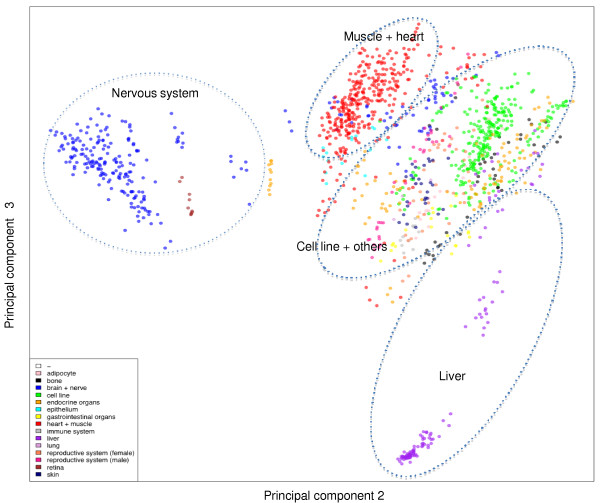
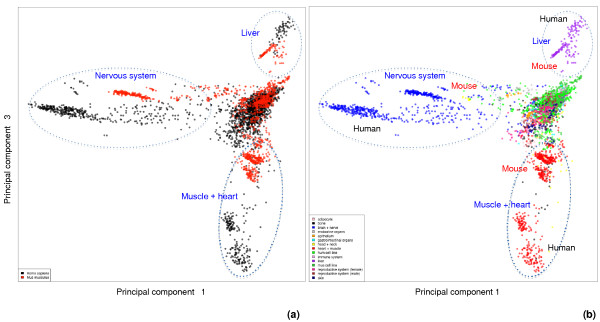
In a principal component analysis (PCA) of combined data from human and mouse samples merged on orthologous probesets, samples largely form distinctive clusters based on their tissue sources when projected onto the top principal components. The most prominent groups are the nervous system, muscle/heart tissues, liver and cell lines. Despite the great differences in sample characteristics and experiment conditions, the overall patterns of these prominent clusters are strikingly similar for human and mouse. We further analyzed data for each tissue separately and found that the most variable genes in each tissue are highly enriched with human-mouse tissue-specific orthologs and the least variable genes in each tissue are enriched with human-mouse housekeeping orthologs.
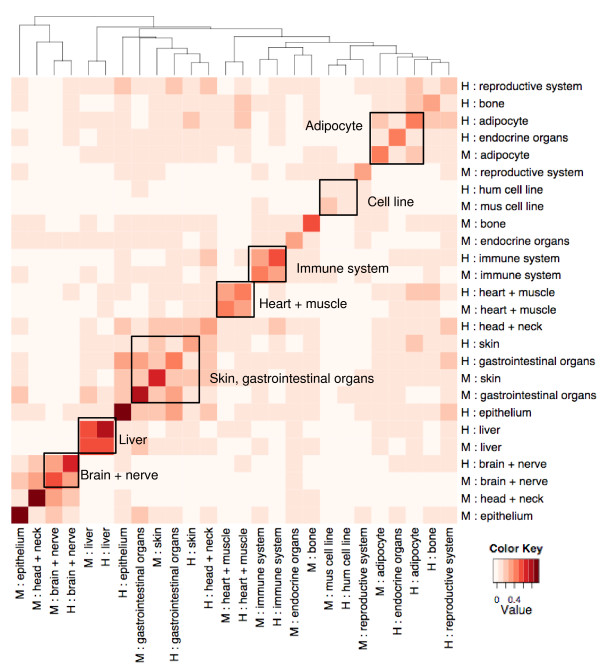
The results indicate that the global patterns of tissue-specific expression of orthologous genes are conserved in human and mouse. The expression of groups of orthologous genes co-varies in the two species, both for the most variable genes and the most ubiquitously expressed genes.
物种间的同源基因在序列水平上是保守的,并且在不同的生物体中执行相似的功能,这一点已被广泛接受。然而,不同物种中同源基因表达模式的保守程度尚不清楚。为了解决这个问题,我们比较了基于 2557 个人类和 1267 个小鼠样本的高质量基因表达数据的同源基因的基因表达,这些样本从存储在公共微阵列库 ArrayExpress 中的实验中选择。
在对人类和小鼠样本的同源探针集合并的组合数据进行主成分分析(PCA)时,当投射到顶部主成分上时,样本主要根据其组织来源形成独特的聚类。最突出的组是神经系统、肌肉/心脏组织、肝脏和细胞系。尽管样本特征和实验条件存在很大差异,但人类和小鼠的这些显著聚类的总体模式非常相似。我们进一步分析了每个组织的数据,发现每个组织中最具变异性的基因高度富集了人类-小鼠组织特异性同源物,而每个组织中最具不变性的基因则富集了人类-小鼠管家同源物。
结果表明,同源基因的组织特异性表达的全局模式在人类和小鼠中是保守的。在这两个物种中,同源基因的表达呈共变,无论是最具变异性的基因还是最普遍表达的基因。