The Gurdon Institute and Department of Physiology, Development, and Neuroscience, University of Cambridge, Tennis Court Road, Cambridge CB2 1QN, UK.
Cell. 2010 Dec 23;143(7):1161-73. doi: 10.1016/j.cell.2010.12.007.
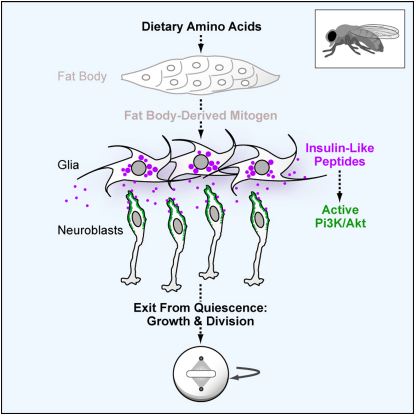
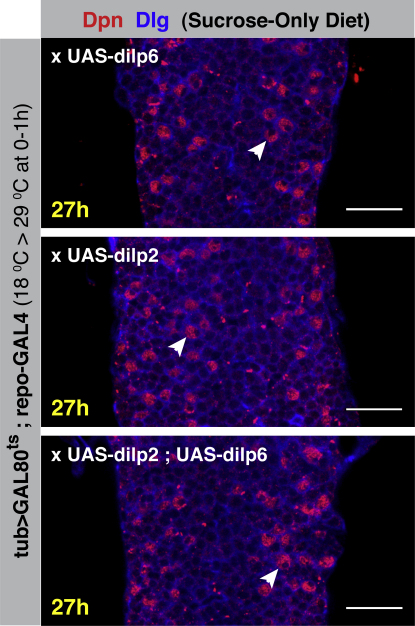
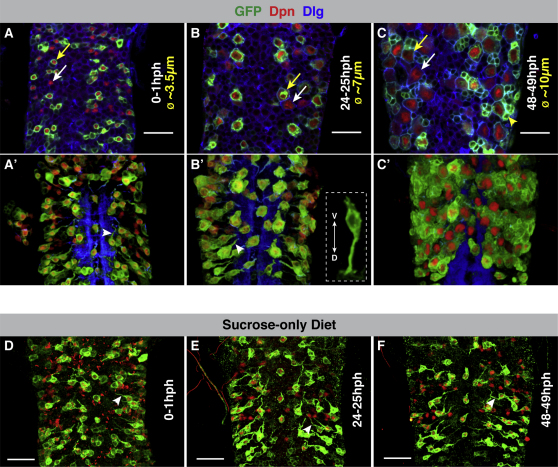
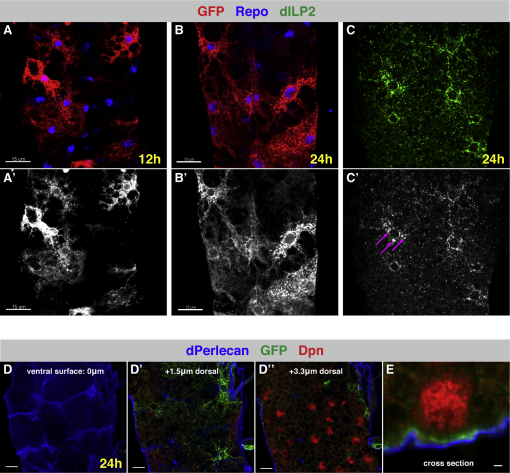
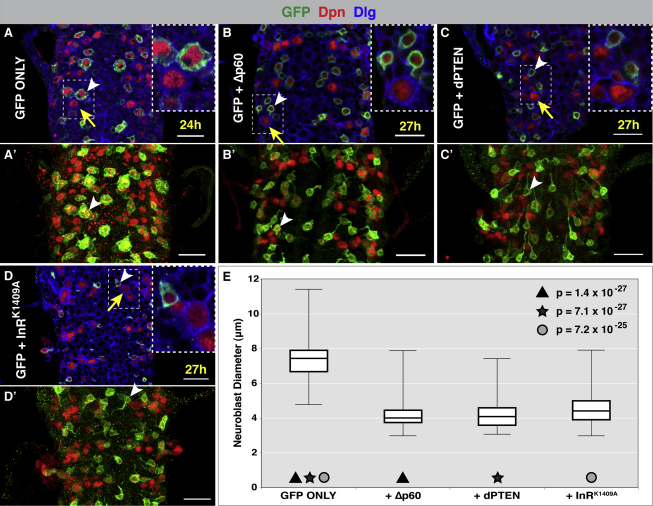
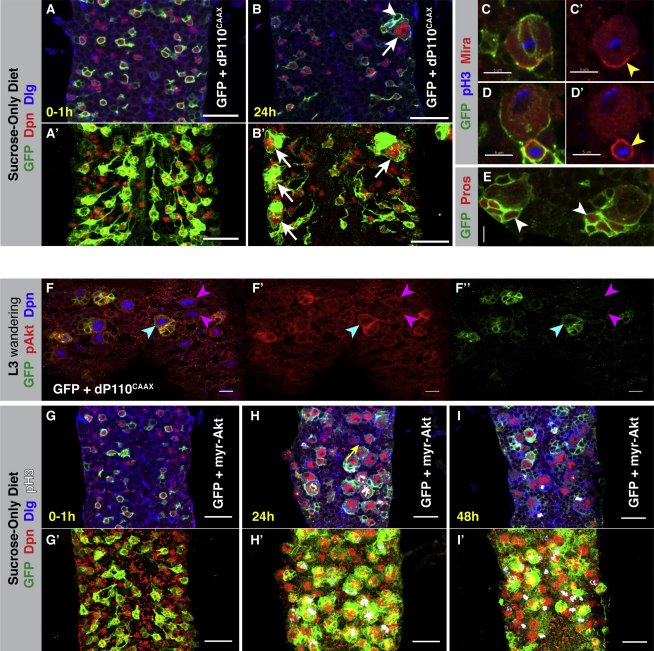
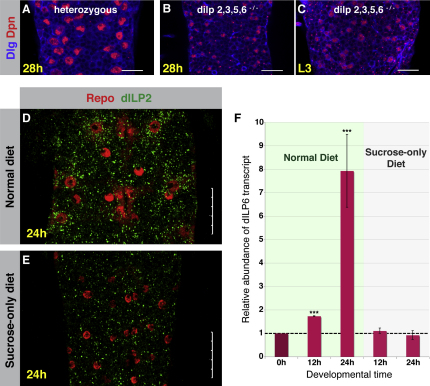
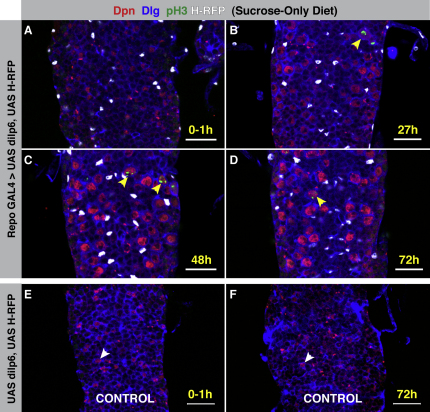
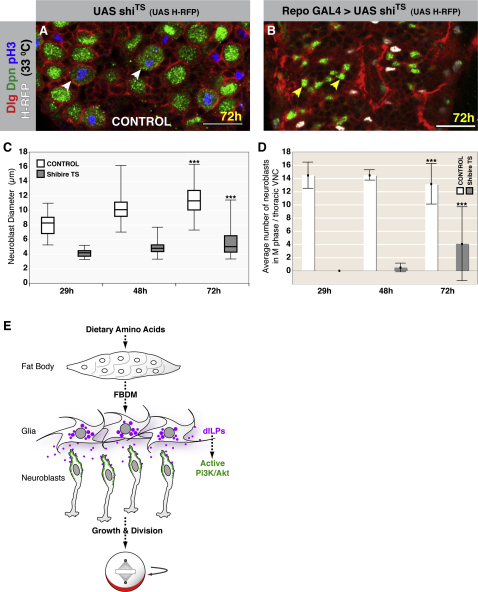
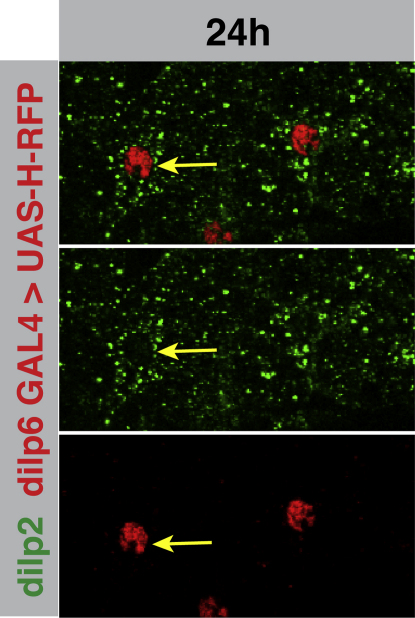
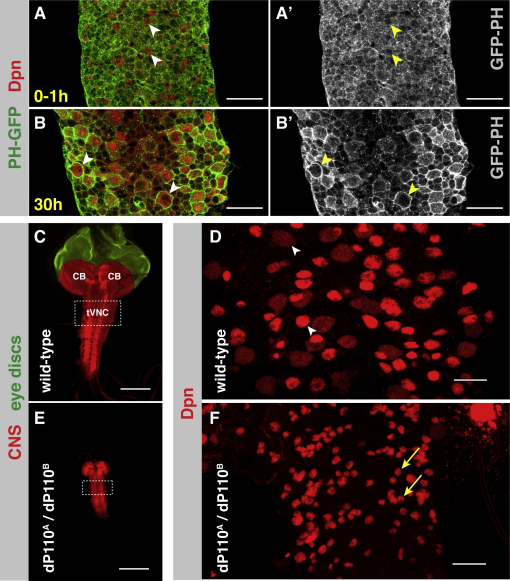
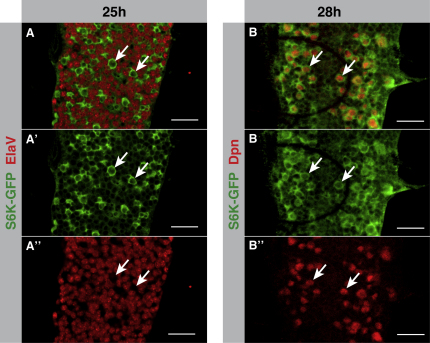
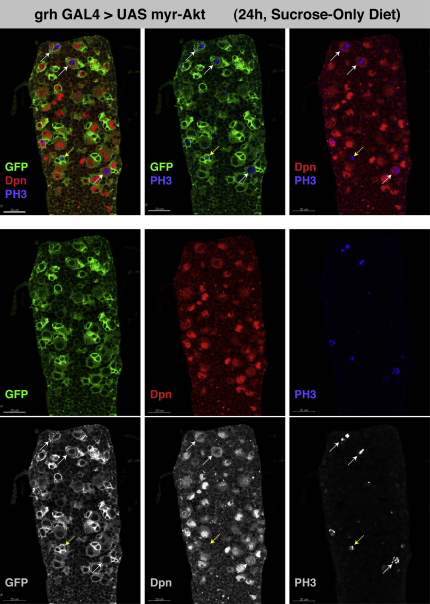
The systemic regulation of stem cells ensures that they meet the needs of the organism during growth and in response to injury. A key point of regulation is the decision between quiescence and proliferation. During development, Drosophila neural stem cells (neuroblasts) transit through a period of quiescence separating distinct embryonic and postembryonic phases of proliferation. It is known that neuroblasts exit quiescence via a hitherto unknown pathway in response to a nutrition-dependent signal from the fat body. We have identified a population of glial cells that produce insulin/IGF-like peptides in response to nutrition, and we show that the insulin/IGF receptor pathway is necessary for neuroblasts to exit quiescence. The forced expression of insulin/IGF-like peptides in glia, or activation of PI3K/Akt signaling in neuroblasts, can drive neuroblast growth and proliferation in the absence of dietary protein and thus uncouple neuroblasts from systemic control.
干细胞的系统调节确保它们在生长过程中和应对损伤时满足机体的需求。调节的一个关键点是在静止和增殖之间做出决策。在发育过程中,果蝇神经干细胞(神经母细胞)经历了一个静止期,将不同的胚胎期和胚胎后增殖期分开。已知神经母细胞通过一个迄今为止未知的途径退出静止期,以响应来自脂肪体的营养依赖信号。我们已经鉴定出一群胶质细胞,它们响应营养产生胰岛素/IGF 样肽,我们表明胰岛素/IGF 受体途径对于神经母细胞退出静止期是必需的。胰岛素/IGF 样肽在胶质细胞中的强制表达,或 PI3K/Akt 信号在神经母细胞中的激活,可以在没有膳食蛋白的情况下驱动神经母细胞的生长和增殖,从而使神经母细胞与系统控制解耦。