Department of Organismic and Evolutionary Biology, Harvard University, Cambridge, Massachusetts, USA.
Genome Biol Evol. 2011;3:102-13. doi: 10.1093/gbe/evq087. Epub 2010 Dec 23.
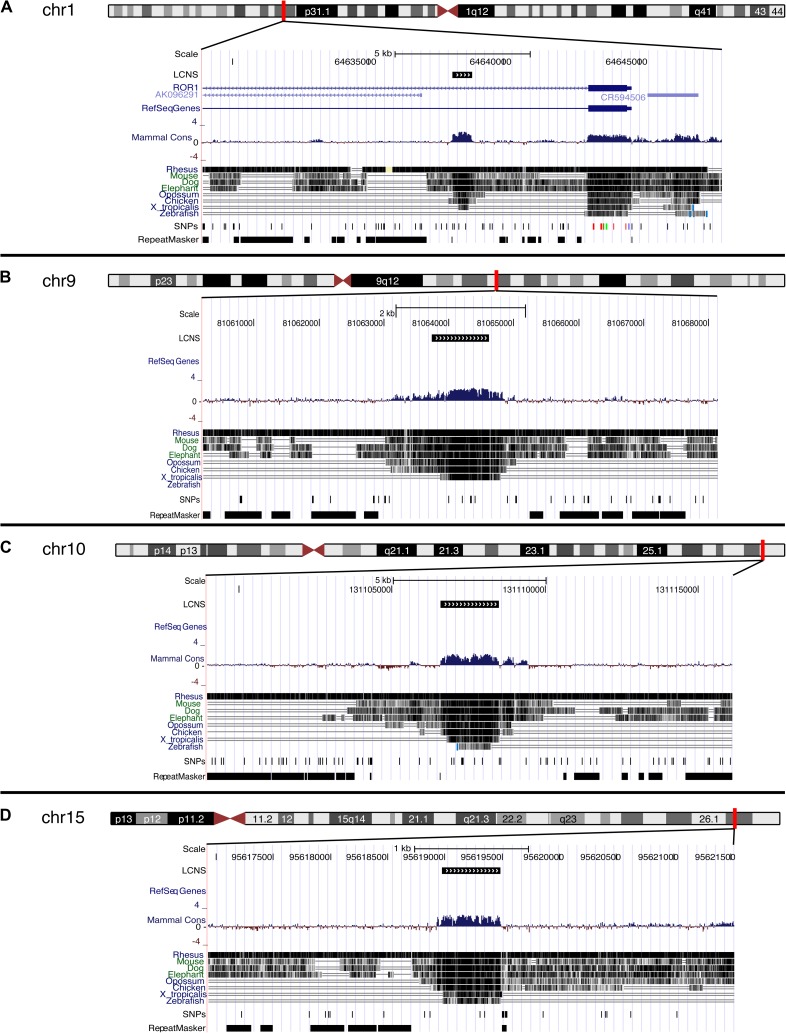
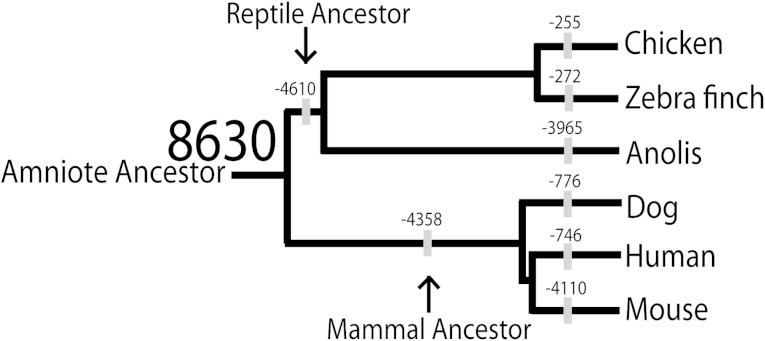
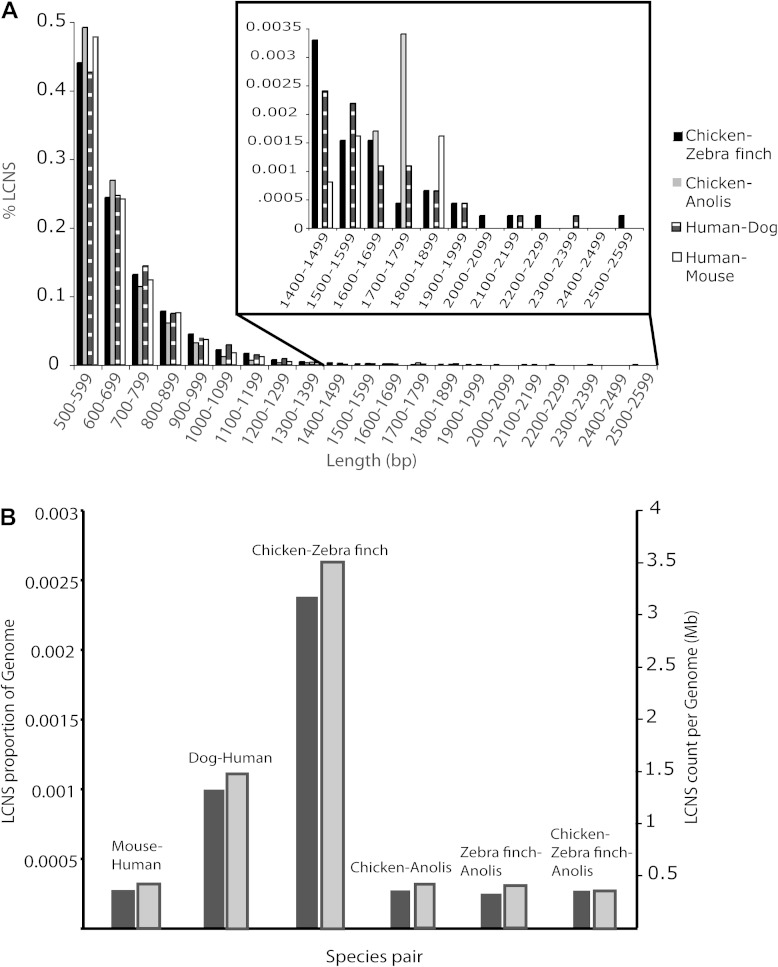
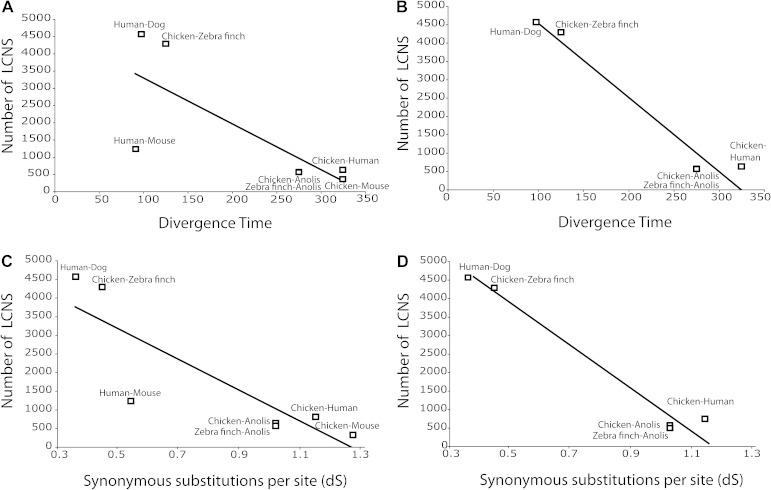
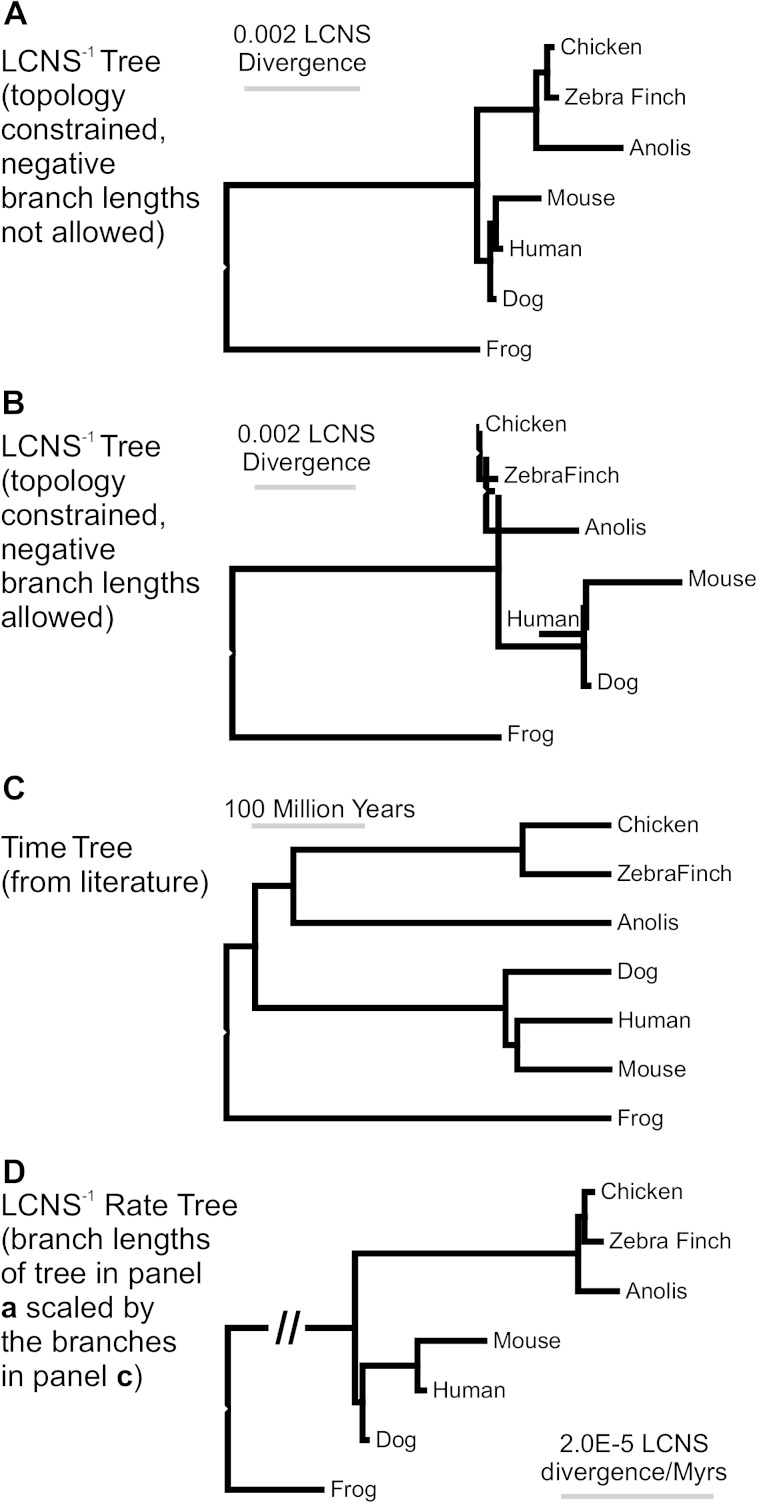
Many noncoding regions of genomes appear to be essential to genome function. Conservation of large numbers of noncoding sequences has been reported repeatedly among mammals but not thus far among birds and reptiles. By searching genomes of chicken (Gallus gallus), zebra finch (Taeniopygia guttata), and green anole (Anolis carolinensis), we quantified the conservation among birds and reptiles and across amniotes of long, conserved noncoding sequences (LCNS), which we define as sequences ≥500 bp in length and exhibiting ≥95% similarity between species. We found 4,294 LCNS shared between chicken and zebra finch and 574 LCNS shared by the two birds and Anolis. The percent of genomes comprised by LCNS in the two birds (0.0024%) is notably higher than the percent in mammals (<0.0003% to <0.001%), differences that we show may be explained in part by differences in genome-wide substitution rates. We reconstruct a large number of LCNS for the amniote ancestor (ca. 8,630) and hypothesize differential loss and substantial turnover of these sites in descendent lineages. By contrast, we estimated a small role for recruitment of LCNS via acquisition of novel functions over time. Across amniotes, LCNS are significantly enriched with transcription factor binding sites for many developmental genes, and 2.9% of LCNS shared between the two birds show evidence of expression in brain expressed sequence tag databases. These results show that the rate of retention of LCNS from the amniote ancestor differs between mammals and Reptilia (including birds) and that this may reflect differing roles and constraints in gene regulation.
许多基因组的非编码区域似乎对基因组功能至关重要。大量非编码序列在哺乳动物中得到了反复报道,但在鸟类和爬行动物中尚未如此。通过搜索鸡(Gallus gallus)、斑胸草雀(Taeniopygia guttata)和绿鬣蜥(Anolis carolinensis)的基因组,我们量化了鸟类和爬行动物之间以及羊膜动物之间长保守非编码序列(LCNS)的保守性,我们将其定义为长度≥500bp 且在物种间具有≥95%相似性的序列。我们发现鸡和斑胸草雀之间有 4294 个 LCNS 共享,这两种鸟和绿鬣蜥之间有 574 个 LCNS 共享。这两种鸟的 LCNS 占基因组的比例(0.0024%)明显高于哺乳动物(<0.0003%至<0.001%),我们表明这些差异部分可以用全基因组替代率的差异来解释。我们为羊膜动物祖先重建了大量 LCNS(约 8630 个),并假设这些位点在后代谱系中发生了差异丢失和大量替换。相比之下,我们估计随着时间的推移通过获得新功能来招募 LCNS 的作用较小。在羊膜动物中,LCNS 显著富集了许多发育基因的转录因子结合位点,并且在这两种鸟之间共享的 2.9%的 LCNS 显示出在大脑表达序列标签数据库中表达的证据。这些结果表明,从羊膜动物祖先保留 LCNS 的速率在哺乳动物和爬行动物(包括鸟类)之间存在差异,这可能反映了基因调控中不同的作用和约束。