Department of Pathology and Center for Biodefense and Emerging Infectious Diseases, University of Texas Medical Branch, Galveston, Texas, United States of America.
PLoS One. 2010 Dec 20;5(12):e15775. doi: 10.1371/journal.pone.0015775.
The obligately intracellular bacterium Ehrlichia chaffeensis that resides in mononuclear phagocytes is the causative agent of human monocytotropic ehrlichiosis. Ehrlichia muris and Ixodes ovatus Ehrlichia (IOE) are agents of mouse models of ehrlichiosis. The mechanism by which Ehrlichia are transported from an infected host cell to a non-infected cell has not been demonstrated.
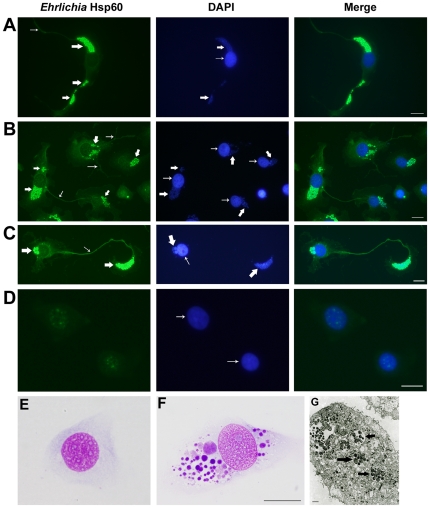
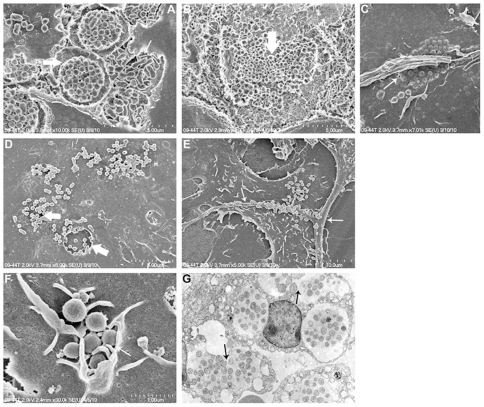
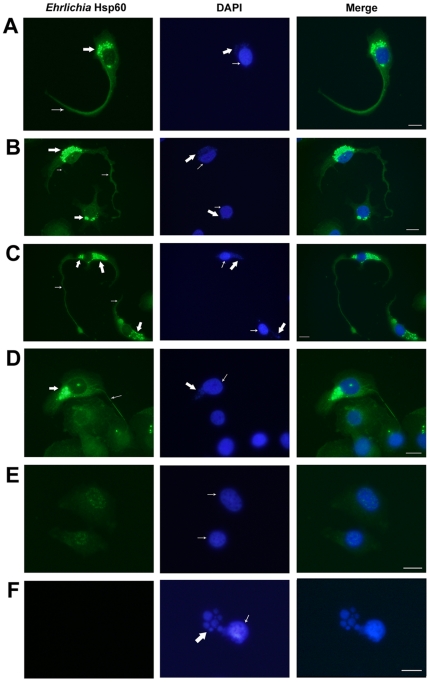
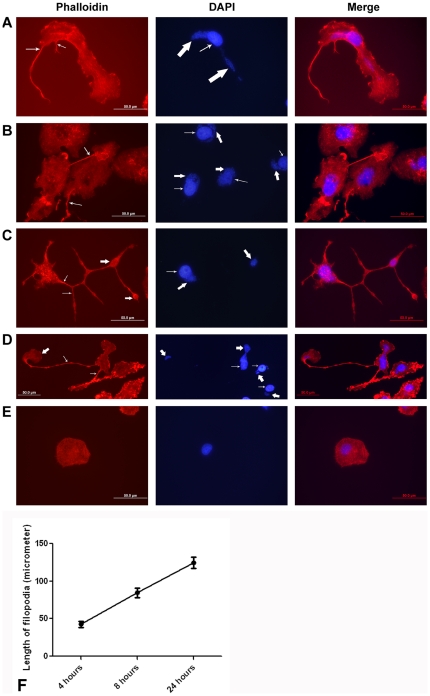
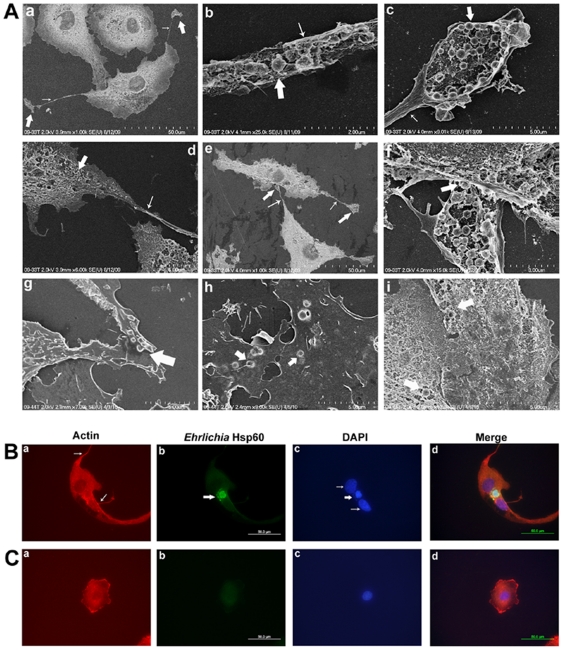
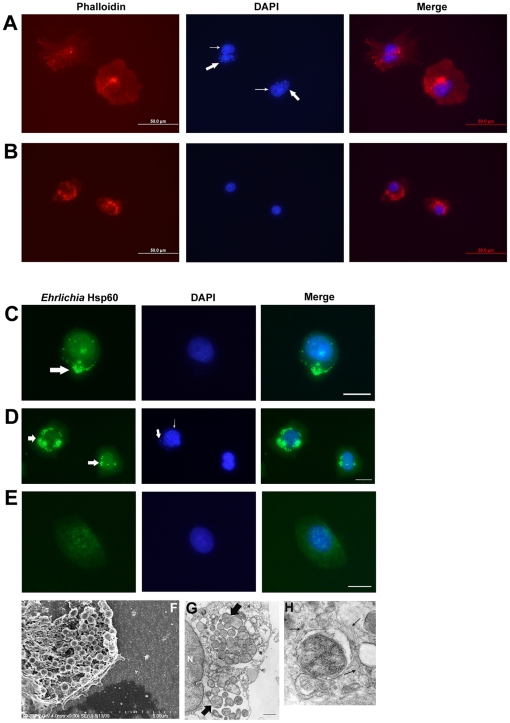
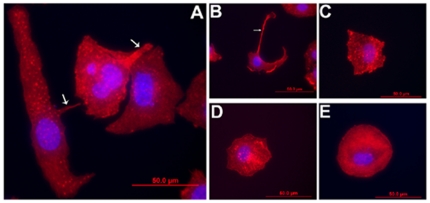
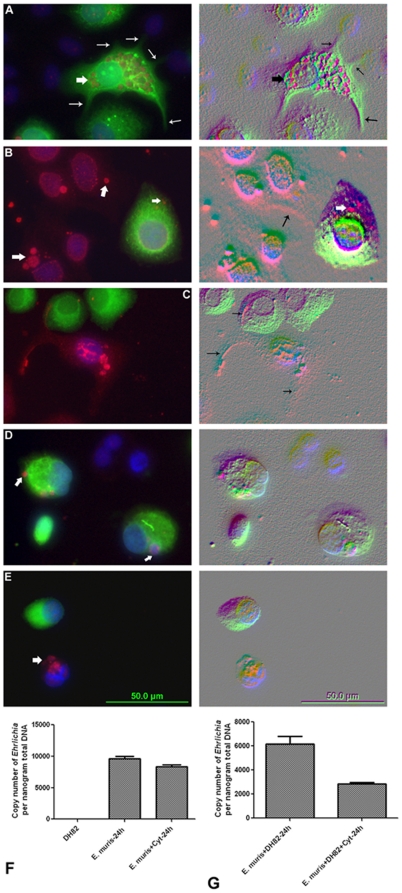
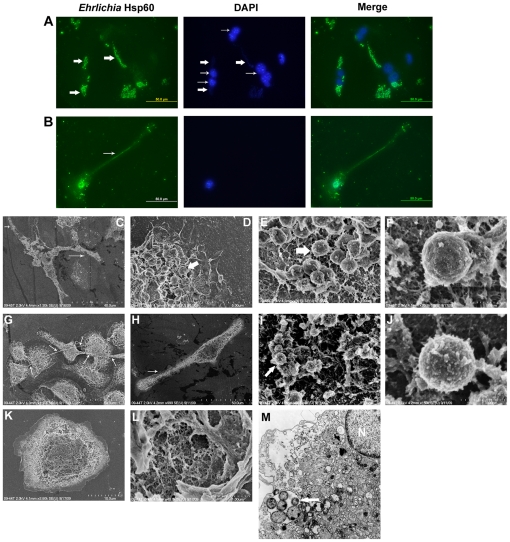
METHODOLOGY/PRINCIPAL FINDINGS: Using fluorescence microscopy and transmission and scanning electron microscopy, we demonstrated that Ehrlichia was transported through the filopodia of macrophages during early stages of infection. If host cells were not present in the vicinity of an Ehrlichia-infected cell, the leading edge of the filopodium formed a fan-shaped structure filled with the pathogen. Formation of filopodia in the host macrophages was inhibited by cytochalasin D and ehrlichial transport were prevented due to the absence of filopodia formation. At late stages of infection the host cell membrane was ruptured, and the bacteria were released.
CONCLUSIONS/SIGNIFICANCE: Ehrlichia are transported through the host cell filopodium during initial stages of infection, but are released by host cell membrane rupture during later stages of infection.
专性细胞内寄生的埃立克体属细菌(Ehrlichia chaffeensis)存在于单核吞噬细胞内,是人类单核细胞埃立克体病的病原体。Ehrlichia muris 和 Ixodes ovatus Ehrlichia(IOE)是埃立克体病小鼠模型的病原体。埃立克体从感染宿主细胞向非感染细胞转移的机制尚未得到证实。
方法/主要发现:通过荧光显微镜、透射电镜和扫描电镜观察,我们发现埃立克体在感染早期通过巨噬细胞的丝状伪足进行运输。如果在感染埃立克体的细胞附近没有宿主细胞,丝状伪足的前缘会形成一个扇形结构,充满病原体。细胞松弛素 D 抑制了宿主巨噬细胞丝状伪足的形成,并且由于丝状伪足的缺失,阻止了埃立克体的运输。在感染后期,宿主细胞膜破裂,细菌被释放。
结论/意义:埃立克体在感染的初始阶段通过宿主细胞丝状伪足进行运输,但在感染后期通过宿主细胞膜破裂而被释放。