Departments of Pathology, University of Texas Medical Branch, Galveston, TX 77555, USA.
Microbiology and Immunology, University of Texas Medical Branch, Galveston, TX 77555, USA.
Pathog Dis. 2021 May 11;79(5). doi: 10.1093/femspd/ftab026.
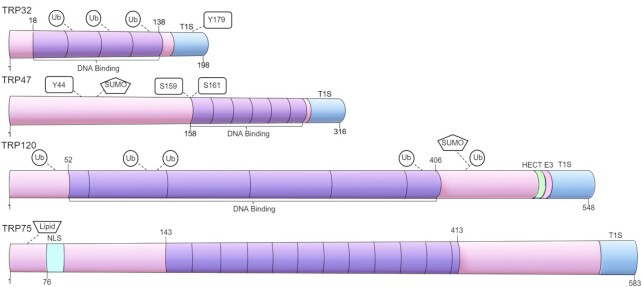
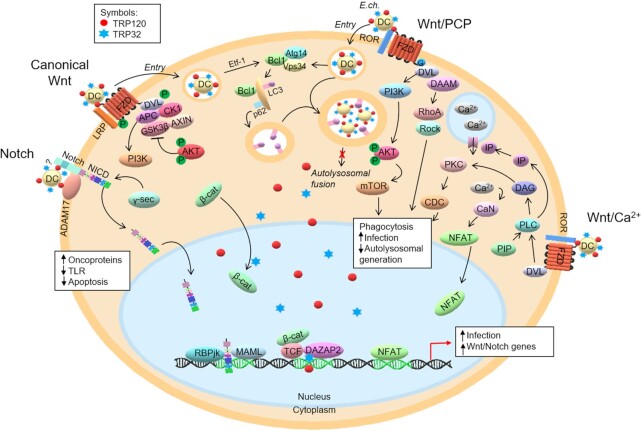
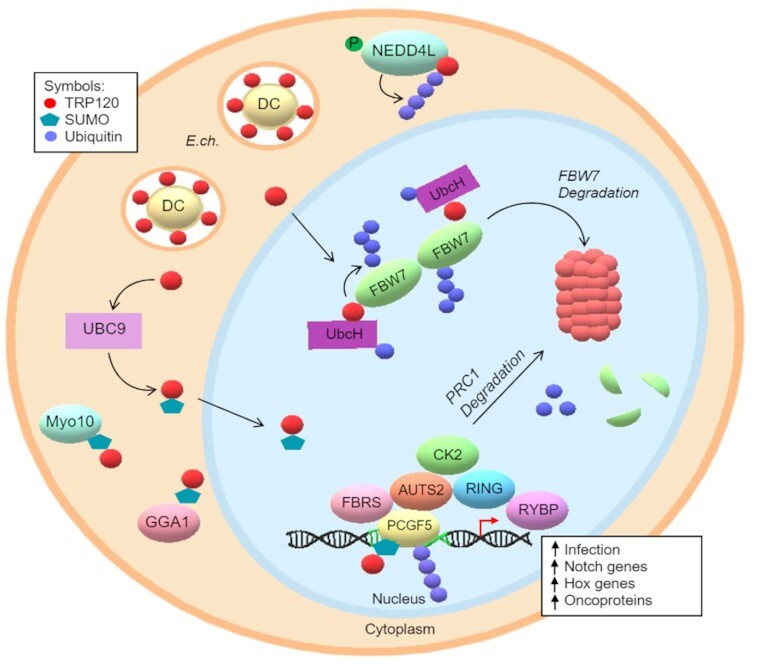
Intracellular bacteria have evolved various strategies to evade host defense mechanisms. Remarkably, the obligately intracellular bacterium, Ehrlichia chaffeensis, hijacks host cell processes of the mononuclear phagocyte to evade host defenses through mechanisms executed in part by tandem repeat protein (TRP) effectors secreted by the type 1 secretion system. In the past decade, TRP120 has emerged as a model moonlighting effector, acting as a ligand mimetic, nucleomodulin and ubiquitin ligase. These defined functions illuminate the diverse roles TRP120 plays in exploiting and manipulating host cell processes, including cytoskeletal organization, vesicle trafficking, cell signaling, transcriptional regulation, post-translational modifications, autophagy and apoptosis. This review will focus on TRP effectors and their expanding roles in infection and provide perspective on Ehrlichia chaffeensis as an invaluable model organism for understanding infection strategies of obligately intracellular bacteria.
胞内细菌进化出了各种策略来逃避宿主防御机制。值得注意的是,专性胞内细菌,Ehrlichia chaffeensis,通过 1 型分泌系统分泌的串联重复蛋白 (TRP) 效应子劫持宿主单核吞噬细胞的过程,部分通过机制逃避宿主防御。在过去的十年中,TRP120 已成为一种模型分子伴侣效应子,充当配体模拟物、核调素和泛素连接酶。这些明确的功能阐明了 TRP120 在利用和操纵宿主细胞过程中发挥的多种作用,包括细胞骨架组织、囊泡运输、细胞信号转导、转录调控、翻译后修饰、自噬和细胞凋亡。这篇综述将重点介绍 TRP 效应子及其在感染中的扩展作用,并提供关于 Chaffeensis 作为理解专性胞内细菌感染策略的宝贵模型生物的观点。