Department of Orthopaedics, Sint Maartenskliniek, Nijmegen, the Netherlands.
Acta Orthop. 2011 Feb;82(1):27-34. doi: 10.3109/17453674.2010.548025. Epub 2010 Dec 29.
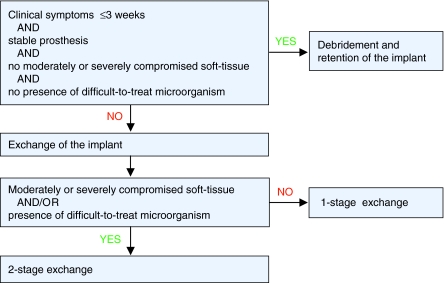
Successful treatment of prosthetic hip joint infection (PI) means elimination of infection and restored hip function. However, functional outcome is rarely studied. We analyzed the outcome of the strict use of a treatment algorithm for PI.
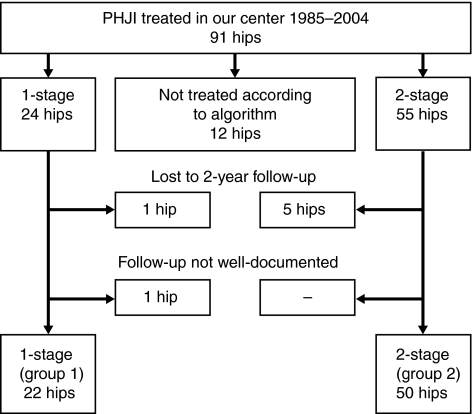
The study groups included 22 hips with 1-stage exchange for PI (group 1), 22 matched hips revised for aseptic loosening (controls), and 50 hips with 2-stage exchange (group 2). Relapse of infection, Harris hip score (HHS), limping, use of crutches, reoperations, complications, and radiographic changes were compared between the groups.
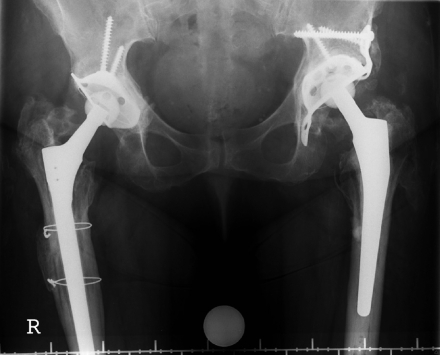
There was 1 relapse of infection, which occurred in group 2. In group 1, the mean HHS was 84; 4 of 19 patients were limping and 2 required 2 crutches, which was similar to the control results. In group 2, scores were lower and complication rates higher. The use of a Burch-Schneider ring and the presence of a deficient trochanter impaired function. There were no differences in radiographic outcome between the groups.
With the algorithm used, infection can be cured with high reliability. With a 1-stage procedure, mobility is maintained. After 2-stage procedures, function was impaired due to there being more previous surgery and more serious infection.
成功治疗人工髋关节感染(PI)意味着消除感染并恢复髋关节功能。然而,功能结果很少被研究。我们分析了严格使用 PI 治疗算法的结果。
研究组包括 22 例因 PI 行 1 期置换的髋关节(第 1 组)、22 例匹配的无菌性松动翻修髋关节(对照组)和 50 例行 2 期置换的髋关节(第 2 组)。比较了各组之间的感染复发、Harris 髋关节评分(HHS)、跛行、使用拐杖、再次手术、并发症和影像学变化。
第 2 组发生 1 例感染复发。第 1 组中,平均 HHS 为 84;19 例患者中有 4 例跛行,2 例需要使用 2 根拐杖,与对照组结果相似。第 2 组的评分较低,并发症发生率较高。Burch-Schneider 环的使用和转子缺陷会影响功能。各组的影像学结果无差异。
使用该算法可以可靠地治愈感染。1 期手术可保持活动能力。2 期手术后,由于先前手术更多、感染更严重,功能受损。