Gu X, Trybiło M, Ramsay S, Jensen M, Fulton R, Rosser S, Gilbert D
Syst Synth Biol. 2010 Sep;4(3):203-14. doi: 10.1007/s11693-010-9063-2. Epub 2010 Sep 18.
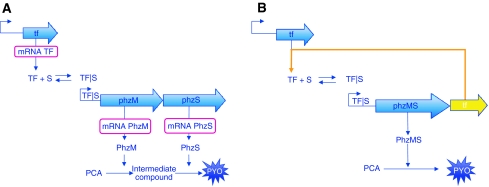
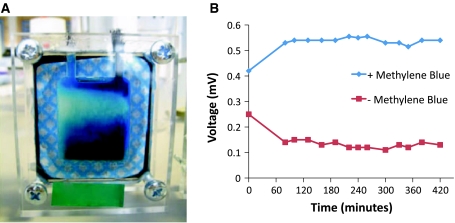
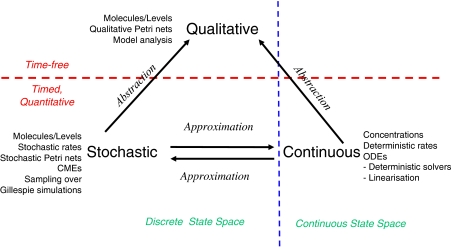
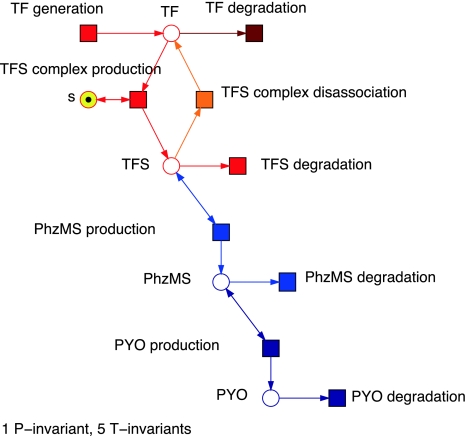
This paper records the efforts of a multi-disciplinary team of undergraduate students from Glasgow University to collectively design and carry out a 10 week project in Synthetic Biology as part of the international Genetic Engineered Machine competition (iGEM). The aim of the project was to design and build a self-powering electrochemical biosensor called 'ElectrEcoBlu'. The novelty of this engineered machine lies in coupling a biosensor with a microbial fuel cell to transduce a pollution input into an easily measurable electrical output signal. The device consists of two components; the sensor element which is modular, allowing for customisation to detect a range of input signals as required, and the universal reporter element which is responsible for generating an electrical signal as an output. The genetic components produce pyocyanin, a competitive electron mediator for microbial fuel cells, thus enabling the generation of an electrical current in the presence of target chemical pollutants. The pollutants tested in our implementation were toluene and salicylate. ElectrEcoBlu is expected to drive forward the development of a new generation of biosensors. Our approach exploited a range of state-of-the-art modelling techniques in a unified framework of qualitative, stochastic and continuous approaches to support the design and guide the construction of this novel biological machine. This work shows that integrating engineering techniques with scientific methodologies can provide new insights into genetic regulation and can be considered as a reference framework for the development of biochemical systems in synthetic biology.
本文记录了格拉斯哥大学的一个多学科本科生团队共同设计并开展一个为期10周的合成生物学项目的过程,该项目是国际遗传工程机器竞赛(iGEM)的一部分。该项目的目标是设计并构建一种名为“ElectrEcoBlu”的自供电电化学生物传感器。这种工程机器的新颖之处在于将生物传感器与微生物燃料电池相结合,将污染输入转化为易于测量的电输出信号。该装置由两个组件组成;传感器元件是模块化的,可根据需要进行定制以检测一系列输入信号,通用报告元件则负责产生电信号作为输出。遗传组件产生绿脓菌素,这是一种用于微生物燃料电池的竞争性电子介体,从而在存在目标化学污染物的情况下能够产生电流。在我们的实验中测试的污染物是甲苯和水杨酸盐。预计ElectrEcoBlu将推动新一代生物传感器的发展。我们的方法在定性、随机和连续方法的统一框架中利用了一系列先进的建模技术,以支持该新型生物机器的设计并指导其构建。这项工作表明,将工程技术与科学方法相结合可以为基因调控提供新的见解,并可被视为合成生物学中生化系统开发的参考框架。