Pang Dachling, Thompson Dominic N P
Department of Neurological Surgery, University of California, Davis, Sacramento, CA, USA.
Childs Nerv Syst. 2011 Apr;27(4):523-64. doi: 10.1007/s00381-010-1358-9. Epub 2010 Dec 31.
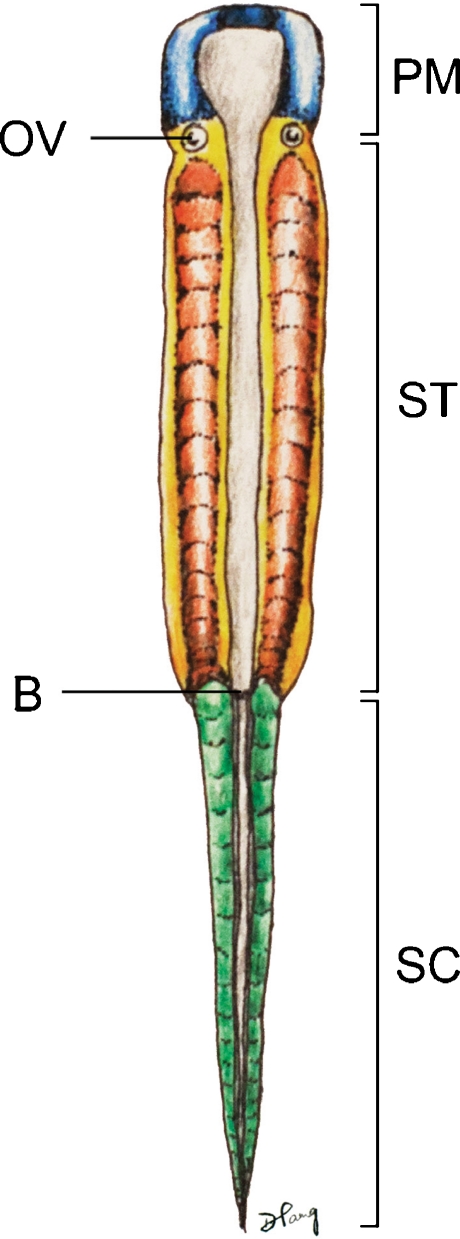
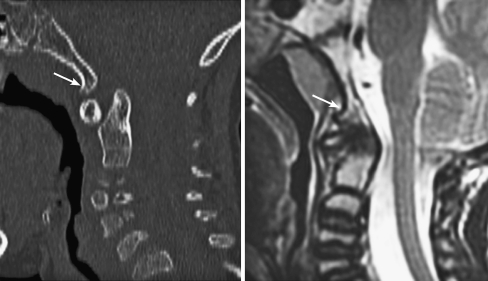
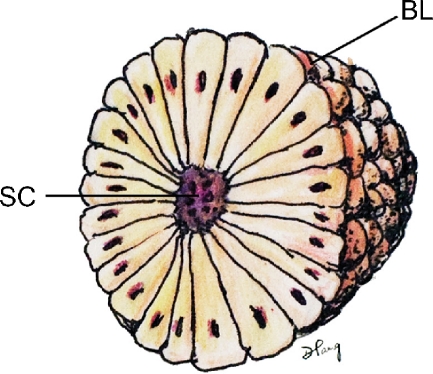
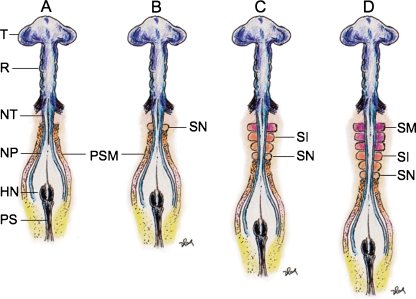
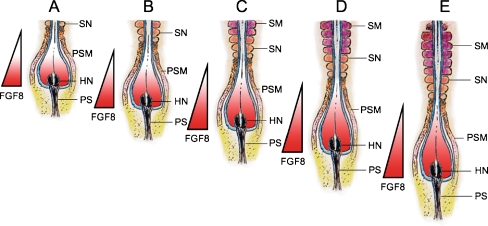
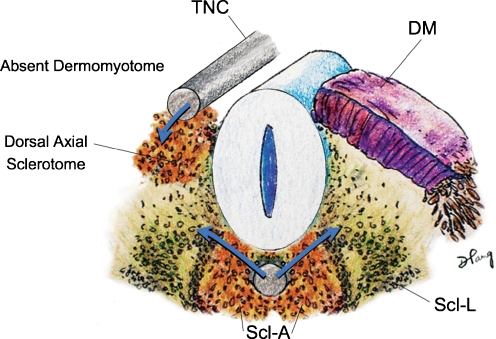
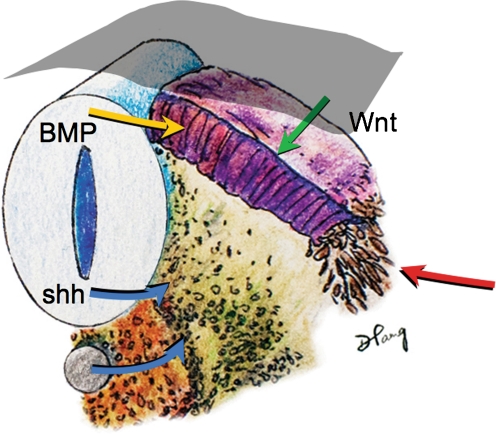
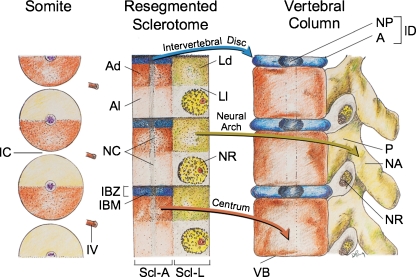
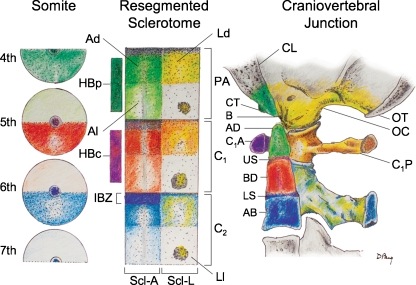
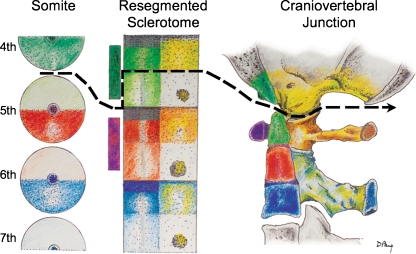
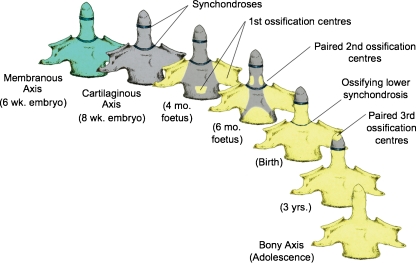
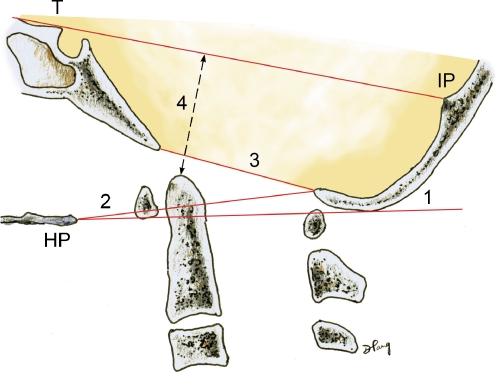
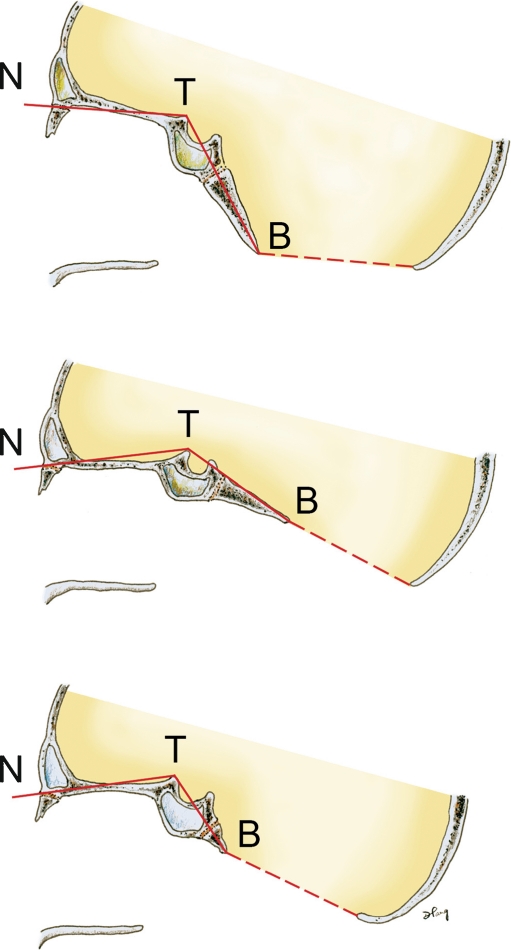
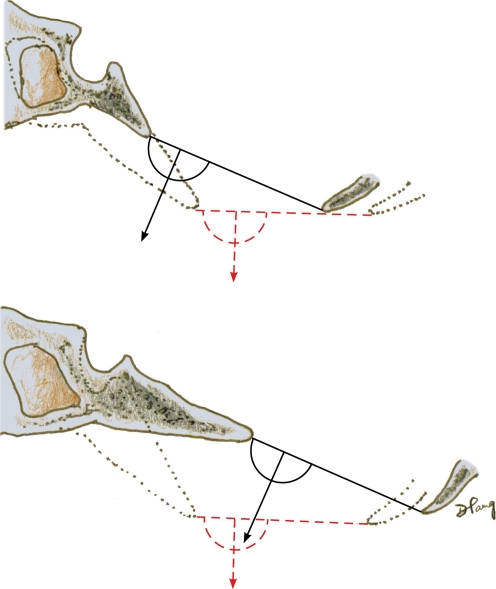
The embryology of the bony craniovertebral junction (CVJ) is reviewed with the purpose of explaining the genesis and unusual configurations of the numerous congenital malformations in this region. Functionally, the bony CVJ can be divided into a central pillar consisting of the basiocciput and dental pivot and a two-tiered ring revolving round the central pivot, comprising the foramen magnum rim and occipital condyles above and the atlantal ring below. Embryologically, the central pillar and the surrounding rings descend from different primordia, and accordingly, developmental anomalies at the CVJ can also be segregated into those affecting the central pillar and those affecting the surrounding rings, respectively.
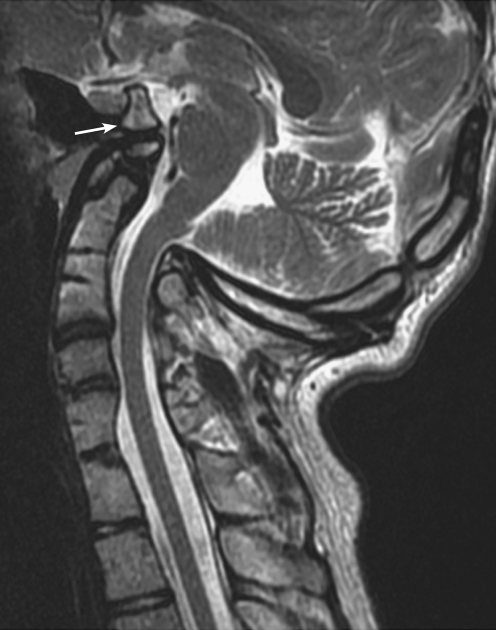
A logical classification of this seemingly unwieldy group of malformations is thus possible based on their ontogenetic lineage, morbid anatomy, and clinical relevance. Representative examples of the main constituents of this classification scheme are given, and their surgical treatments are selectively discussed.
回顾颅骨与颈椎交界处(CVJ)的胚胎学,旨在解释该区域众多先天性畸形的发生及异常形态。从功能上看,骨性CVJ可分为由枕骨基底部和齿突组成的中央支柱,以及围绕中央支柱旋转的两层环,上层包括枕骨大孔边缘和枕髁,下层为寰椎环。在胚胎学上,中央支柱和周围的环源自不同的原基,因此,CVJ处的发育异常也可分别分为影响中央支柱的异常和影响周围环的异常。
基于其个体发生谱系、病理解剖及临床相关性,对这组看似复杂的畸形进行合理分类成为可能。给出了该分类方案主要组成部分的代表性实例,并对其手术治疗进行了选择性讨论。