Gene Center and Department of Biochemistry, Center for Integrated Protein Science CIPSM, Ludwig-Maximilians-Universität München, Munich, Germany.
Mol Syst Biol. 2011 Jan 4;7:458. doi: 10.1038/msb.2010.112.
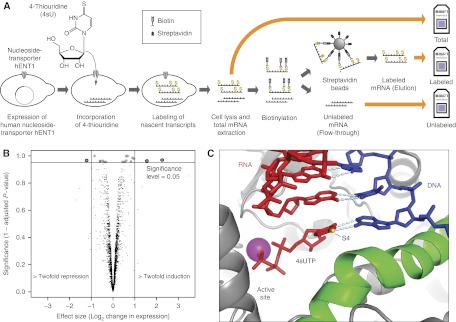
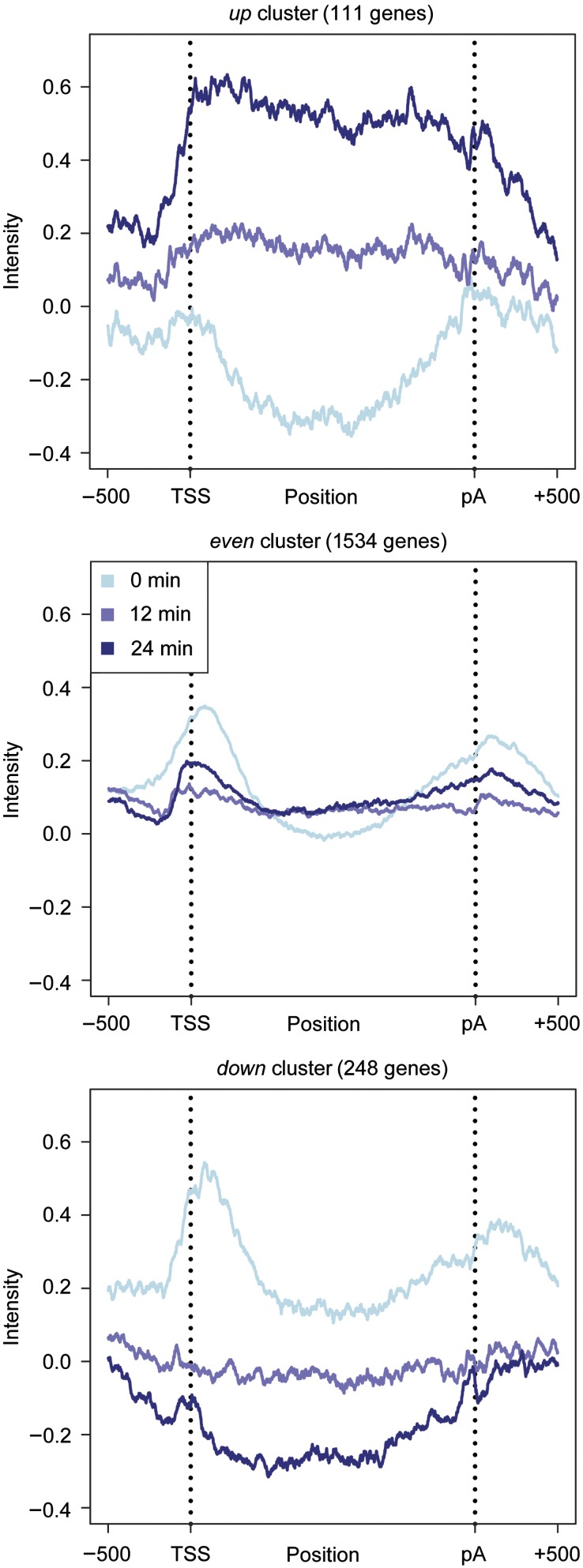
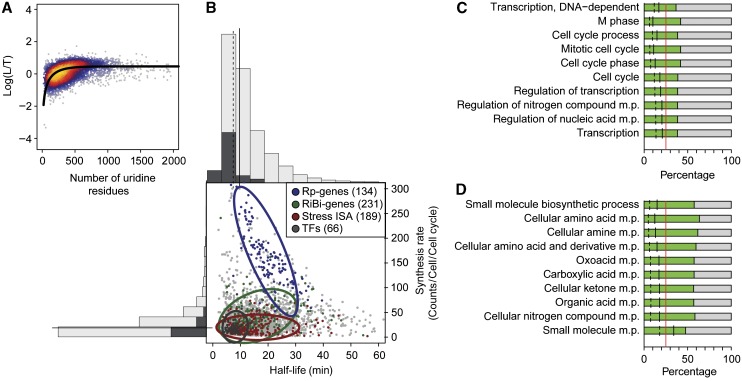
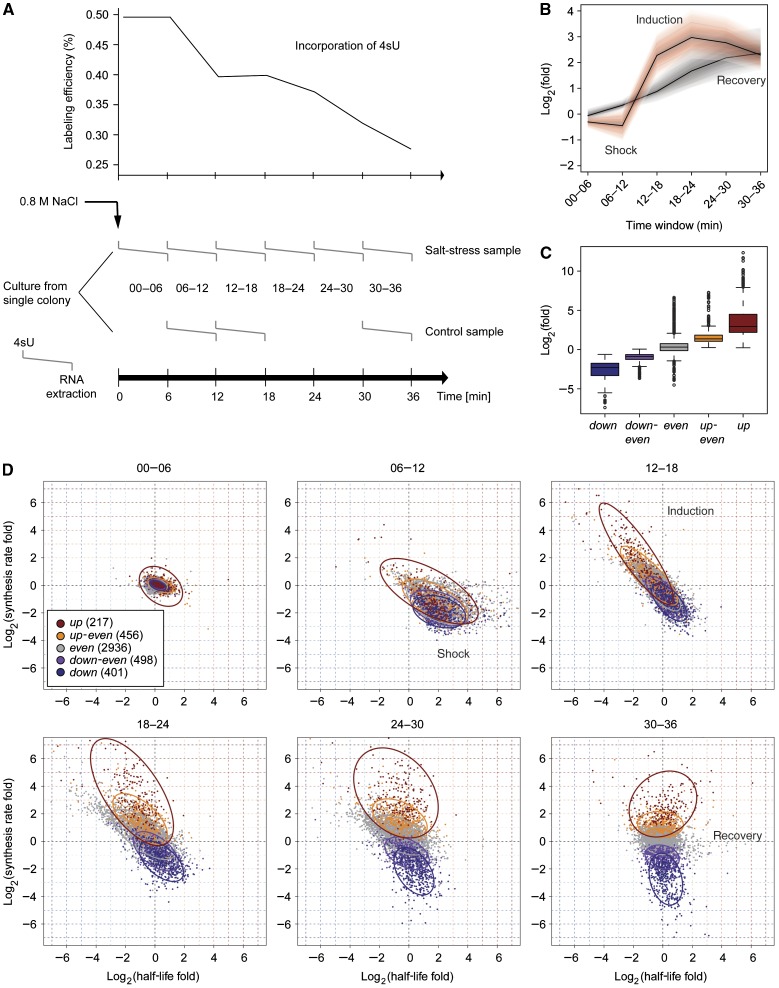
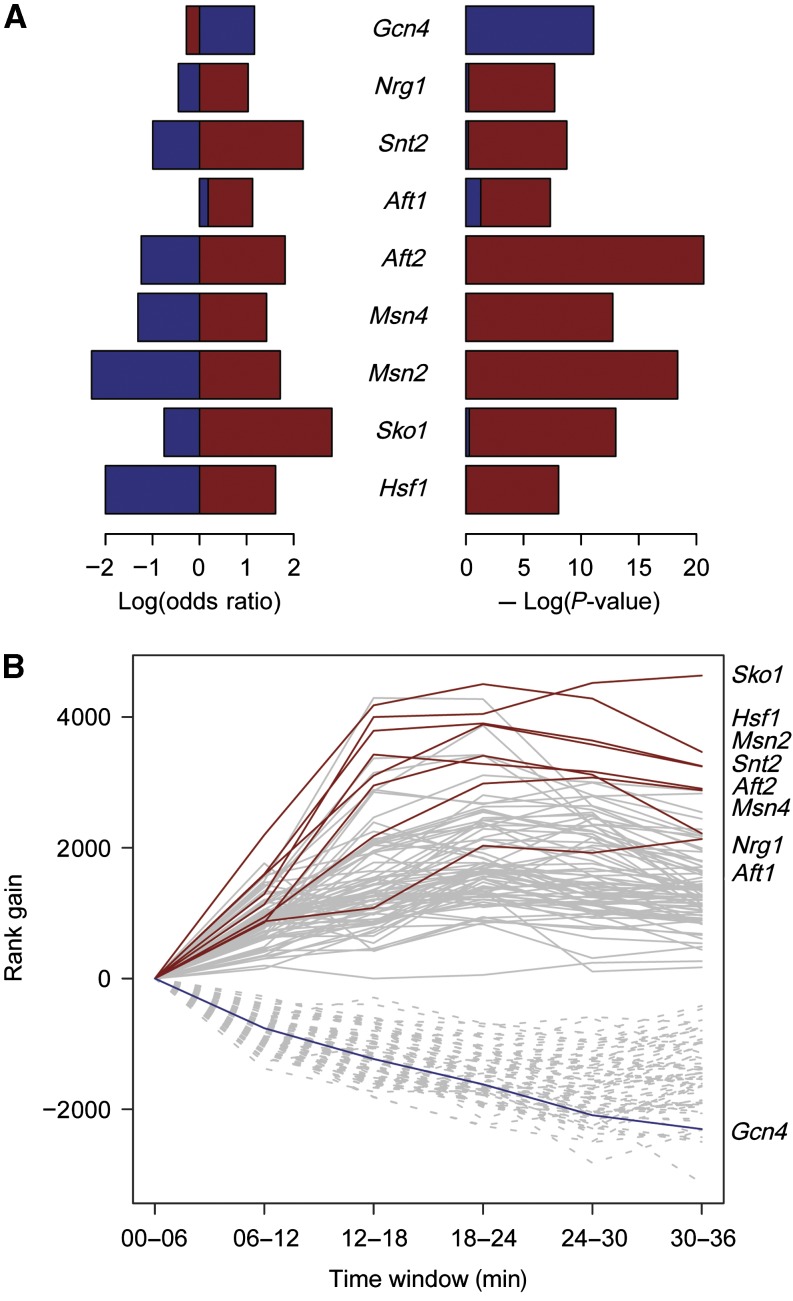
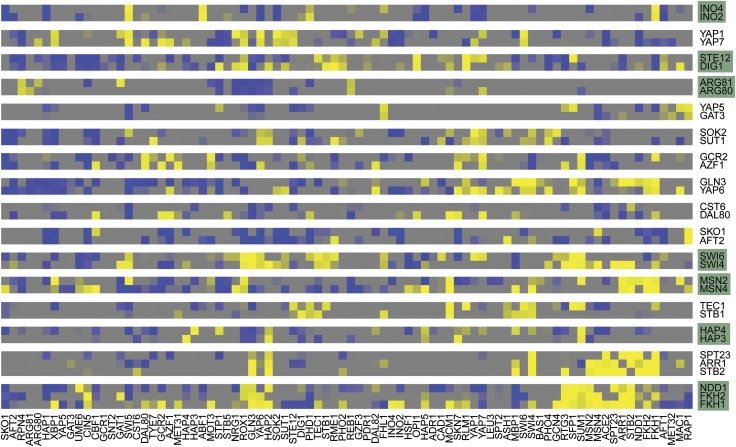
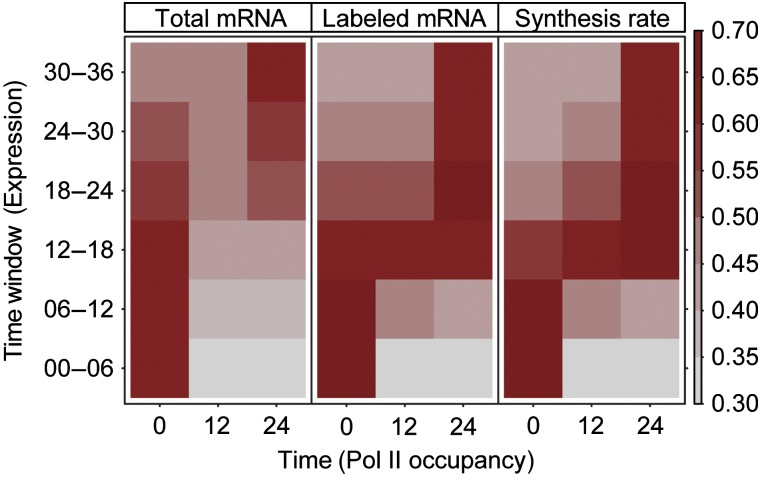
To obtain rates of mRNA synthesis and decay in yeast, we established dynamic transcriptome analysis (DTA). DTA combines non-perturbing metabolic RNA labeling with dynamic kinetic modeling. DTA reveals that most mRNA synthesis rates are around several transcripts per cell and cell cycle, and most mRNA half-lives range around a median of 11 min. DTA can monitor the cellular response to osmotic stress with higher sensitivity and temporal resolution than standard transcriptomics. In contrast to monotonically increasing total mRNA levels, DTA reveals three phases of the stress response. During the initial shock phase, mRNA synthesis and decay rates decrease globally, resulting in mRNA storage. During the subsequent induction phase, both rates increase for a subset of genes, resulting in production and rapid removal of stress-responsive mRNAs. During the recovery phase, decay rates are largely restored, whereas synthesis rates remain altered, apparently enabling growth at high salt concentration. Stress-induced changes in mRNA synthesis rates are predicted from gene occupancy with RNA polymerase II. DTA-derived mRNA synthesis rates identified 16 stress-specific pairs/triples of cooperative transcription factors, of which seven were known. Thus, DTA realistically monitors the dynamics in mRNA metabolism that underlie gene regulatory systems.
为了获得酵母中 mRNA 合成和降解的速率,我们建立了动态转录组分析(DTA)。DTA 将非干扰性代谢 RNA 标记与动态动力学建模相结合。DTA 表明,大多数 mRNA 合成速率约为每个细胞和细胞周期几个转录本,大多数 mRNA 半衰期约为 11 分钟的中位数。DTA 可以以比标准转录组学更高的灵敏度和时间分辨率监测细胞对渗透压胁迫的反应。与总 mRNA 水平单调增加相反,DTA 揭示了应激反应的三个阶段。在初始冲击阶段,mRNA 合成和降解速率普遍降低,导致 mRNA 储存。在随后的诱导阶段,一部分基因的这两种速率都增加,导致产生和快速去除应激响应的 mRNAs。在恢复阶段,降解速率在很大程度上恢复,而合成速率仍然改变,显然能够在高盐浓度下生长。mRNA 合成速率的应激诱导变化可从 RNA 聚合酶 II 与基因的结合来预测。DTA 衍生的 mRNA 合成速率鉴定了 16 个应激特异性转录因子对/三重对,其中 7 个是已知的。因此,DTA 真实地监测了构成基因调控系统的 mRNA 代谢动力学。