Kron Tomas, Eyles David, Schreiner L John, Battista Jerry
Peter MacCallum Cancer Centre, Melbourne, Australia.
J Med Phys. 2006 Oct;31(4):242-54. doi: 10.4103/0971-6203.29194.
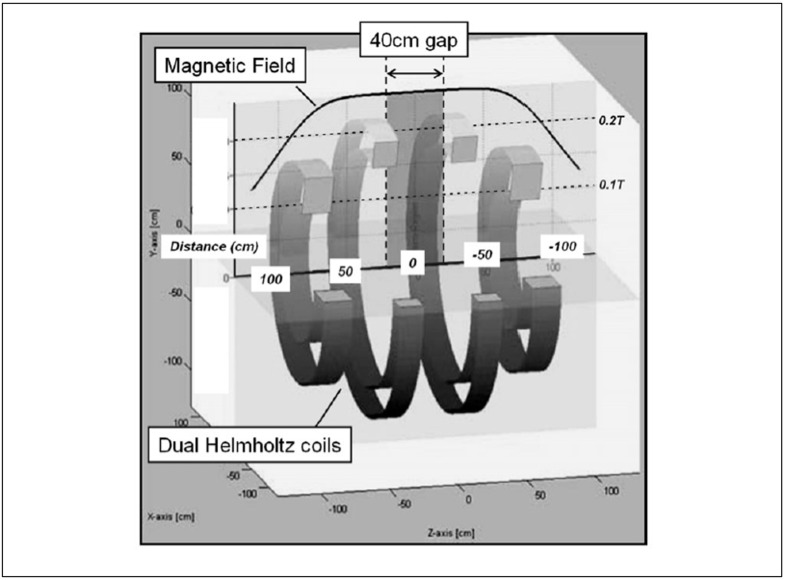
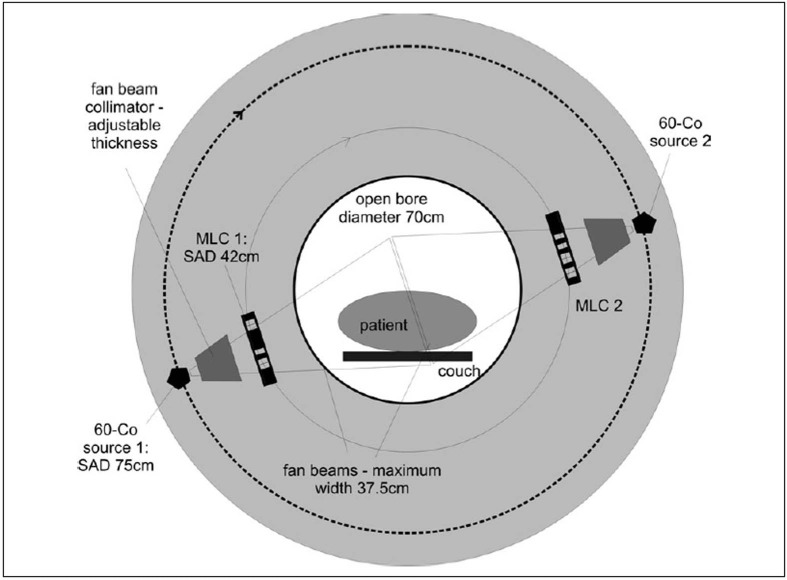
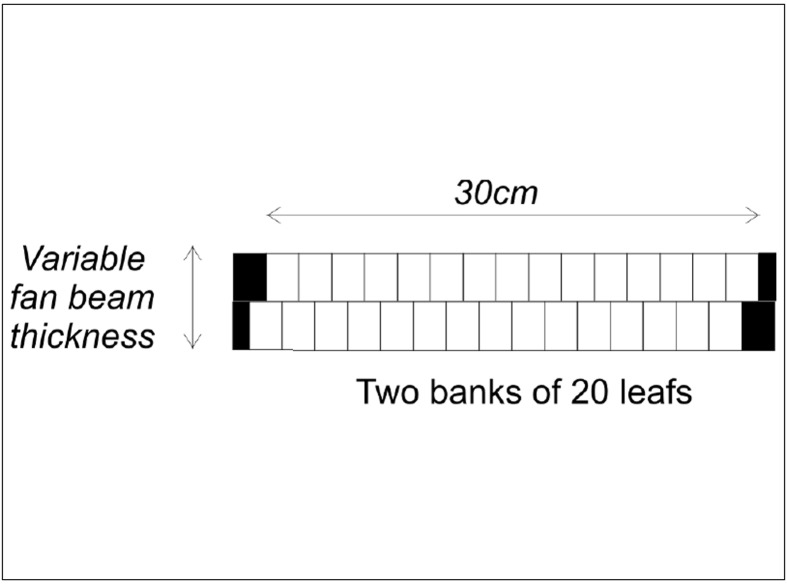
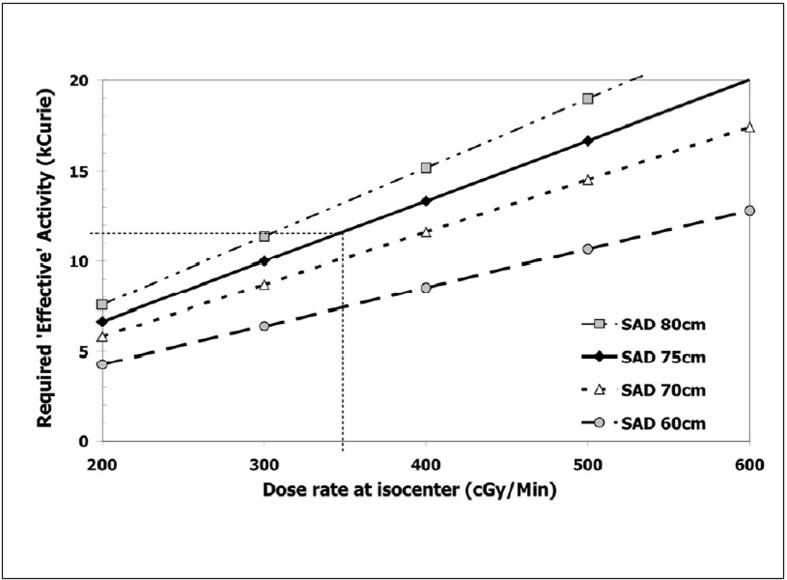
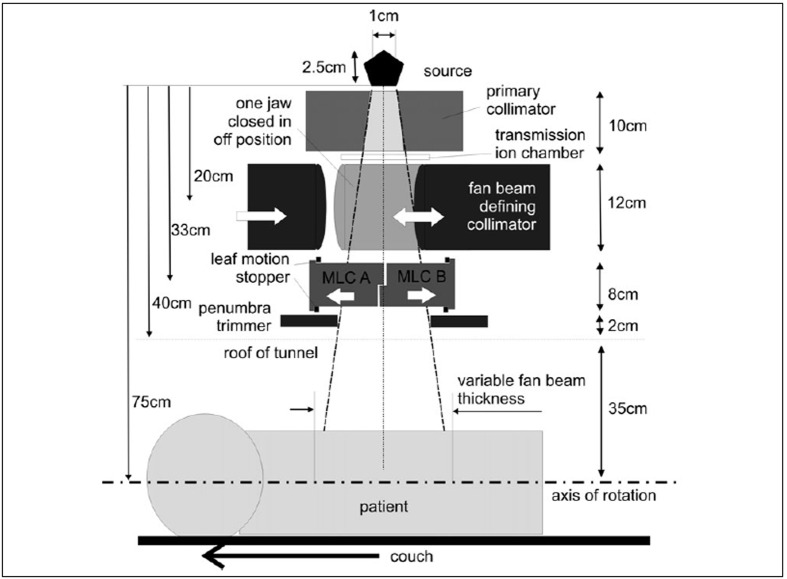
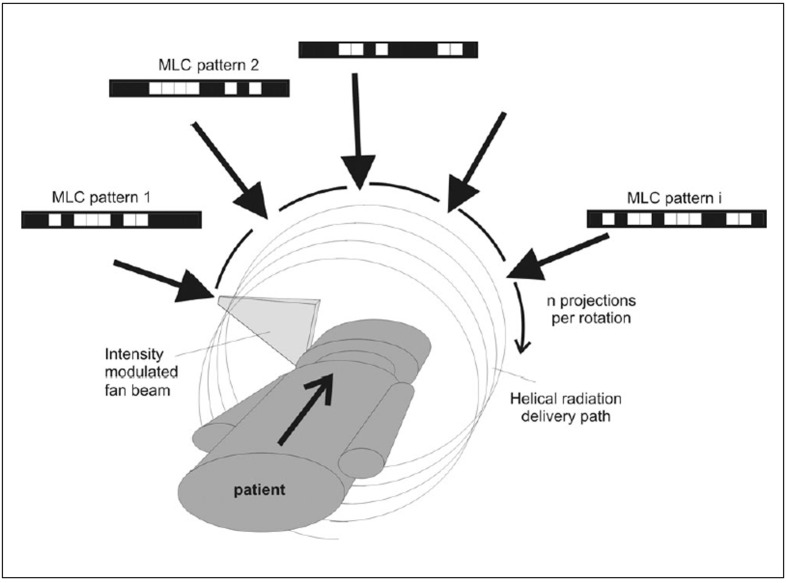
Magnetic resonance imaging (MRI) provides excellent soft tissue contrast for oncology applications. We propose to combine a MRI scanner with a helical tomotherapy (HT) system to enable daily target imaging for improved conformal radiation dose delivery to a patient. HT uses an intensity-modulated fan-beam that revolves around a patient, while the patient slowly advances through the plane of rotation, yielding a helical beam trajectory. Since the use of a linear accelerator to produce radiation may be incompatible with the pulsed radiofrequency and the high and pulsed magnetic fields required for MRI, it is proposed that a radioactive Cobalt-60 ((60)Co) source be used instead to provide the radiation. An open low field (0.25 T) MRI system is proposed where the tomotherapy ring gantry is located between two sets of Helmholtz coils that can generate a sufficiently homogenous main magnetic field.It is shown that the two major challenges with the design, namely acceptable radiation dose rate (and therefore treatment duration) and moving parts in strong magnetic field, can be addressed. The high dose rate desired for helical tomotherapy delivery can be achieved using two radiation sources of 220TBq (6000Ci) each on a ring gantry with a source to axis-of-rotation distance of 75 cm. In addition to this, a dual row multi-leaf collimator (MLC) system with 15 mm leaf width at isocentre and relatively large fan beam widths between 15 and 30 mm per row shall be employed. In this configuration, the unit would be well-suited for most pelvic radiotherapy applications where the soft tissue contrast of MRI will be particularly beneficial. Non-magnetic MRI compatible materials must be used for the rotating gantry. Tungsten, which is non-magnetic, can be used for primary collimation of the fan-beam as well as for the MLC, which allows intensity modulated radiation delivery. We propose to employ a low magnetic Cobalt compound, sycoporite (CoS) for the Cobalt source material itself.Rotational delivery is less susceptible to problems related to the use of a low energy megavoltage photon source while the helical delivery reduces the negative impact of the relatively large penumbra inherent in the use of Cobalt sources for radiotherapy. On the other hand, the use of a (60)Co source ensures constant dose rate with gantry rotation and makes dose calculation in a magnetic field as easy as the range of secondary electrons is limited.The MR-integrated Cobalt tomotherapy unit, dubbed 'MiCoTo,' uses two independent physical principles for image acquisition and treatment delivery. It would offer excellent target definition and will allow following target motion during treatment using fast imaging techniques thus providing the best possible input for adaptive radiotherapy. As an additional bonus, quality assurance of the radiation delivery can be performed in situ using radiation sensitive gels imaged by MRI.
磁共振成像(MRI)在肿瘤学应用中能提供出色的软组织对比度。我们提议将MRI扫描仪与螺旋断层放射治疗(HT)系统相结合,以便每天对靶区进行成像,从而更精确地向患者输送适形放射剂量。HT使用强度调制扇形束,围绕患者旋转,同时患者缓慢通过旋转平面,形成螺旋形束轨迹。由于使用直线加速器产生辐射可能与MRI所需的脉冲射频以及高脉冲磁场不兼容,因此建议改用放射性钴 - 60(⁶⁰Co)源来提供辐射。提议采用开放式低场(0.25T)MRI系统,其中断层放射治疗环形机架位于两组亥姆霍兹线圈之间,这两组线圈可产生足够均匀的主磁场。结果表明,该设计面临的两个主要挑战,即可接受的放射剂量率(以及由此决定的治疗持续时间)和强磁场中的运动部件,是可以解决的。使用两个220TBq(6000Ci)的放射源,放置在环形机架上,源到旋转轴的距离为75cm,可实现螺旋断层放射治疗所需的高剂量率。除此之外,应采用在等中心处叶片宽度为15mm且每行扇束宽度在15至30mm之间相对较大的双排多叶准直器(MLC)系统。在这种配置下,该装置将非常适合大多数盆腔放射治疗应用,其中MRI的软组织对比度将特别有益。旋转机架必须使用与MRI兼容的非磁性材料。非磁性的钨可用于扇形束的初级准直以及MLC,从而实现强度调制放射输送。我们提议使用低磁性的钴化合物西科波石(CoS)作为钴源材料本身。旋转式输送对与使用低能兆伏光子源相关的问题不太敏感,而螺旋式输送减少了钴源用于放射治疗时固有的相对较大半值层的负面影响。另一方面,使用⁶⁰Co源可确保随着机架旋转剂量率恒定,并且由于二次电子的射程有限,使得在磁场中进行剂量计算变得容易。集成MRI的钴断层放射治疗装置,称为“MiCoTo”,使用两种独立的物理原理进行图像采集和治疗输送。它将提供出色的靶区定义,并允许在治疗期间使用快速成像技术跟踪靶区运动,从而为自适应放射治疗提供尽可能好的输入。另外,使用MRI成像的辐射敏感凝胶可在原位对放射输送进行质量保证。