Children's Memorial Hospital, Division of Cardiovascular-Thoracic Surgery, 2300 Children's Plaza, Chicago, IL 60614, USA.
Circulation. 2011 Feb 1;123(4):364-73. doi: 10.1161/CIRCULATIONAHA.110.971622. Epub 2011 Jan 17.
Human cardiac progenitor cells (hCPCs) may promote myocardial regeneration in adult ischemic myocardium. The regenerative capacity of hCPCs in young patients with nonischemic congenital heart defects for potential use in congenital heart defect repair warrants exploration.
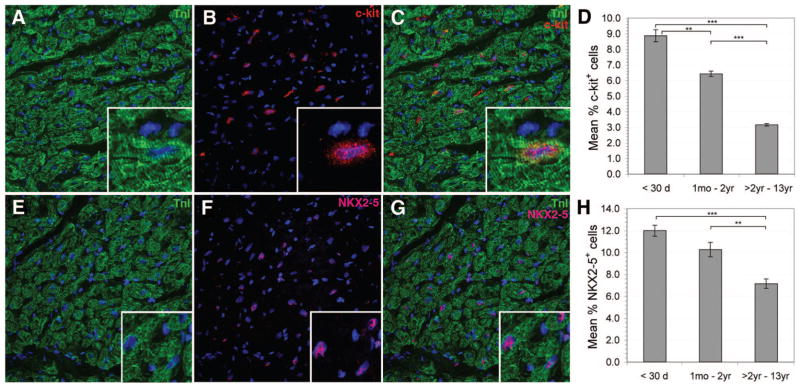
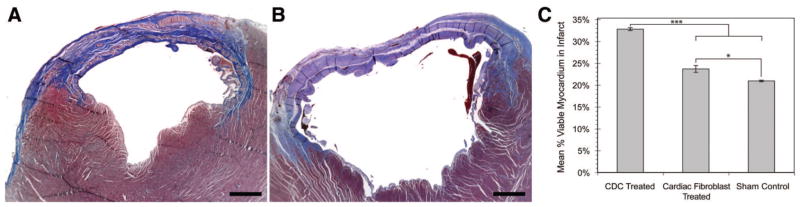
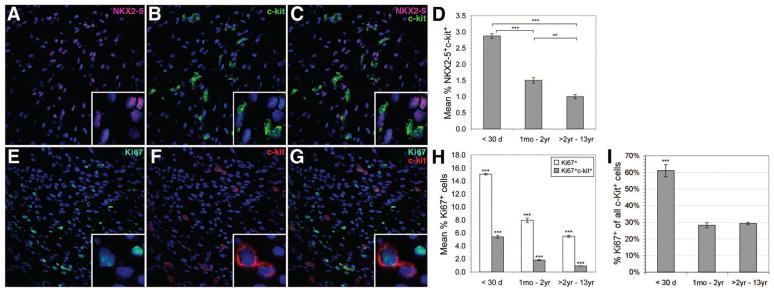
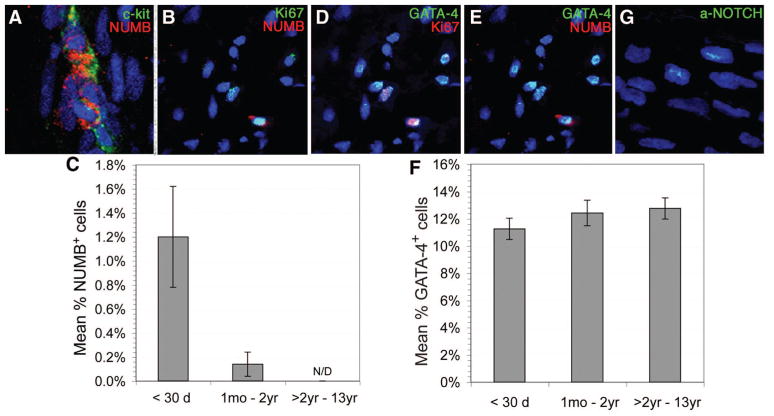
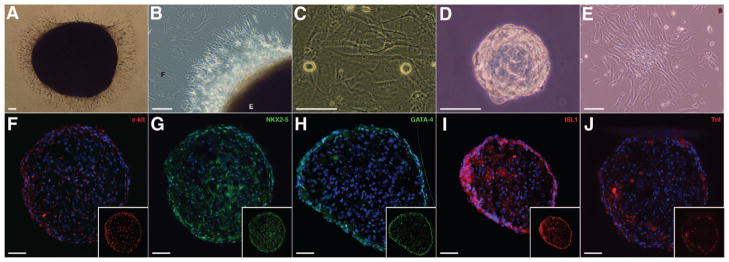
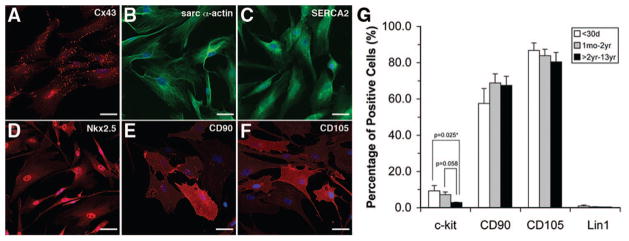
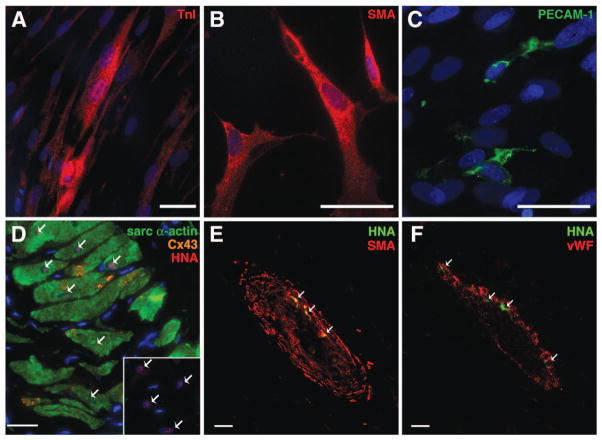
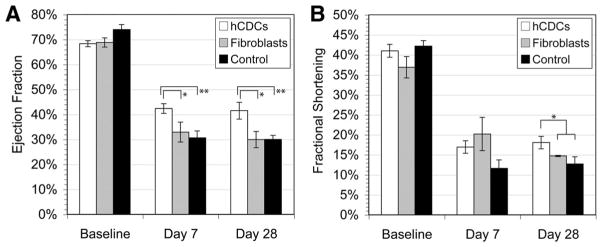
Human right atrial specimens were obtained during routine congenital cardiac surgery across 3 groups: neonates (age, <30 days), infants (age, 1 month to 2 years), and children (age, >2 to ≤13 years). C-kit(+) hCPCs were 3-fold higher in neonates than in children >2 years of age. hCPC proliferation was greatest during the neonatal period as evidenced by c-kit(+) Ki67(+) expression but decreased with age. hCPC differentiation capacity was also greatest in neonatal right atrium as evidenced by c-kit(+), NKX2-5(+), NOTCH1(+), and NUMB(+) expression. Despite the age-dependent decline in resident hCPCs, we isolated and expanded right atrium-derived CPCs from all patients (n=103) across all ages and diagnoses using the cardiosphere method. Intact cardiospheres contained a mix of heart-derived cell subpopulations that included cardiac progenitor cells expressing c-kit(+), Islet-1, and supporting cells. The number of c-kit(+)-expressing cells was highest in human cardiosphere-derived cells (hCDCs) grown from neonatal and infant right atrium. Furthermore, hCDCs could differentiate into diverse cardiovascular lineages by in vitro differentiation assays. Transplanted hCDCs promoted greater myocardial regeneration and functional improvement in infarcted myocardium than transplanted cardiac fibroblasts.
Resident hCPCs are most abundant in the neonatal period and rapidly decrease over time. hCDCs can be reproducibly isolated and expanded from young human myocardial samples regardless of age or diagnosis. hCPCs are functional and have potential in congenital cardiac repair.
人类心脏祖细胞(hCPCs)可能促进成人缺血性心肌中的心肌再生。在患有非缺血性先天性心脏缺陷的年轻患者中,hCPC 的再生能力可能用于先天性心脏缺陷修复,值得探索。
在 3 组常规先天性心脏手术中获得了人类右心房标本:新生儿(<30 天)、婴儿(1 个月至 2 岁)和儿童(>2 至≤13 岁)。与>2 岁的儿童相比,新生儿的 c-kit(+) hCPC 高 3 倍。c-kit(+) Ki67(+) 表达表明,新生儿的 hCPC 增殖最大,但随年龄增长而减少。hCPC 分化能力在新生儿右心房最大,表现为 c-kit(+)、NKX2-5(+)、NOTCH1(+) 和 NUMB(+) 表达。尽管驻留 hCPC 随年龄增长而下降,但我们使用心脏球体方法从所有患者(n=103)的所有年龄段和诊断中分离和扩增了右心房衍生的 CPC。完整的心脏球体包含多种心脏来源的细胞亚群,包括表达 c-kit(+)、Islet-1 和支持细胞的心脏祖细胞。在新生儿和婴儿右心房衍生的心脏球体中,表达 c-kit(+) 的细胞数量最多。此外,通过体外分化试验,hCDCs 可分化为多种心血管谱系。移植 hCDCs 可促进梗塞心肌中更多的心肌再生和功能改善,比移植的心脏成纤维细胞效果更好。
驻留 hCPC 在新生儿期最丰富,随时间迅速减少。hCDCs 可以从年轻的人类心肌样本中重复分离和扩增,无论年龄或诊断如何。hCPC 具有功能,在先天性心脏修复中有应用潜力。