Republic Polytechnic, Centre for Educational Development, Singapore.
Adv Health Sci Educ Theory Pract. 2011 Oct;16(4):465-79. doi: 10.1007/s10459-011-9272-9. Epub 2011 Jan 18.
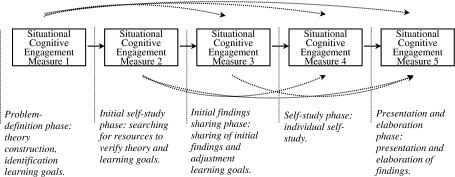
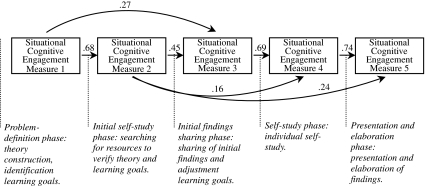
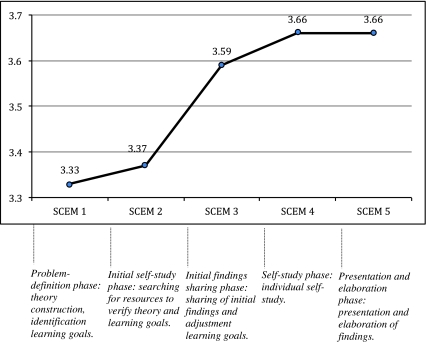
The objective of the present study was to examine to what extent autonomy in problem-based learning (PBL) results in cognitive engagement with the topic at hand. To that end, a short self-report instrument was devised and validated. Moreover, it was examined how cognitive engagement develops as a function of the learning process and the extent to which cognitive engagement determines subsequent levels of cognitive engagement during a one-day PBL event. Data were analyzed by means of confirmatory factor analysis, repeated measures ANOVA, and path analysis. The results showed that the new measure of situational cognitive engagement is valid and reliable. Furthermore, the results revealed that students' cognitive engagement significantly increased as a function of the learning event. Implications of these findings for PBL are discussed.
本研究旨在探讨基于问题的学习(PBL)中的自主性在多大程度上导致对当前主题的认知参与。为此,设计并验证了一种简短的自我报告工具。此外,还研究了认知参与如何随着学习过程的发展而发展,以及认知参与在一天的 PBL 事件中决定随后的认知参与水平的程度。通过验证性因素分析、重复测量方差分析和路径分析对数据进行了分析。结果表明,新的情境认知参与测量是有效和可靠的。此外,研究结果表明,学生的认知参与随着学习事件的进行而显著增加。这些发现对 PBL 的意义进行了讨论。