Meloni Marisa, De Servi Barbara, Marasco Daniela, Del Prete Salvatore
Mol Vis. 2011 Jan 12;17:113-26.
The present study was concerned with the development of a new experimental model of dry eye using human reconstructed in vitro corneal epithelium (HCE). The model is based on the use of adapted culture conditions that induce relevant modifications at the cellular and molecular level thus mimicking dry eye.
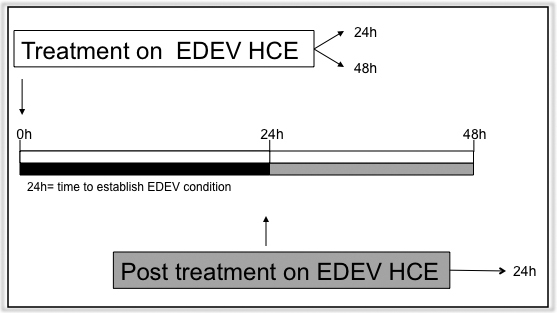
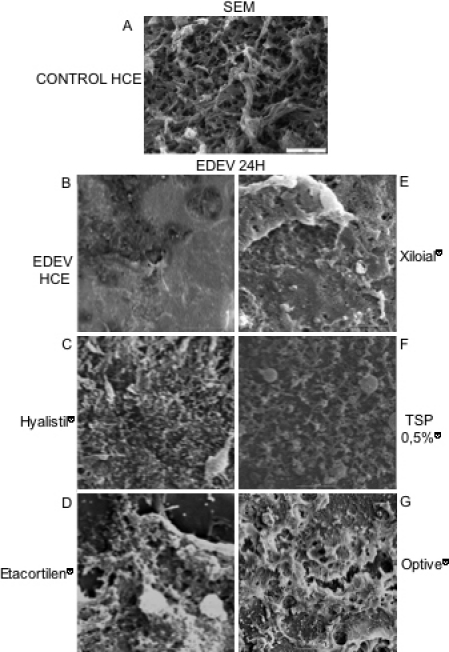
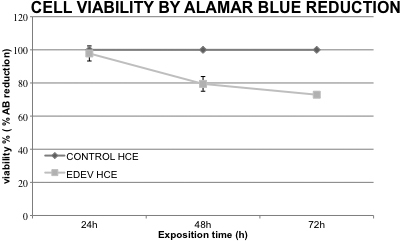
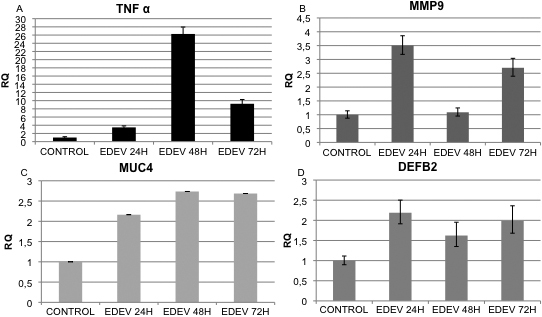
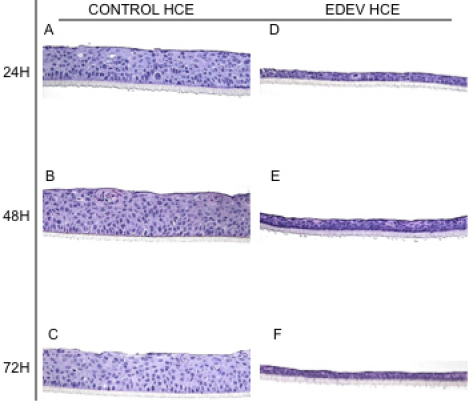
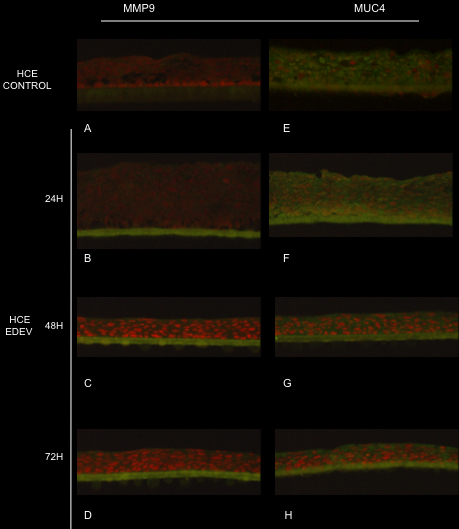
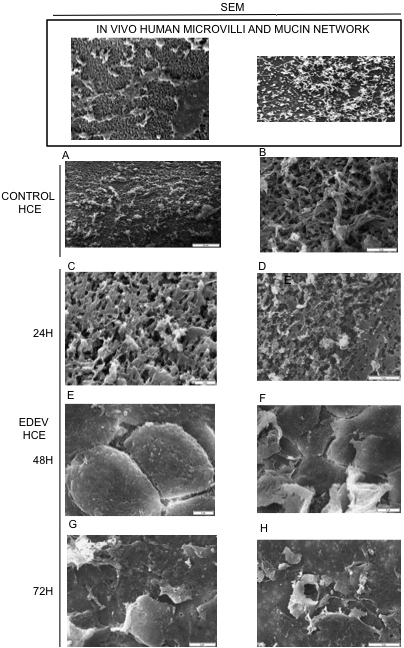
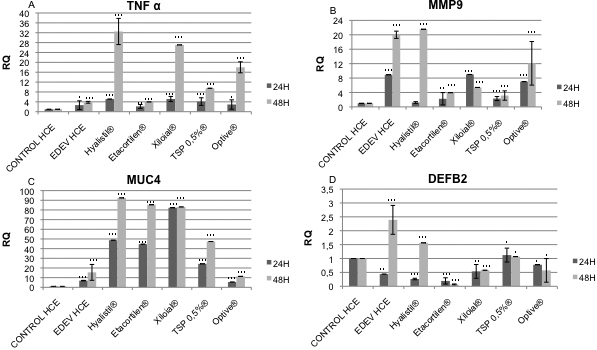
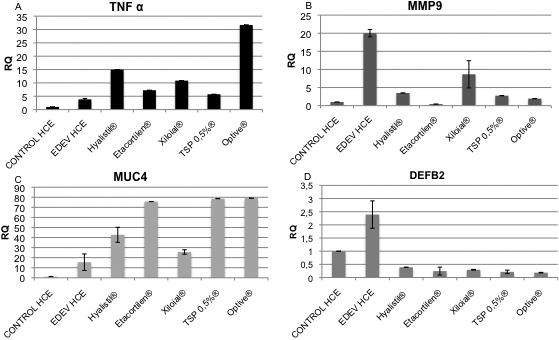
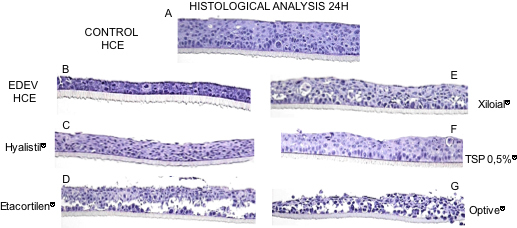
The HCE model was maintained in a controlled environmental setting (relative humidity <40% and 40 °C temperature) for 24 h and up to 72 h to induce dry eye. The evolution of the dry eye condition was assessed by histology, immunohistochemistry staining, scanning electron microscopy, and gene expression by using TaqMan gene assay technology (mucin-4 [MUC4], matrix metallopeptidase-9 [MMP9], tumor necrosis factor-α [TNF-α], and defensin β-2 [DEFB2). The effects of different commercially available tear substitutes on the induced dry eye condition were tested.
This in vitro dry eye HCE model, that was well established within 24 h, has the characteristic features of a dry eye epithelium and could be satisfactorily used for preliminary assessment of the protective activity of some artificial tears. The transcriptional study of selected biomarkers showed an increase in MUC4, MMP9, TNF-α, and hBD-2 (DEFB2) gene expression.
By using a dynamic approach, we were able to define a biomarker gene signature of dry eye-induced effects that could be predictive of corneal damage in vivo and to discriminate the efficacy among different commercial artificial tears.
本研究关注使用人重组体外角膜上皮(HCE)建立一种新型干眼实验模型。该模型基于采用适应性培养条件,在细胞和分子水平诱导相关改变,从而模拟干眼。
将HCE模型置于可控环境条件下(相对湿度<40%,温度40°C)24小时至72小时以诱导干眼。通过组织学、免疫组化染色、扫描电子显微镜以及使用TaqMan基因检测技术(黏蛋白-4 [MUC4]、基质金属蛋白酶-9 [MMP9]、肿瘤坏死因子-α [TNF-α]和防御素β-2 [DEFB2])进行基因表达分析,评估干眼状况的演变。测试了不同市售泪液替代品对诱导的干眼状况的影响。
这种体外干眼HCE模型在24小时内即可良好建立,具有干眼上皮的特征,可令人满意地用于初步评估某些人工泪液的保护活性。对选定生物标志物的转录研究表明,MUC4、MMP9、TNF-α和hBD-2(DEFB2)基因表达增加。
通过采用动态方法,我们能够确定干眼诱导效应的生物标志物基因特征,该特征可预测体内角膜损伤,并区分不同市售人工泪液的疗效。