School of Medicine, Louisiana State University Health Sciences Center, New Orleans, Louisiana, United States of America.
PLoS One. 2011 Jan 5;6(1):e15816. doi: 10.1371/journal.pone.0015816.
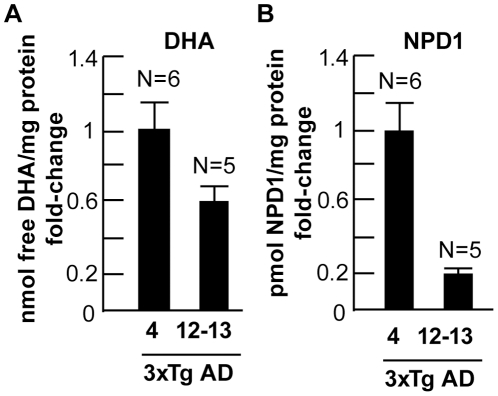
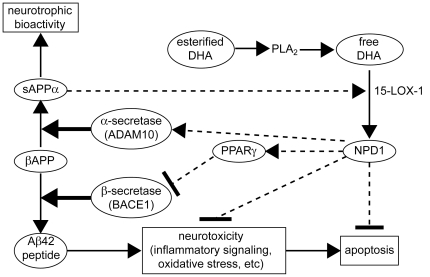
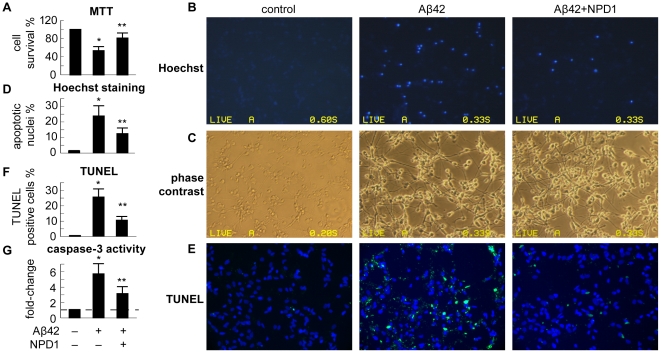
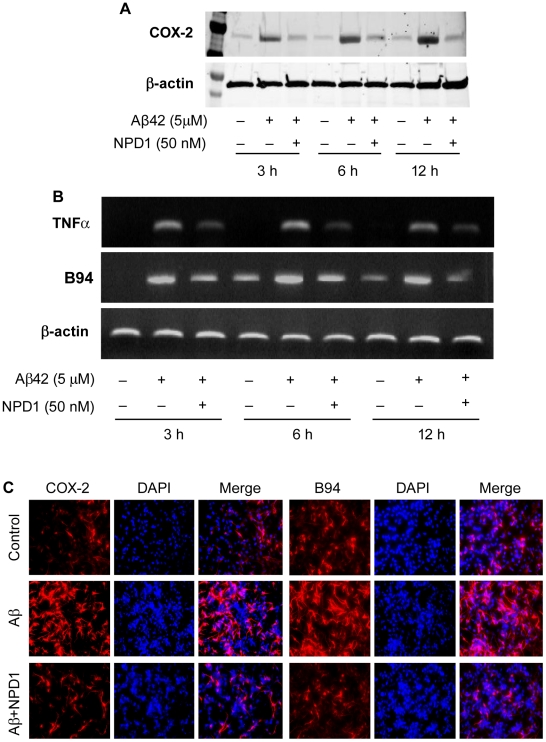
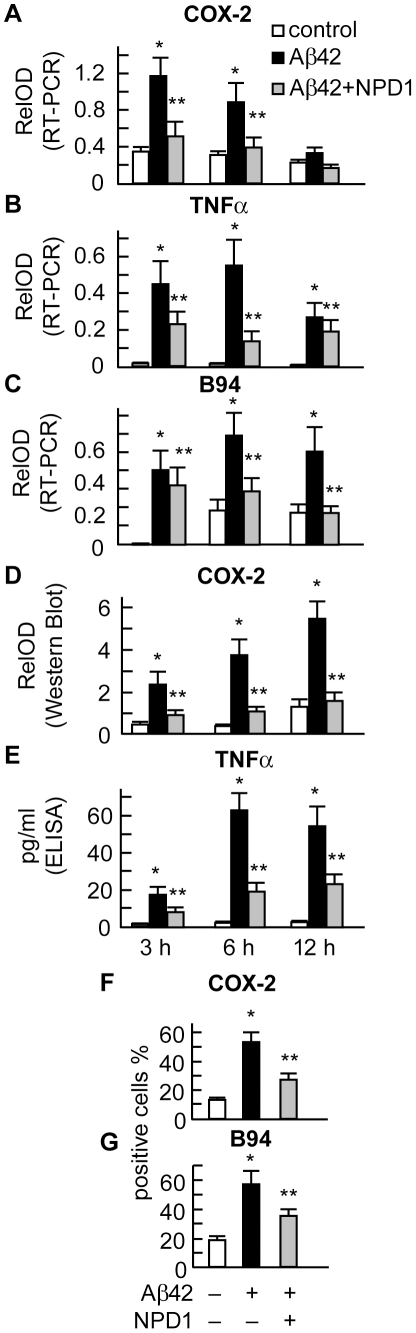
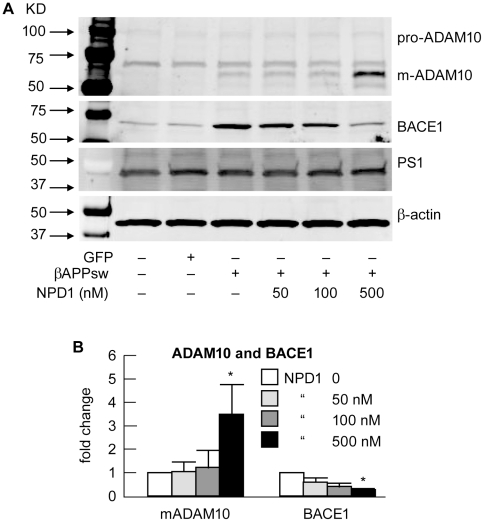
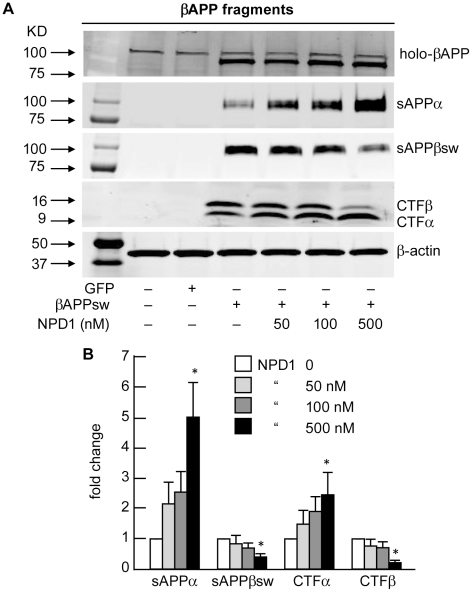
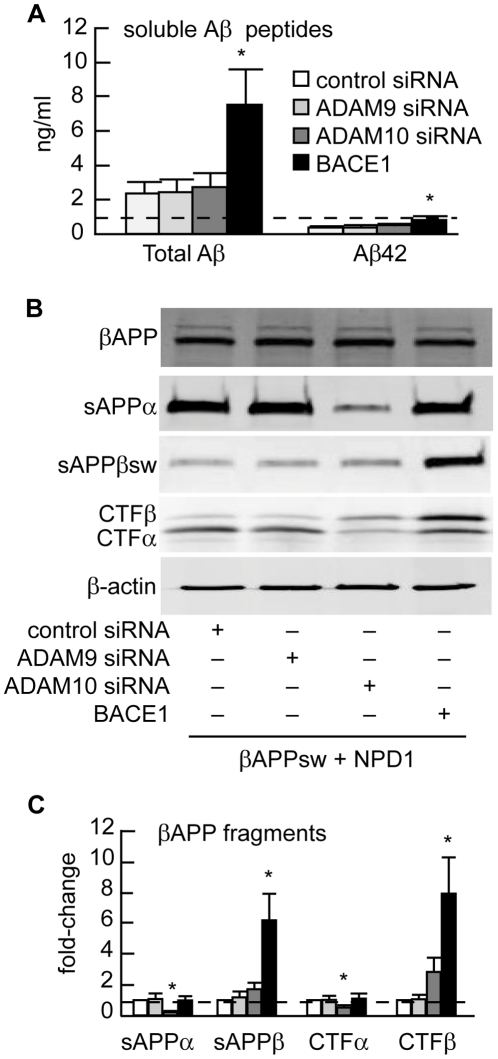
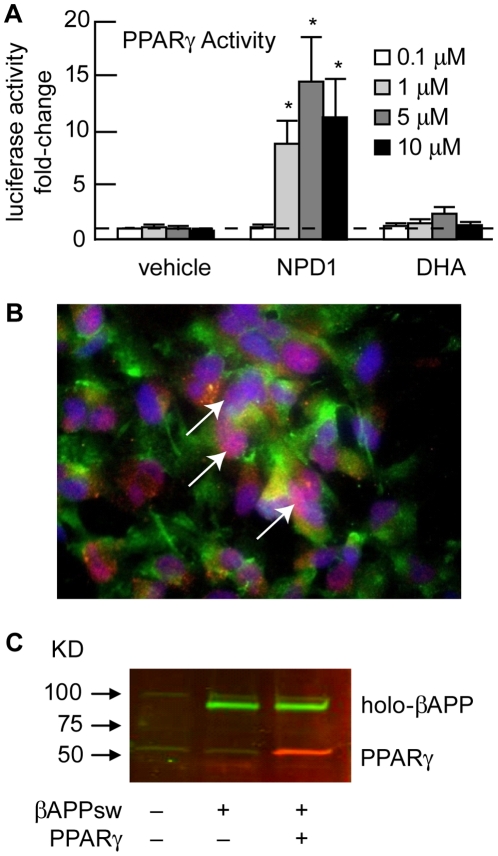
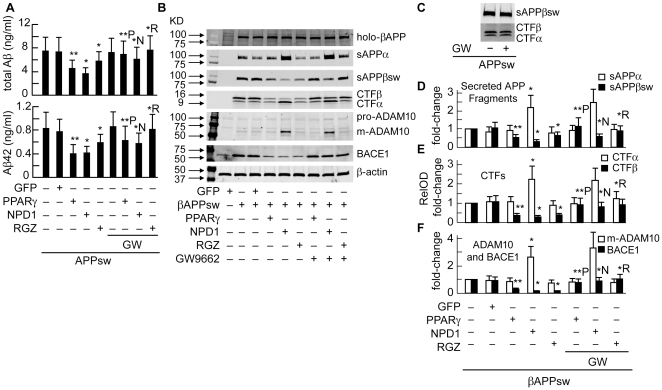
Neuroprotectin D1 (NPD1) is a stereoselective mediator derived from the omega-3 essential fatty acid docosahexaenoic acid (DHA) with potent inflammatory resolving and neuroprotective bioactivity. NPD1 reduces Aβ42 peptide release from aging human brain cells and is severely depleted in Alzheimer's disease (AD) brain. Here we further characterize the mechanism of NPD1's neurogenic actions using 3xTg-AD mouse models and human neuronal-glial (HNG) cells in primary culture, either challenged with Aβ42 oligomeric peptide, or transfected with beta amyloid precursor protein (βAPP)(sw) (Swedish double mutation APP695(sw), K595N-M596L). We also show that NPD1 downregulates Aβ42-triggered expression of the pro-inflammatory enzyme cyclooxygenase-2 (COX-2) and of B-94 (a TNF-α-inducible pro-inflammatory element) and apoptosis in HNG cells. Moreover, NPD1 suppresses Aβ42 peptide shedding by down-regulating β-secretase-1 (BACE1) while activating the α-secretase ADAM10 and up-regulating sAPPα, thus shifting the cleavage of βAPP holoenzyme from an amyloidogenic into the non-amyloidogenic pathway. Use of the thiazolidinedione peroxisome proliferator-activated receptor gamma (PPARγ) agonist rosiglitazone, the irreversible PPARγ antagonist GW9662, and overexpressing PPARγ suggests that the NPD1-mediated down-regulation of BACE1 and Aβ42 peptide release is PPARγ-dependent. In conclusion, NPD1 bioactivity potently down regulates inflammatory signaling, amyloidogenic APP cleavage and apoptosis, underscoring the potential of this lipid mediator to rescue human brain cells in early stages of neurodegenerations.
神经保护素 D1(NPD1)是一种从ω-3 必需脂肪酸二十二碳六烯酸(DHA)衍生而来的立体选择性介质,具有强大的抗炎和解神经保护生物活性。NPD1 可减少衰老人脑细胞中 Aβ42 肽的释放,并且在阿尔茨海默病(AD)脑中严重耗尽。在这里,我们使用 3xTg-AD 小鼠模型和原代培养的人神经元-神经胶质(HNG)细胞进一步研究了 NPD1 的神经发生作用的机制,这些细胞受到 Aβ42 寡聚肽的挑战,或转染了β淀粉样前体蛋白(βAPP)(sw)(瑞典双突变 APP695(sw),K595N-M596L)。我们还表明,NPD1 下调 Aβ42 触发的促炎酶环氧合酶-2(COX-2)和 B-94(TNF-α诱导的促炎元件)的表达以及 HNG 细胞中的细胞凋亡。此外,NPD1 通过下调β-分泌酶-1(BACE1)并激活α-分泌酶 ADAM10 以及上调 sAPPα 来抑制 Aβ42 肽的脱落,从而将βAPP 全酶的切割从淀粉样蛋白生成途径转移到非淀粉样蛋白生成途径。使用噻唑烷二酮过氧化物酶体增殖物激活受体γ(PPARγ)激动剂罗格列酮、不可逆的 PPARγ 拮抗剂 GW9662 和过表达 PPARγ 表明,NPD1 介导的 BACE1 下调和 Aβ42 肽释放依赖于 PPARγ。总之,NPD1 的生物活性可有效下调炎症信号、淀粉样蛋白生成 APP 切割和细胞凋亡,强调了这种脂质介质在挽救神经退行性早期阶段的人脑细胞方面的潜力。