Bolon Brad, Stolina Marina, King Caroline, Middleton Scot, Gasser Jill, Zack Debra, Feige Ulrich
Department of Pathology, Amgen Inc., Thousand Oaks, CA 91320, USA.
J Biomed Biotechnol. 2011;2011:569068. doi: 10.1155/2011/569068. Epub 2010 Dec 28.
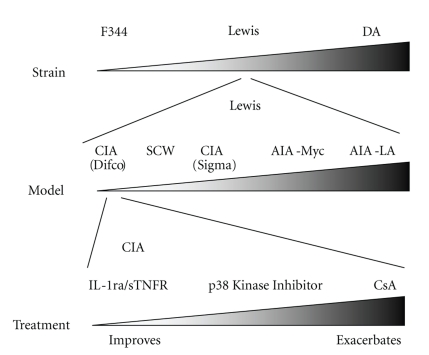
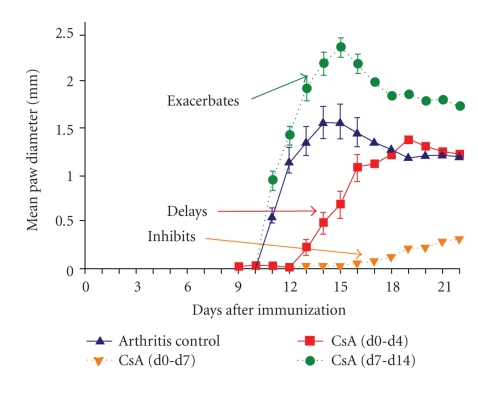
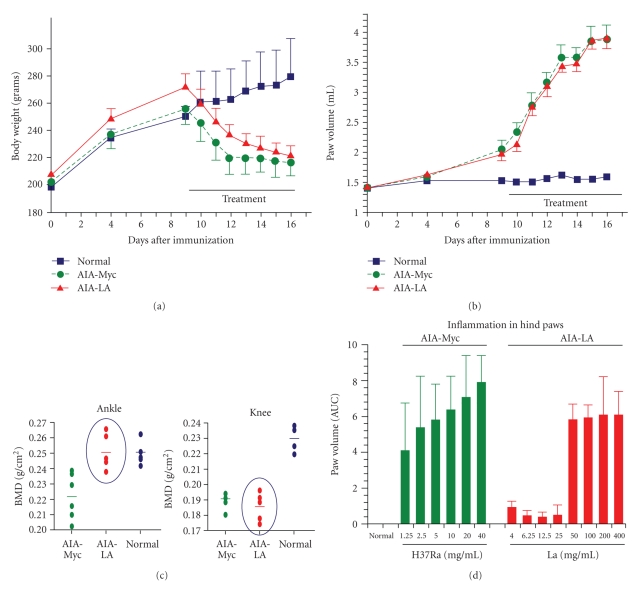
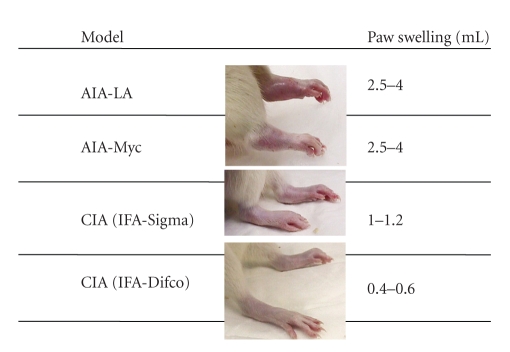
Rodent models of immune-mediated arthritis (RMIA) are the conventional approach to evaluating mechanisms of inflammatory joint disease and the comparative efficacy of antiarthritic agents. Rat adjuvant-induced (AIA), collagen-induced (CIA), and streptococcal cell wall-induced (SCW) arthritides are preferred models of the joint pathology that occurs in human rheumatoid arthritis (RA). Lesions of AIA are most severe and consistent; structural and immunological changes of CIA best resemble RA. Lesion extent and severity in RMIA depends on experimental methodology (inciting agent, adjuvant, etc.) and individual physiologic parameters (age, genetics, hormonal status, etc.). The effectiveness of antiarthritic molecules varies with the agent, therapeutic regimen, and choice of RMIA. All RMIA are driven by overactivity of proinflammatory pathways, but the dominant molecules differ among the models. Hence, as with the human clinical experience, the efficacy of various antiarthritic molecules differs among RMIA, especially when the agent is a specific cytokine inhibitor.
免疫介导性关节炎的啮齿动物模型(RMIA)是评估炎症性关节疾病机制和抗关节炎药物相对疗效的传统方法。大鼠佐剂诱导性关节炎(AIA)、胶原诱导性关节炎(CIA)和链球菌细胞壁诱导性关节炎(SCW)是人类类风湿性关节炎(RA)中出现的关节病理的首选模型。AIA的病变最为严重且一致;CIA的结构和免疫学变化最类似于RA。RMIA中病变的程度和严重程度取决于实验方法(激发剂、佐剂等)和个体生理参数(年龄、遗传学、激素状态等)。抗关节炎分子的有效性因药物、治疗方案和RMIA的选择而异。所有RMIA均由促炎途径的过度活跃驱动,但不同模型中占主导地位的分子有所不同。因此,与人类临床经验一样,各种抗关节炎分子在RMIA中的疗效也有所不同,尤其是当药物为特异性细胞因子抑制剂时。