Microbiology Division, IBR (Instituto de Biología Molecular y Celular de Rosario), Consejo Nacional de Investigaciones Científicas y Técnicas, Facultad de Ciencias Bioquímicas y Farmacéuticas, Universidad Nacional de Rosario, Rosario, Argentina.
Microb Biotechnol. 2008 Nov;1(6):476-86. doi: 10.1111/j.1751-7915.2008.00046.x. Epub 2008 Aug 4.
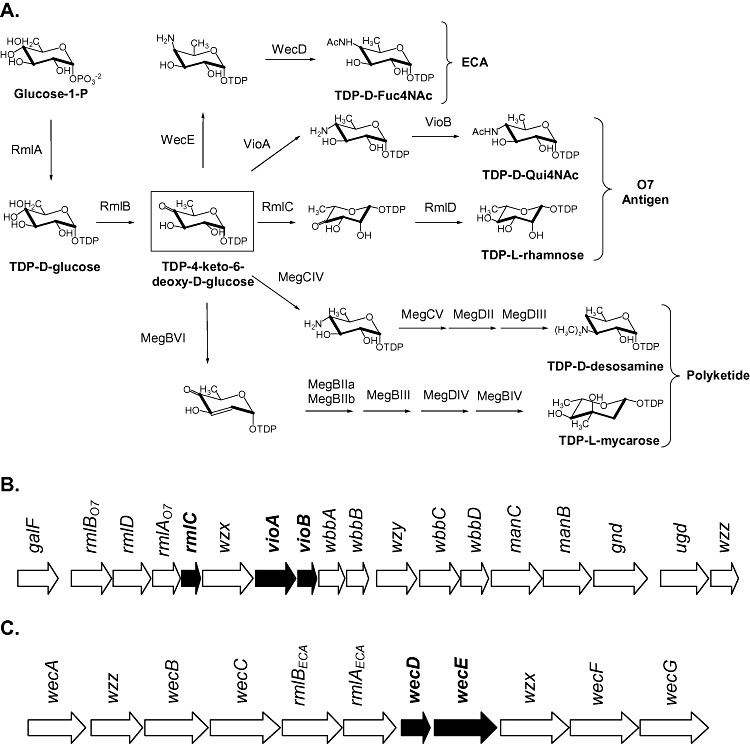
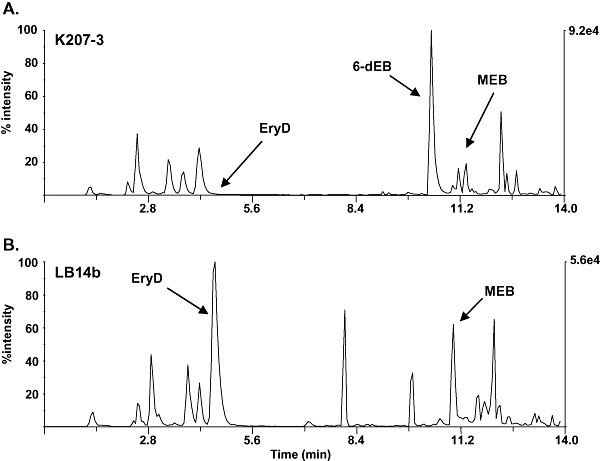
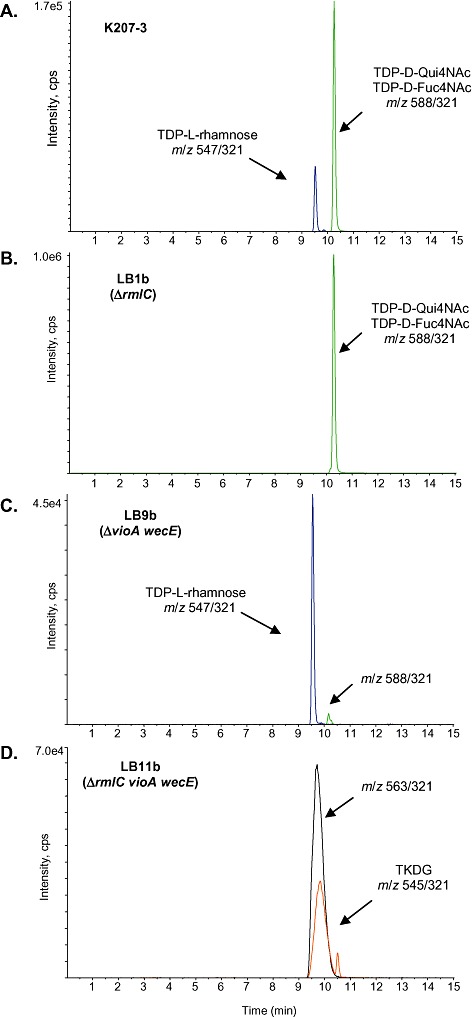
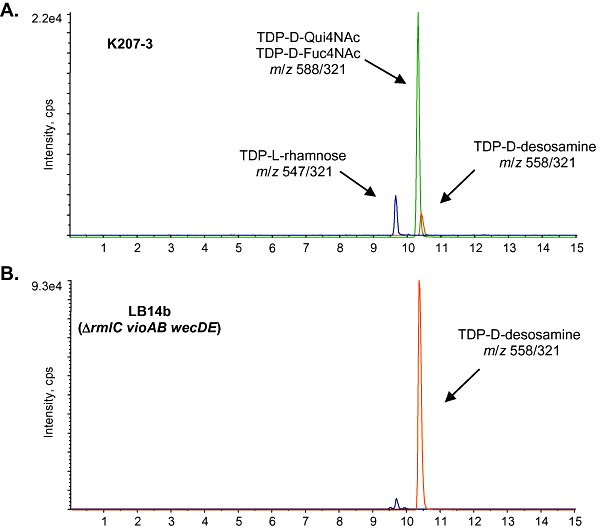
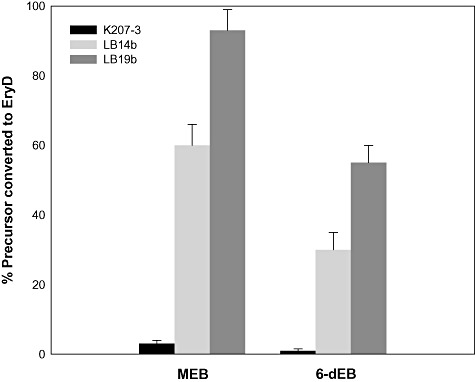
Significant achievements in polyketide gene expression have made Escherichia coli one of the most promising hosts for the heterologous production of pharmacologically important polyketides. However, attempts to produce glycosylated polyketides, by the expression of heterologous sugar pathways, have been hampered until now by the low levels of glycosylated compounds produced by the recombinant hosts. By carrying out metabolic engineering of three endogenous pathways that lead to the synthesis of TDP sugars in E. coli, we have greatly improved the intracellular levels of the common deoxysugar intermediate TDP-4-keto-6-deoxyglucose resulting in increased production of the heterologous sugars TDP-L-mycarose and TDP-D-desosamine, both components of medically important polyketides. Bioconversion experiments carried out by feeding 6-deoxyerythronolide B (6-dEB) or 3-α-mycarosylerythronolide B (MEB) demonstrated that the genetically modified E. coli B strain was able to produce 60- and 25-fold more erythromycin D (EryD) than the original strain K207-3, respectively. Moreover, the additional knockout of the multidrug efflux pump AcrAB further improved the ability of the engineered strain to produce these glycosylated compounds. These results open the possibility of using E. coli as a generic host for the industrial scale production of glycosylated polyketides, and to combine the polyketide and deoxysugar combinatorial approaches with suitable glycosyltransferases to yield massive libraries of novel compounds with variations in both the aglycone and the tailoring sugars.
在聚酮基因表达方面取得的重大进展使大肠杆菌成为异源生产具有药理重要性的聚酮类化合物的最有前途的宿主之一。然而,通过表达异源糖途径来生产糖基化的聚酮类化合物,迄今为止一直受到重组宿主产生的糖基化化合物水平低的阻碍。通过对导致大肠杆菌中 TDP 糖合成的三个内源性途径进行代谢工程改造,我们大大提高了常见去氧糖中间体 TDP-4-酮-6-脱氧葡萄糖的细胞内水平,从而增加了异源糖 TDP-L-鼠李糖和 TDP-D-去甲氨基葡萄糖的产量,这两种糖都是具有医学重要性的聚酮类化合物的组成部分。通过喂食 6-脱氧红霉素 B(6-dEB)或 3-α-鼠李糖基红霉素 B(MEB)进行的生物转化实验表明,与原始菌株 K207-3 相比,经过基因改造的大肠杆菌 B 菌株能够分别产生 60 倍和 25 倍的红霉素 D(EryD)。此外,多药外排泵 AcrAB 的额外敲除进一步提高了工程菌株生产这些糖基化化合物的能力。这些结果为使用大肠杆菌作为糖基化聚酮类化合物工业规模生产的通用宿主开辟了可能性,并为聚酮类和去氧糖组合方法与合适的糖基转移酶相结合提供了可能性,以产生具有糖基和修饰糖变化的新型化合物的大规模文库。