Department of Medical Microbiology and Immunology, The Bartholin Building, Aarhus University, DK-8000 Aarhus C, Denmark.
Nat Rev Immunol. 2011 Feb;11(2):143-54. doi: 10.1038/nri2937.
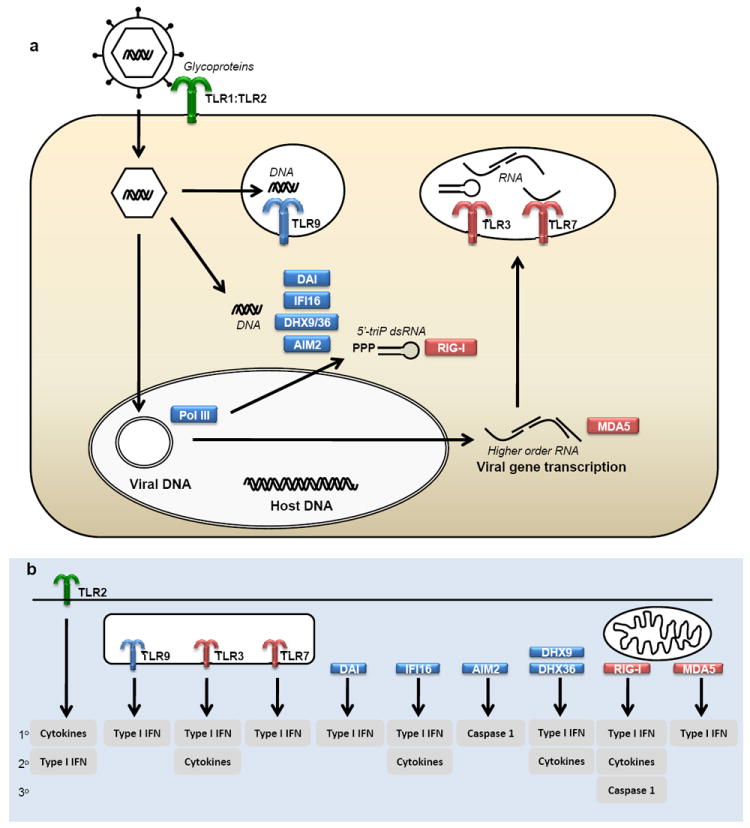
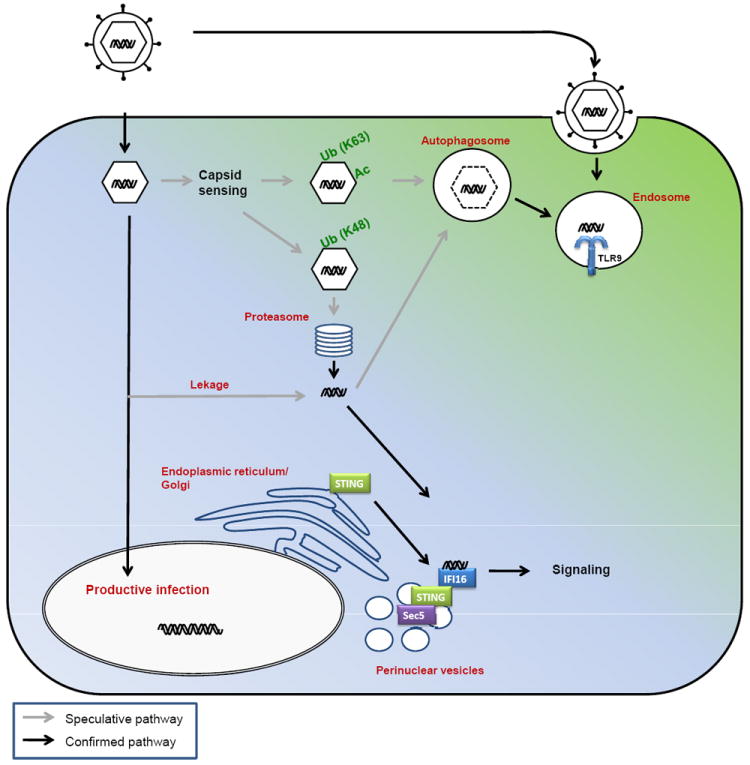
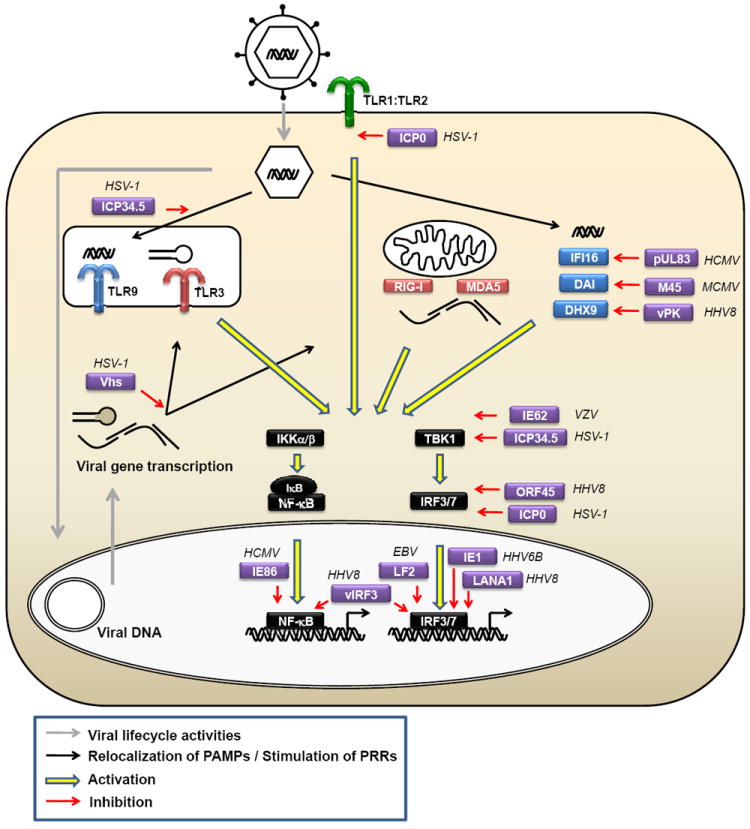
Advances in innate immunity over the past decade have revealed distinct classes of pattern recognition receptors (PRRs) that detect pathogens at the cell surface and in intracellular compartments. This has shed light on how herpesviruses, which are large disease-causing DNA viruses that replicate in the nucleus, are initially recognized during cellular infection. Surprisingly, this involves multiple PRRs both on the cell surface and within endosomes and the cytosol. In this article we describe recent advances in our understanding of innate detection of herpesviruses, how this innate detection translates into anti-herpesvirus host defence, and how the viruses seek to evade this innate detection to establish persistent infections.
在过去十年中,先天免疫领域的进展揭示了识别细胞表面和细胞内病原体的不同模式识别受体 (PRR) 类别。这阐明了疱疹病毒(一种在细胞核内复制的大型致病 DNA 病毒)在细胞感染时是如何被最初识别的。令人惊讶的是,这涉及到细胞表面以及内体和细胞质中的多种 PRR。在本文中,我们描述了我们对疱疹病毒先天检测的理解的最新进展,这种先天检测如何转化为抗病毒宿主防御,以及病毒如何试图逃避这种先天检测以建立持续性感染。