Department of Biochemistry, Graduate School of Pharmaceutical Sciences, Keio University, 1-5-30, Shibakoen, Minato-ku, Tokyo 105-8512, Japan.
Mediators Inflamm. 2010;2010:634145. doi: 10.1155/2010/634145. Epub 2011 Jan 4.
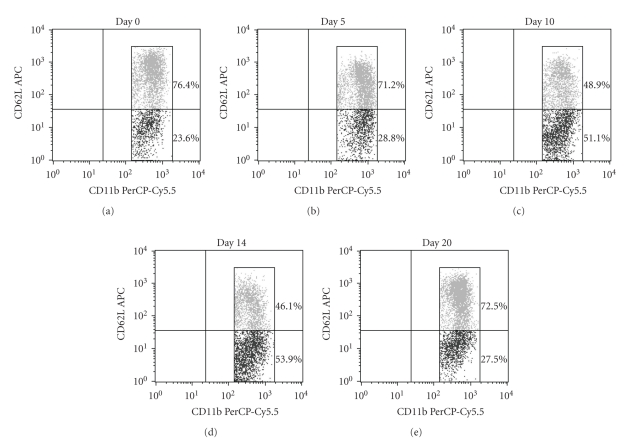
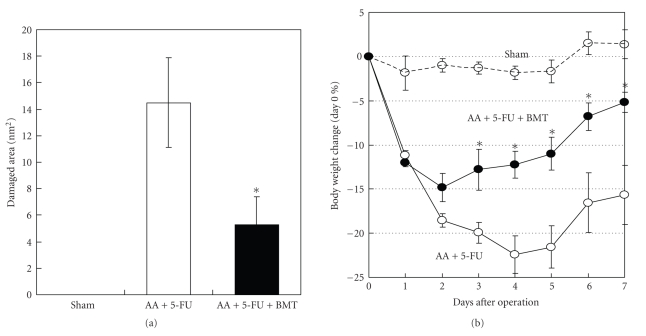
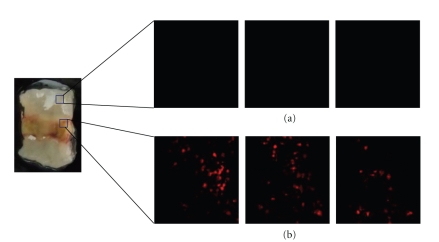
Mucosal damage is a common side effect of many cancer treatments, especially radiotherapy and intensive chemotherapy, which often induce bone marrow (BM) suppression. We observed that acetic acid- (AA-) induced mucosal damage in the colon of mice was worsened by simultaneous treatment with irradiation or 5-FU. However, irradiation 14 days prior to the AA treatment augmented the recovery from mucosal damage, suggesting that the recovery from BM suppression had an advantageous effect on the mucosal repair. In addition, BM transplantation also augmented the recovery from AA-induced mucosal damage. We further confirmed that transplanted BM-derived cells, particularly F4/80+Gr1+ "inflammatory" monocytes (Subset 1), accumulated in the damaged mucosal area in the early healing phase, and both of Subset 1 and F4/80+Gr1⁻ "resident" monocytes (Subset 2) accumulated in this area in later phases. Our results suggest that monocytes/macrophages contribute to the mucosal recovery and regeneration following mucosal damage by anticancer drug therapy.
黏膜损伤是许多癌症治疗方法(尤其是放疗和强化化疗)的常见副作用,这些治疗方法常常导致骨髓(BM)抑制。我们观察到,在同时接受辐射或 5-FU 治疗的情况下,乙酸(AA)诱导的小鼠结肠黏膜损伤会加重。然而,在 AA 处理前 14 天进行辐射处理会增强黏膜损伤的恢复,表明 BM 抑制的恢复对黏膜修复有有利影响。此外,骨髓移植也会增强 AA 诱导的黏膜损伤的恢复。我们进一步证实,移植的 BM 来源细胞,特别是 F4/80+Gr1+“炎症”单核细胞(子集 1),在早期愈合阶段积聚在受损的黏膜区域,并且子集 1 和 F4/80+Gr1−“常驻”单核细胞(子集 2)都在后期积聚在该区域。我们的研究结果表明,单核细胞/巨噬细胞在抗癌药物治疗后促进黏膜损伤后的黏膜恢复和再生。