Shechter Ravid, London Anat, Varol Chen, Raposo Catarina, Cusimano Melania, Yovel Gili, Rolls Asya, Mack Matthias, Pluchino Stefano, Martino Gianvito, Jung Steffen, Schwartz Michal
Department of Neurobiology, The Weizmann Institute of Science, Rehovot, Israel.
PLoS Med. 2009 Jul;6(7):e1000113. doi: 10.1371/journal.pmed.1000113. Epub 2009 Jul 28.
Although macrophages (MPhi) are known as essential players in wound healing, their contribution to recovery from spinal cord injury (SCI) is a subject of debate. The difficulties in distinguishing between different MPhi subpopulations at the lesion site have further contributed to the controversy and led to the common view of MPhi as functionally homogenous. Given the massive accumulation in the injured spinal cord of activated resident microglia, which are the native immune occupants of the central nervous system (CNS), the recruitment of additional infiltrating monocytes from the peripheral blood seems puzzling. A key question that remains is whether the infiltrating monocyte-derived MPhi contribute to repair, or represent an unavoidable detrimental response. The hypothesis of the current study is that a specific population of infiltrating monocyte-derived MPhi is functionally distinct from the inflammatory resident microglia and is essential for recovery from SCI.
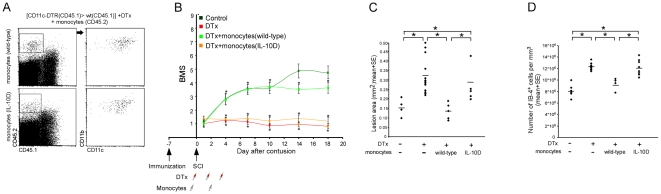
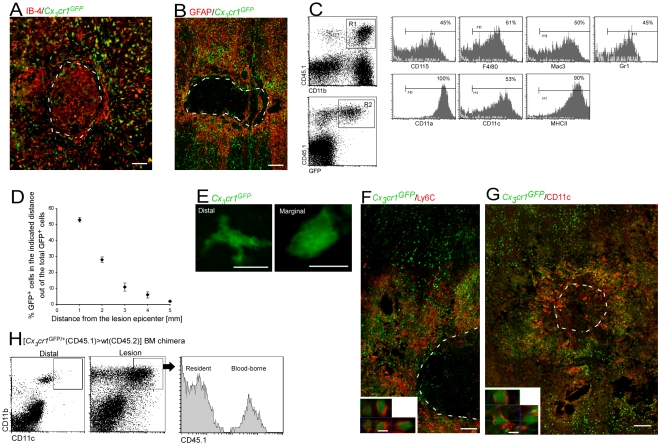
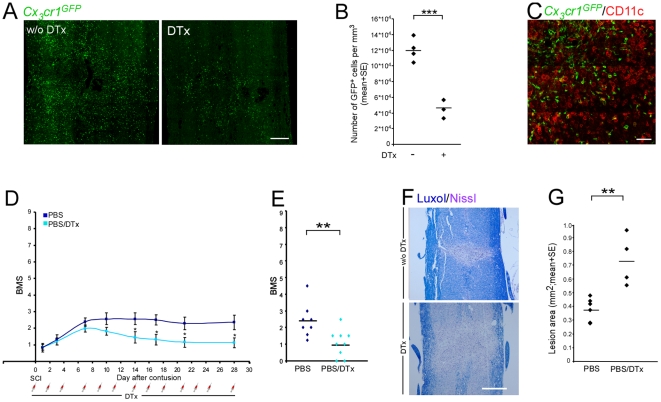
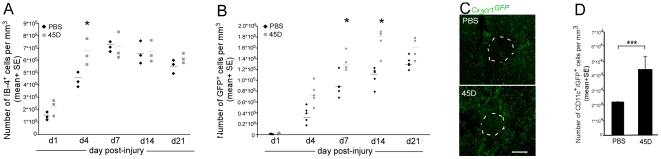
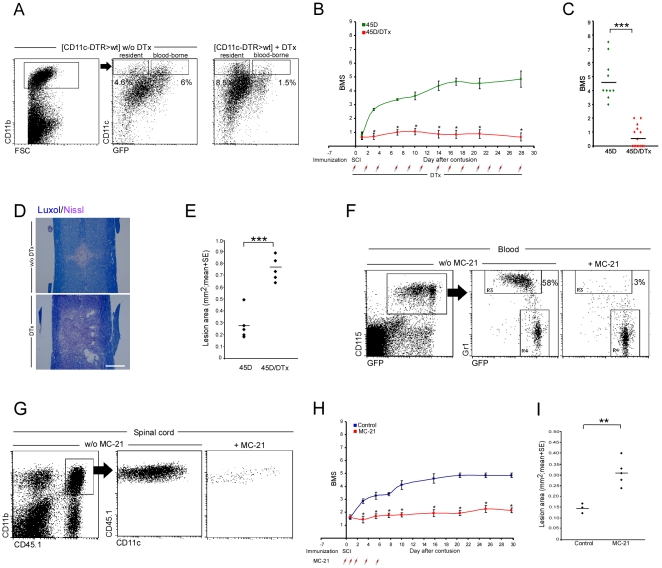
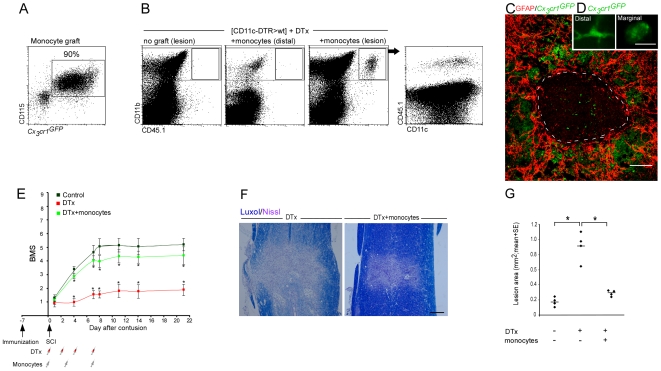
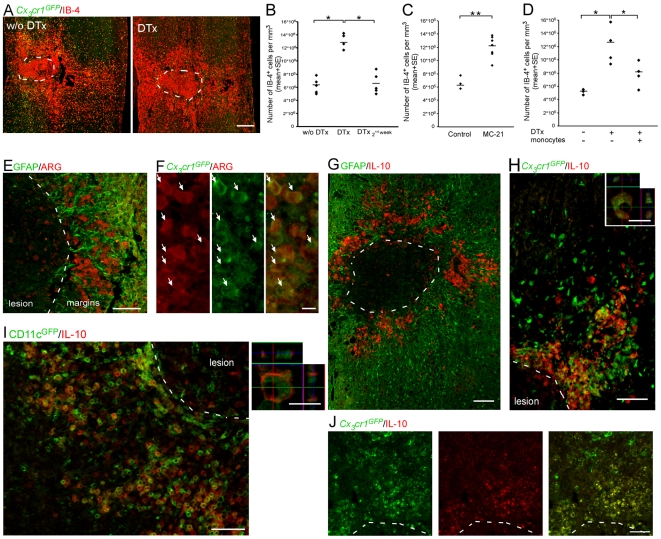
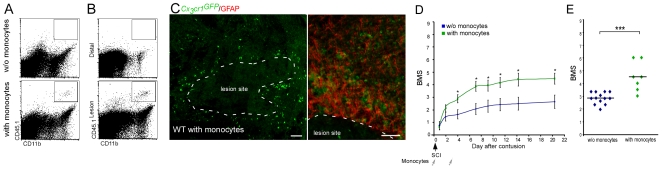
We inflicted SCI in adult mice, and tested the effect of infiltrating monocyte-derived MPhi on the recovery process. Adoptive transfer experiments and bone marrow chimeras were used to functionally distinguish between the resident microglia and the infiltrating monocyte-derived MPhi. We followed the infiltration of the monocyte-derived MPhi to the injured site and characterized their spatial distribution and phenotype. Increasing the naïve monocyte pool by either adoptive transfer or CNS-specific vaccination resulted in a higher number of spontaneously recruited cells and improved recovery. Selective ablation of infiltrating monocyte-derived MPhi following SCI while sparing the resident microglia, using either antibody-mediated depletion or conditional ablation by diphtheria toxin, impaired recovery. Reconstitution of the peripheral blood with monocytes resistant to ablation restored the lost motor functions. Importantly, the infiltrating monocyte-derived MPhi displayed a local anti-inflammatory beneficial role, which was critically dependent upon their expression of interleukin 10.
The results of this study attribute a novel anti-inflammatory role to a unique subset of infiltrating monocyte-derived MPhi in SCI recovery, which cannot be provided by the activated resident microglia. According to our results, limited recovery following SCI can be attributed in part to the inadequate, untimely, spontaneous recruitment of monocytes. This process is amenable to boosting either by active vaccination with a myelin-derived altered peptide ligand, which indicates involvement of adaptive immunity in monocyte recruitment, or by augmenting the naïve monocyte pool in the peripheral blood. Thus, our study sheds new light on the long-held debate regarding the contribution of MPhi to recovery from CNS injuries, and has potentially far-reaching therapeutic implications.
尽管巨噬细胞(MPhi)被认为是伤口愈合的关键参与者,但其对脊髓损伤(SCI)恢复的作用仍存在争议。在损伤部位区分不同MPhi亚群存在困难,这进一步加剧了争议,并导致人们普遍认为MPhi在功能上是同质的。鉴于损伤脊髓中大量积累的活化常驻小胶质细胞,它们是中枢神经系统(CNS)的天然免疫细胞,从外周血中招募额外的浸润单核细胞似乎令人费解。一个关键问题仍然是,浸润的单核细胞衍生的MPhi是有助于修复,还是代表一种不可避免的有害反应。本研究的假设是,特定群体的浸润单核细胞衍生的MPhi在功能上不同于炎症常驻小胶质细胞,并且对SCI恢复至关重要。
我们对成年小鼠造成SCI,并测试浸润单核细胞衍生的MPhi对恢复过程的影响。采用过继转移实验和骨髓嵌合体在功能上区分常驻小胶质细胞和浸润单核细胞衍生的MPhi。我们追踪单核细胞衍生的MPhi向损伤部位的浸润情况,并对其空间分布和表型进行了表征。通过过继转移或中枢神经系统特异性疫苗接种增加幼稚单核细胞库,会导致自发募集的细胞数量增加,并改善恢复情况。在SCI后,使用抗体介导的清除或白喉毒素条件性清除选择性清除浸润单核细胞衍生的MPhi,同时保留常驻小胶质细胞,会损害恢复。用抗清除的单核细胞重建外周血可恢复丧失的运动功能。重要的是,浸润单核细胞衍生的MPhi发挥了局部抗炎有益作用,这关键取决于它们白细胞介素10的表达。
本研究结果赋予了浸润单核细胞衍生的MPhi独特亚群在SCI恢复中一种新的抗炎作用,而活化的常驻小胶质细胞无法提供这种作用。根据我们的结果,SCI后恢复有限部分可归因于单核细胞招募不足、不及时和自发募集。这个过程可以通过用髓磷脂衍生的改变肽配体进行主动疫苗接种来促进,这表明适应性免疫参与了单核细胞招募,或者通过增加外周血中的幼稚单核细胞库来促进。因此,我们的研究为长期以来关于MPhi对中枢神经系统损伤恢复贡献的争论提供了新的思路,并具有潜在的深远治疗意义。