Coral Reef Ecosystem Laboratory, Global Change Institute, ARC Centre for Excellence in Coral Reef Studies, The University of Queensland, St Lucia, Queensland, Australia.
PLoS One. 2011 Jan 24;6(1):e16095. doi: 10.1371/journal.pone.0016095.
Mass coral bleaching is increasing in scale and frequency across the world's coral reefs and is being driven primarily by increased levels of thermal stress arising from global warming. In order to understand the impacts of projected climate change upon corals reefs, it is important to elucidate the underlying cellular mechanisms that operate during coral bleaching and subsequent mortality. In this respect, increased apoptotic cell death activity is an important cellular process that is associated with the breakdown of the mutualistic symbiosis between the cnidarian host and their dinoflagellate symbionts.
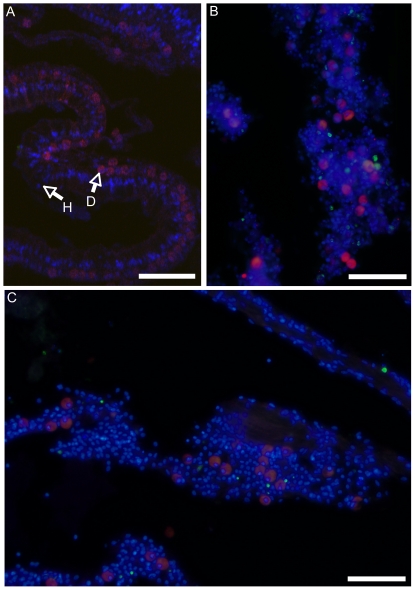
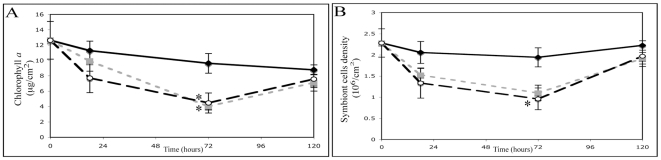
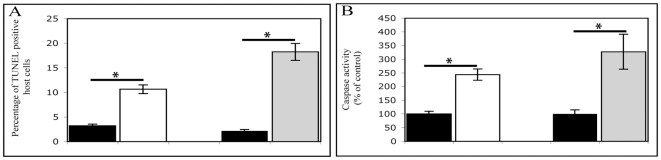
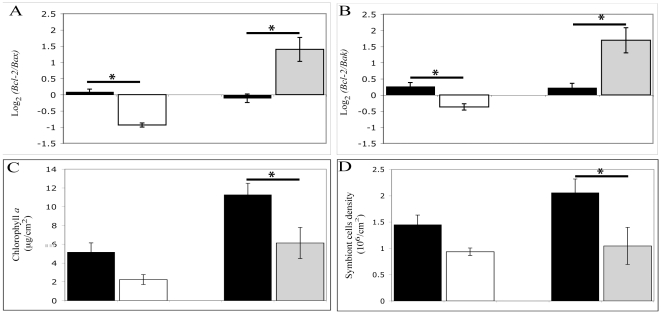
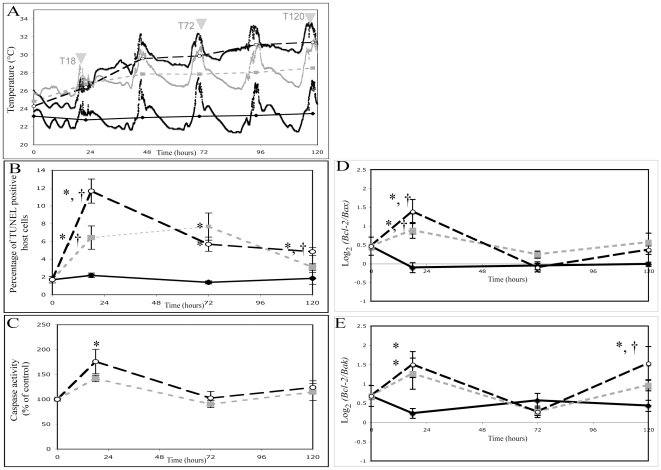
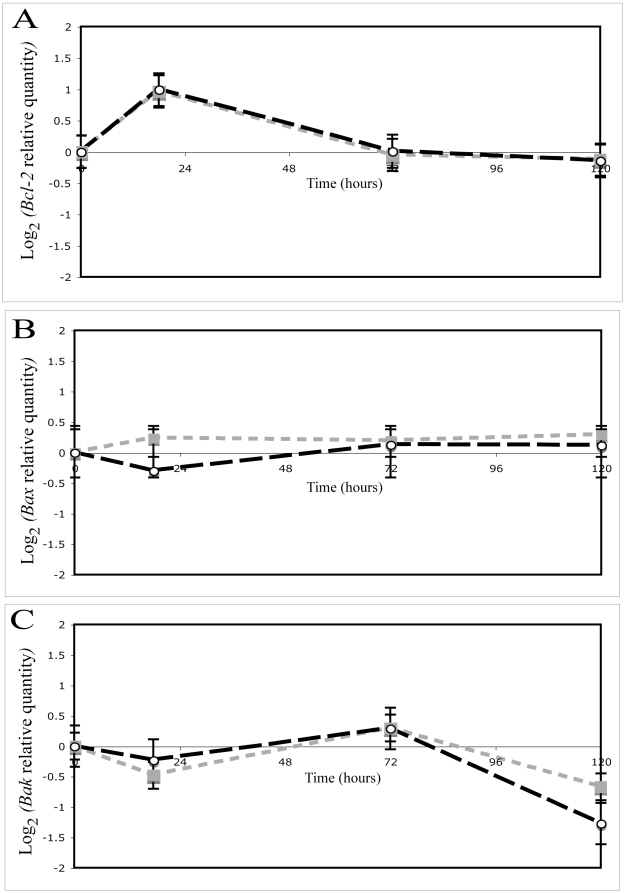
METHODOLOGY/PRINCIPAL FINDINGS: The PRESENT study reports the impacts of different stressors (colchicine and heat stress) on three phases of apoptosis: (i) the potential initiation by differential expression of Bcl-2 members, (ii) the execution of apoptotic events by activation of caspase 3-like proteases and (iii) and finally, the cell disposal indicated by DNA fragmentation in the reef building coral Acropora millepora. In corals incubated with colchicine, an increase in caspase 3-like activity and DNA fragmentation was associated with a relative down-regulation of Bcl-2, suggesting that the initiation of apoptosis may be mediated by the suppression of an anti-apoptotic mechanism. In contrast, in the early steps of heat stress, the induction of caspase-dependent apoptosis was related to a relative up-regulation of Bcl-2 consecutively followed by a delayed decrease in apoptosis activity.
CONCLUSIONS/SIGNIFICANCE: In the light of these results, we propose a model of heat stress in coral hosts whereby increasing temperatures engage activation of caspase 3-dependent apoptosis in cells designated for termination, but also the onset of a delayed protective response involving overexpression of Bcl-2 in surviving cells. This mitigating response to thermal stress could conceivably be an important regulatory mechanism for cell survival in corals exposed to sudden environmental changes.
大规模珊瑚白化现象在全球珊瑚礁中日益严重,且日趋频繁,主要原因是全球变暖导致的热应激水平上升。为了了解预计气候变化对珊瑚礁的影响,阐明珊瑚白化及随后死亡过程中的潜在细胞机制非常重要。在这方面,凋亡细胞死亡活性增加是一个重要的细胞过程,与刺胞动物宿主与其共生鞭毛藻之间的共生关系的破裂有关。
方法/主要发现:本研究报告了不同胁迫源(秋水仙素和热应激)对凋亡的三个阶段的影响:(i)Bcl-2 家族成员的差异表达可能引发潜在的凋亡起始,(ii)通过半胱天冬酶 3 样蛋白酶的激活执行凋亡事件,(iii)最后,通过珊瑚礁建造珊瑚 Acropora millepora 中的 DNA 片段化指示细胞处理。在用秋水仙素孵育的珊瑚中,半胱天冬酶 3 样活性和 DNA 片段化的增加与 Bcl-2 的相对下调有关,这表明凋亡的起始可能是通过抑制抗凋亡机制介导的。相比之下,在热应激的早期阶段, caspase 依赖性凋亡的诱导与 Bcl-2 的相对上调有关,随后凋亡活性延迟下降。
结论/意义:根据这些结果,我们提出了珊瑚宿主热应激模型,即温度升高会激活指定终止的细胞中的 caspase 3 依赖性凋亡,但也会引发延迟的保护反应,涉及存活细胞中 Bcl-2 的过表达。这种对热应激的缓解反应可能是暴露于突然环境变化的珊瑚细胞存活的重要调节机制。