Climate Change and Ocean Acidification Team, Australian Institute of Marine Science, Townsville, Queensland, Australia.
PLoS One. 2013 May 9;8(5):e61736. doi: 10.1371/journal.pone.0061736. Print 2013.
Understanding the mechanisms by which natural populations cope with environmental stress is paramount to predict their persistence in the face of escalating anthropogenic impacts. Reef-building corals are increasingly exposed to local and global stressors that alter nutritional status causing reduced fitness and mortality, however, these responses can vary considerably across species and populations.
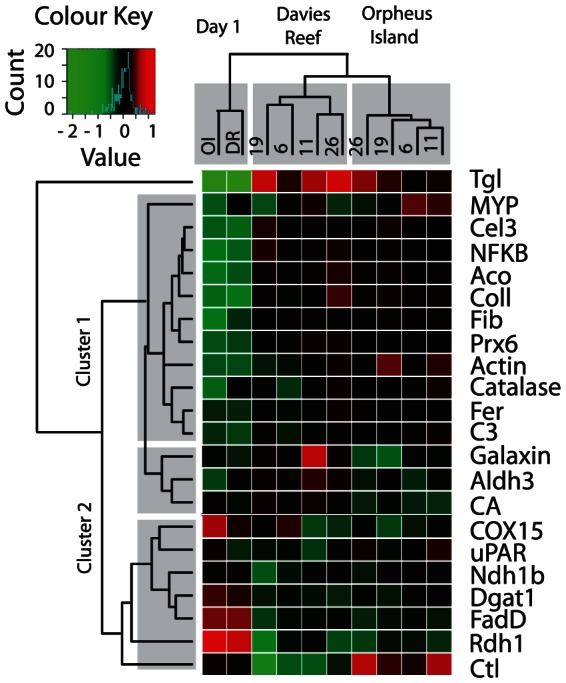
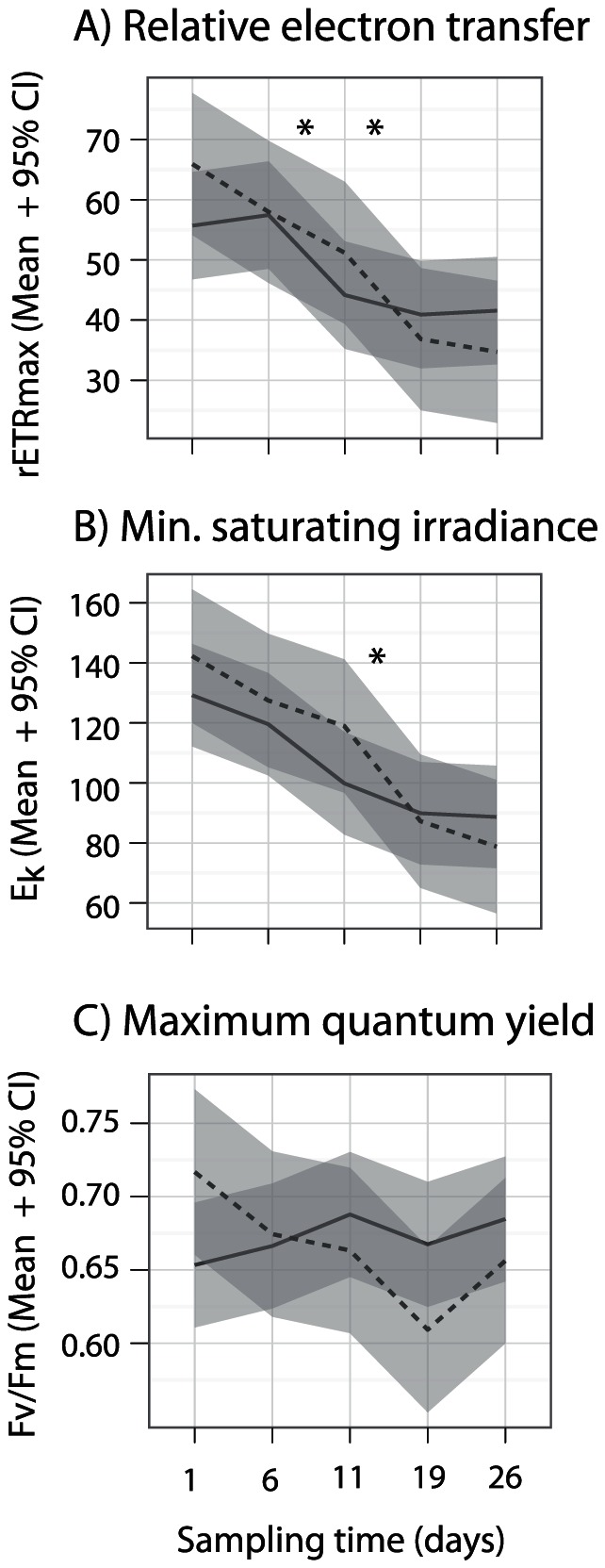
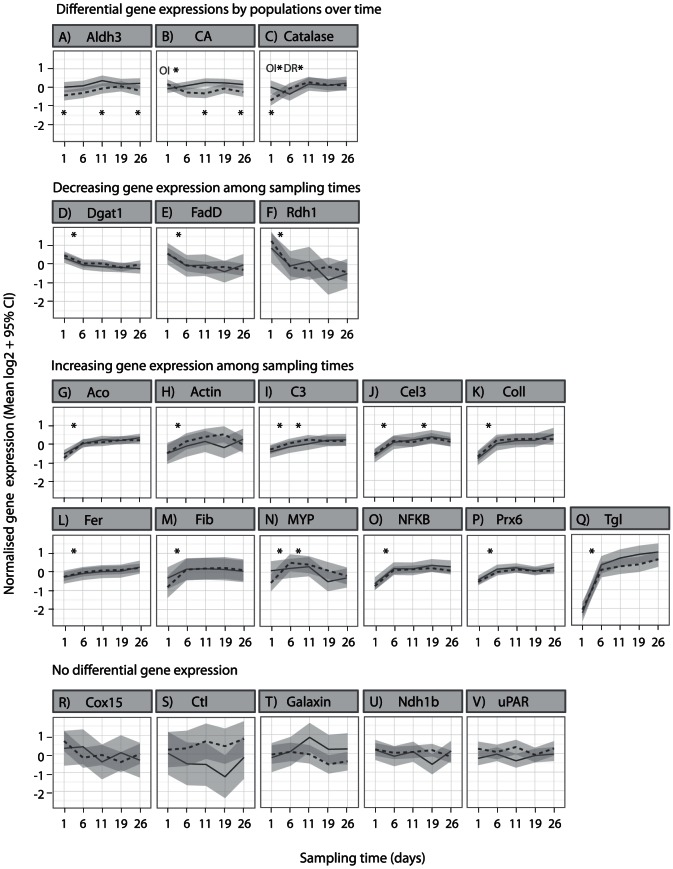
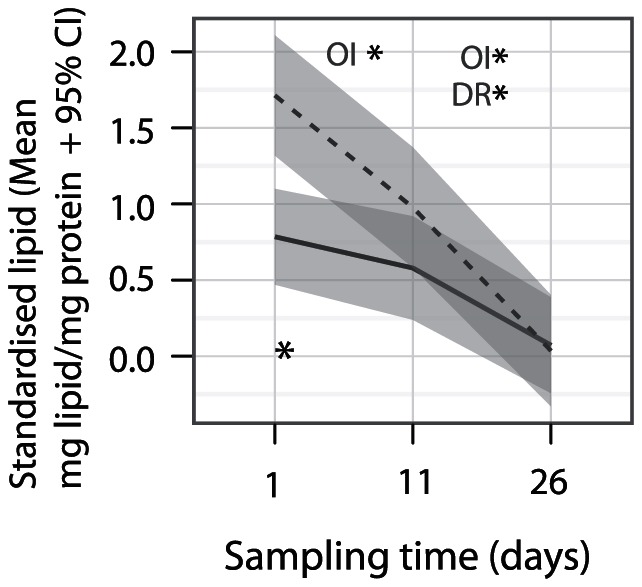
METHODOLOGY/PRINCIPAL FINDINGS: We compare the expression of 22 coral host genes in individuals from an inshore and an offshore reef location using quantitative Reverse Transcription-PCR (qRT-PCR) over the course of 26 days following translocation into a shaded, filtered seawater environment. Declines in lipid content and PSII activity of the algal endosymbionts (Symbiodinium ITS-1 type C2) over the course of the experiment indicated that heterotrophic uptake and photosynthesis were limited, creating nutritional deprivation conditions. Regulation of coral host genes involved in metabolism, CO2 transport and oxidative stress could be detected already after five days, whereas PSII activity took twice as long to respond. Opposing expression trajectories of Tgl, which releases fatty acids from the triacylglycerol storage, and Dgat1, which catalyses the formation of triglycerides, indicate that the decline in lipid content can be attributed, at least in part, by mobilisation of triacylglycerol stores. Corals from the inshore location had initially higher lipid content and showed consistently elevated expression levels of two genes involved in metabolism (aldehyde dehydrogenase) and calcification (carbonic anhydrase).
CONCLUSIONS/SIGNIFICANCE: Coral host gene expression adjusts rapidly upon change in nutritional conditions, and therefore can serve as an early signature of imminent coral stress. Consistent gene expression differences between populations indicate that corals acclimatize and/or adapt to local environments. Our results set the stage for analysis of these processes in natural coral populations, to better understand the responses of coral communities to global climate change and to develop more efficient management strategies.
了解自然种群应对环境压力的机制对于预测它们在人为影响不断加剧的情况下的生存能力至关重要。造礁珊瑚越来越多地暴露在改变营养状况的地方和全球胁迫因素下,导致适应性降低和死亡率上升,然而,这些反应在不同物种和种群中差异很大。
方法/主要发现:我们使用定量逆转录-PCR(qRT-PCR)比较了在经历了 26 天的遮荫、过滤海水环境的转移后,来自近岸和离岸珊瑚礁位置的个体中 22 种珊瑚宿主基因的表达。在实验过程中,藻类共生体(共生藻 ITS-1 型 C2)的脂质含量和 PSII 活性下降表明,异养吸收和光合作用受到限制,导致营养剥夺条件。代谢、CO2 运输和氧化应激相关的珊瑚宿主基因的调节可以在五天后检测到,而 PSII 活性需要两倍的时间来响应。Tgl(从三酰基甘油储存中释放脂肪酸)和 Dgat1(催化甘油三酯形成)的表达轨迹相反,表明脂质含量的下降至少部分归因于三酰基甘油储存的动员。近岸位置的珊瑚最初具有更高的脂质含量,并表现出代谢(醛脱氢酶)和钙化(碳酸酐酶)两个基因的表达水平持续升高。
结论/意义:珊瑚宿主基因表达在营养条件发生变化时迅速调整,因此可以作为珊瑚即将面临压力的早期特征。种群之间一致的基因表达差异表明,珊瑚适应和/或适应了当地环境。我们的研究结果为在自然珊瑚种群中分析这些过程奠定了基础,以便更好地了解珊瑚群落对全球气候变化的反应,并制定更有效的管理策略。