Indiana University School of Informatics, Indianapolis, Indiana, United States of America.
PLoS One. 2011 Jan 20;6(1):e16395. doi: 10.1371/journal.pone.0016395.
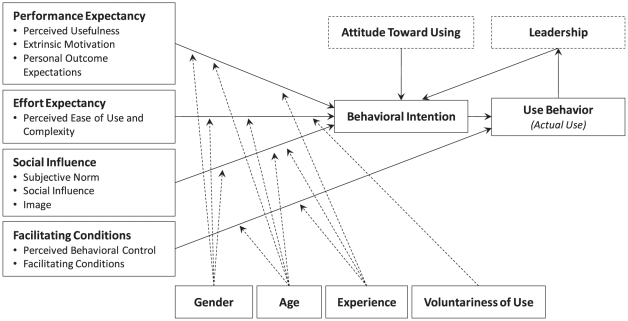
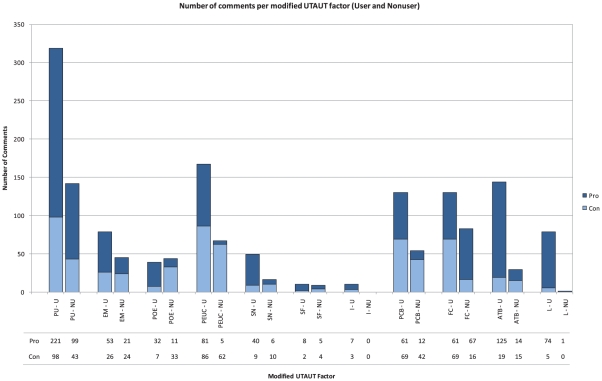
Robotic-assisted surgical techniques are not yet well established among surgeon practice groups beyond a few surgical subspecialties. To help identify the facilitators and barriers to their adoption, this belief-elicitation study contextualized and supplemented constructs of the unified theory of acceptance and use of technology (UTAUT) in robotic-assisted surgery. Semi-structured individual interviews were conducted with 21 surgeons comprising two groups: users and nonusers. The main facilitators to adoption were Perceived Usefulness and Facilitating Conditions among both users and nonusers, followed by Attitude Toward Using Technology among users and Extrinsic Motivation among nonusers. The three main barriers to adoption for both users and nonusers were Perceived Ease of Use and Complexity, Perceived Usefulness, and Perceived Behavioral Control. This study's findings can assist surgeons, hospital and medical school administrators, and other policy makers on the proper adoption of robotic-assisted surgery and can guide future research on the development of theories and framing of hypotheses.
机器人辅助手术技术在几个外科亚专业之外的外科医生实践群体中尚未得到广泛应用。为了帮助确定其采用的促进因素和障碍,这项信念启发研究将机器人辅助手术中统一接受和使用技术理论(UTAUT)的结构进行了情境化和补充。对 21 名外科医生进行了半结构化的个人访谈,这些外科医生分为两组:使用者和非使用者。采用的主要促进因素是使用者和非使用者的感知有用性和便利条件,其次是使用者的技术使用态度和非使用者的外在动机。采用的三个主要障碍是使用者和非使用者的感知易用性和复杂性、感知有用性以及感知行为控制。本研究的结果可以帮助外科医生、医院和医学院的管理人员以及其他政策制定者正确采用机器人辅助手术,并可以指导关于理论发展和假设框架的未来研究。