Department of Entomology, Ohio Agricultural and Research Development Center, The Ohio State University, Wooster, Ohio, United States of America.
PLoS One. 2011 Jan 19;6(1):e16336. doi: 10.1371/journal.pone.0016336.
Bed bugs (Cimex lectularius) are blood-feeding insects poised to become one of the major pests in households throughout the United States. Resistance of C. lectularius to insecticides/pesticides is one factor thought to be involved in its sudden resurgence. Despite its high-impact status, scant knowledge exists at the genomic level for C. lectularius. Hence, we subjected the C. lectularius transcriptome to 454 pyrosequencing in order to identify potential genes involved in pesticide resistance.
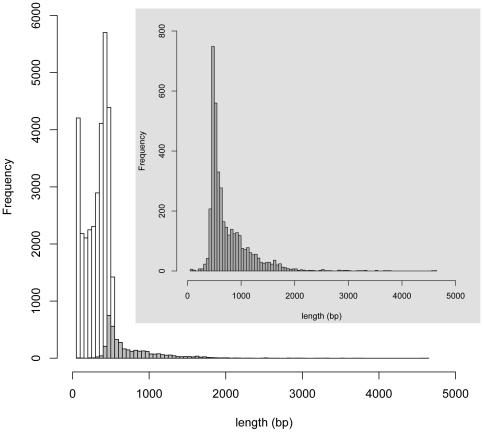
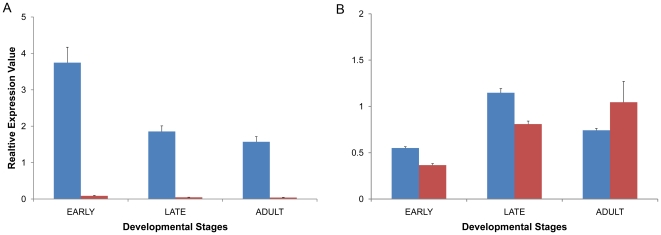
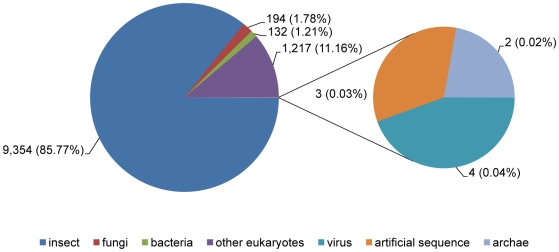
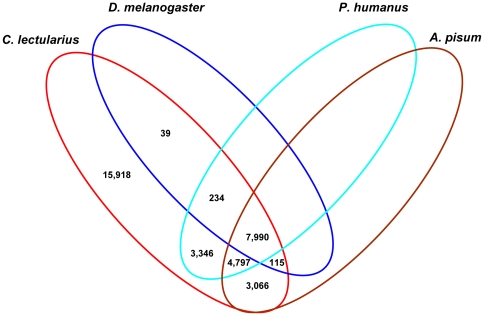
Using 454 pyrosequencing, we obtained a total of 216,419 reads with 79,596,412 bp, which were assembled into 35,646 expressed sequence tags (3902 contigs and 31744 singletons). Nearly 85.9% of the C. lectularius sequences showed similarity to insect sequences, but 44.8% of the deduced proteins of C. lectularius did not show similarity with sequences in the GenBank non-redundant database. KEGG analysis revealed putative members of several detoxification pathways involved in pesticide resistance. Lamprin domains, Protein Kinase domains, Protein Tyrosine Kinase domains and cytochrome P450 domains were among the top Pfam domains predicted for the C. lectularius sequences. An initial assessment of putative defense genes, including a cytochrome P450 and a glutathione-S-transferase (GST), revealed high transcript levels for the cytochrome P450 (CYP9) in pesticide-exposed versus pesticide-susceptible C. lectularius populations. A significant number of single nucleotide polymorphisms (296) and microsatellite loci (370) were predicted in the C. lectularius sequences. Furthermore, 59 putative sequences of Wolbachia were retrieved from the database.
To our knowledge this is the first study to elucidate the genetic makeup of C. lectularius. This pyrosequencing effort provides clues to the identification of potential detoxification genes involved in pesticide resistance of C. lectularius and lays the foundation for future functional genomics studies.
臭虫(Cimex lectularius)是一种吸血昆虫,它们正准备成为全美国家庭中的主要害虫之一。臭虫对杀虫剂/农药的抗性是其突然复苏的一个因素。尽管臭虫具有很高的影响,但在基因组水平上对其知之甚少。因此,我们对 C. lectularius 的转录组进行了 454 焦磷酸测序,以鉴定与杀虫剂抗性相关的潜在基因。
使用 454 焦磷酸测序,我们共获得了 216419 条读长,总长度为 79596412bp,组装成 35646 个表达序列标签(3902 个 contigs 和 31744 个 singletons)。将近 85.9%的 C. lectularius 序列与昆虫序列相似,但 C. lectularius 推断蛋白的 44.8%与 GenBank 非冗余数据库中的序列没有相似性。KEGG 分析显示了几种解毒途径的假定成员,这些途径参与了杀虫剂抗性。Lamprin 结构域、蛋白激酶结构域、蛋白酪氨酸激酶结构域和细胞色素 P450 结构域是预测 C. lectularius 序列的顶级 Pfam 结构域之一。对包括细胞色素 P450 和谷胱甘肽-S-转移酶(GST)在内的假定防御基因的初步评估表明,暴露于杀虫剂的 C. lectularius 种群中细胞色素 P450(CYP9)的转录水平较高。在 C. lectularius 序列中预测到了大量的单核苷酸多态性(296 个)和微卫星位点(370 个)。此外,从数据库中检索到了 59 个沃尔巴克氏体的假定序列。
据我们所知,这是首次阐明 C. lectularius 的遗传构成的研究。这项焦磷酸测序工作为鉴定与 C. lectularius 杀虫剂抗性相关的潜在解毒基因提供了线索,并为未来的功能基因组学研究奠定了基础。